


Molecular Targets of Genistein and Its Related Flavonoids to Exert Anticancer Effects
- PMID: 31100782
- PMCID: PMC6566427
- DOI: 10.3390/ijms20102420
Molecular Targets of Genistein and Its Related Flavonoids to Exert Anticancer Effects
Abstract
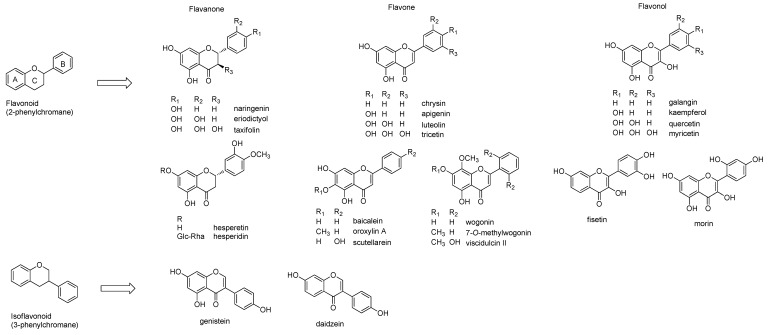
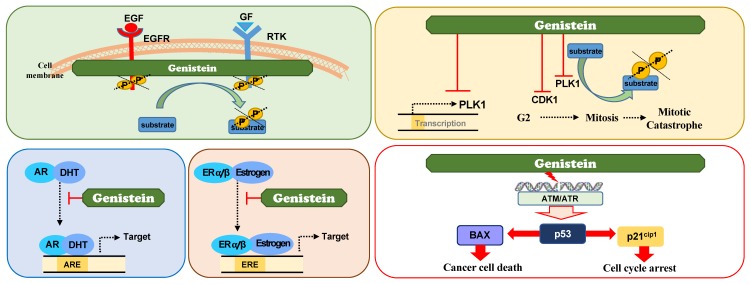
Increased health awareness among the public has highlighted the health benefits of dietary supplements including flavonoids. As flavonoids target several critical factors to exert a variety of biological effects, studies to identify their target-specific effects have been conducted. Herein, we discuss the basic structures of flavonoids and their anticancer activities in relation to the specific biological targets acted upon by these flavonoids. Flavonoids target several signaling pathways involved in apoptosis, cell cycle arrest, mitogen-activated protein kinase (MAPK), phosphoinositide 3-kinase (PI3K)/AKT kinase, and metastasis. Polo-like kinase 1 (PLK1) has been recognized as a valuable target in cancer treatment due to the prognostic implication of PLK1 in cancer patients and its clinical relevance between the overexpression of PLK1 and the reduced survival rates of several carcinoma patients. Recent studies suggest that several flavonoids, including genistein directly inhibit PLK1 inhibitory activity. Later, we focus on the anticancer effects of genistein through inhibition of PLK1.
Keywords: PLK1; anticancer; flavonoid; genistein.
Conflict of interest statement
The authors declare no conflict of interest. The sponsors had no role in the design, execution, interpretation, or writing of the study.
Figures
References
Publication types
MeSH terms
Substances
Grants and funding
LinkOut - more resources
Full Text Sources
Research Materials
Miscellaneous
