


A German climbing study on depression: a bouldering psychotherapeutic group intervention in outpatients compared with state-of-the-art cognitive behavioural group therapy and physical activation - study protocol for a multicentre randomised controlled trial
- PMID: 31101097
- PMCID: PMC6525374
- DOI: 10.1186/s12888-019-2140-5
A German climbing study on depression: a bouldering psychotherapeutic group intervention in outpatients compared with state-of-the-art cognitive behavioural group therapy and physical activation - study protocol for a multicentre randomised controlled trial
Abstract
Background: Besides classical approaches for treating depression, physical activity has been demonstrated to be an effective option. Bouldering psychotherapy (BPT) combines psychotherapeutic interventions with action-oriented elements from the field of climbing. The aim of this study is to investigate the effectiveness of BPT compared with a home-based exercise program (EP - active control group, superiority trial) and state-of-the-art cognitive behavioural therapy (CBT - non-inferiority trial).
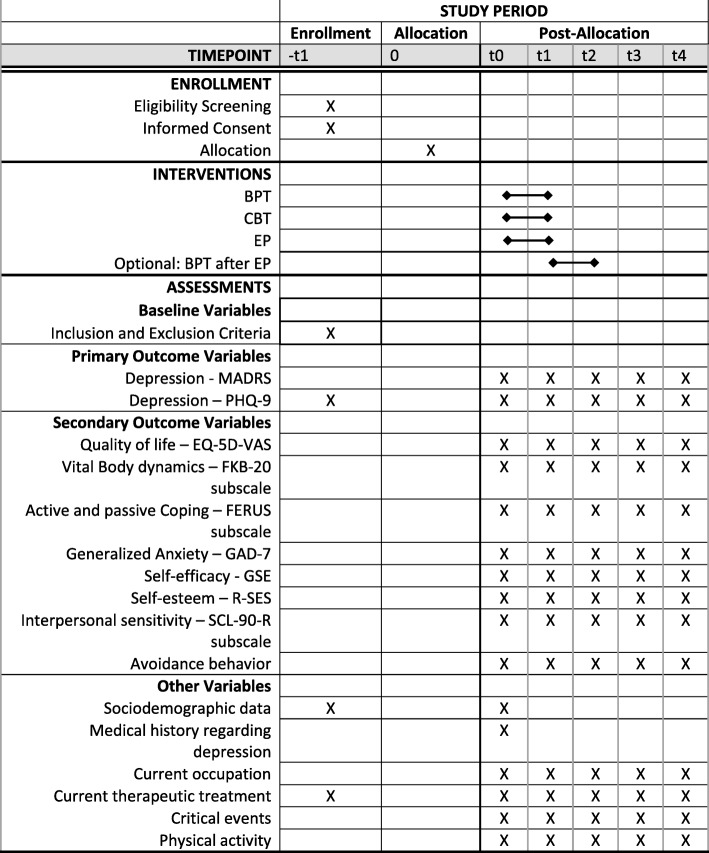
Methods: The study is being conducted as a multicentre randomised controlled intervention trial at three locations in Germany. Participants are being randomised into three groups: BPT, CBT, or EP, each with a 10-week treatment phase. A power analysis indicated that about 240 people should initially be included. The primary outcome of the study is the Montgomery and Asberg Depression Rating Scale (MADRS) directly after the intervention. Additional measurement points are located three, six, and 12 months after the end of the intervention. The data are being collected via computer-assisted telephone interviews. Statistical analyses comprise regression analyses to test for the superiority of BPT over EP. To test for the non-inferiority of BPT and CBT, a non-inferiority margin of 1.9 points in the Patient Health Questionnaire (PHQ-9) and two non-inferiority margins for the MADRS (half of the two smallest Cohen's d values from the current meta-analyses) was predefined. The mean difference between CBT and EP is being used as a supplementary equivalence margin.
Discussion: This is the first study to investigate the effect of a bouldering psychotherapy (BPT) on outpatients' depressive symptoms compared with mere physical activity (superiority analysis) and state-of-the-art cognitive behavioural therapy (CBT, non-inferiority analysis). Methodological strengths of the study are the elaborated, multicentred, randomised, controlled design. Assessors are blinded with regard to group allocation which leads to high objectivity. The study is conducted in a naturalistic setting, which leads to high external validity. Methodological limitations might be the clinical heterogeneity of the sample, which may dilute the intervention effects.
Trial registration: ISRCTN12457760 (Registration date: 26 July 2017, retrospectively registered).
Keywords: Bouldering; Depression; Exercise program; Physical activity; Psychotherapy; Rock climbing; Sports.
Conflict of interest statement
The authors declare that they have no competing interests.
Figures
References
-
- Moussavi S, Chatterji S, Verdes E, Tandon A, Patel V, Ustun B. Depression, chronic diseases, and decrements in health: results from the world health surveys. Lancet. 2007;370(9590):851–858. - PubMed
-
- World Health Organization . The international classification of functioning, disability and health: ICF. Geneva: World Health Organization; 2001.
-
- World Health Organization . The global burden of disease: 2004 update. Geneva: World Health Organization; 2008.
-
- Deutsche Gesellschaft für Psychiatrie Psychotherapie und Neurologie (DGPPN) S3-Leitlinie/Nationale VersorgungsLeitlinie. 2 2015. Unipolare Depression. Langfassung.
Publication types
MeSH terms
Associated data
LinkOut - more resources
Full Text Sources
Medical
