


Impact of diabetes on male sexual function in streptozotocin-induced diabetic rats: Protective role of soluble epoxide hydrolase inhibitor
- PMID: 31102913
- PMCID: PMC6893866
- DOI: 10.1016/j.biopha.2019.108897
Impact of diabetes on male sexual function in streptozotocin-induced diabetic rats: Protective role of soluble epoxide hydrolase inhibitor
Abstract
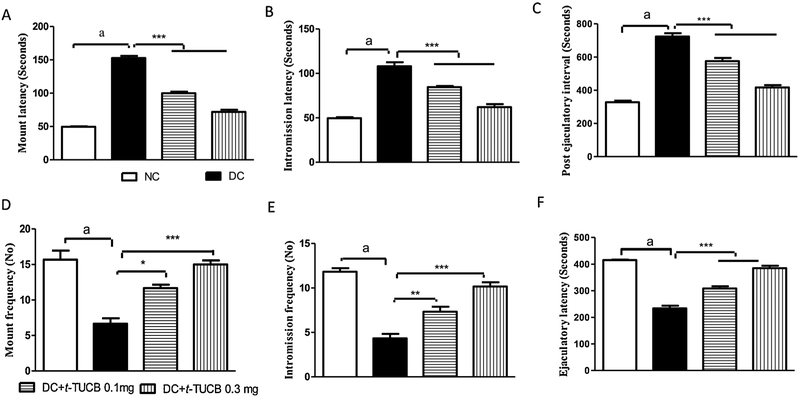
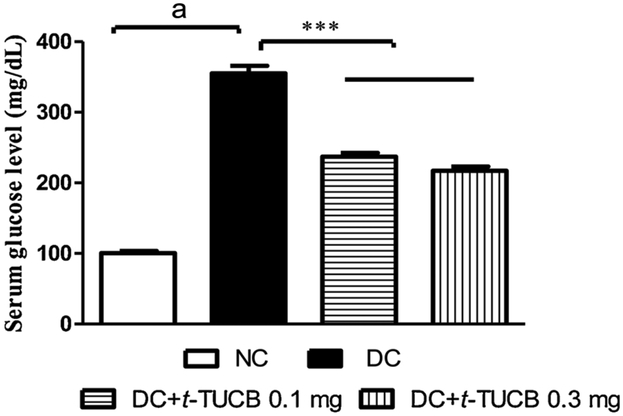
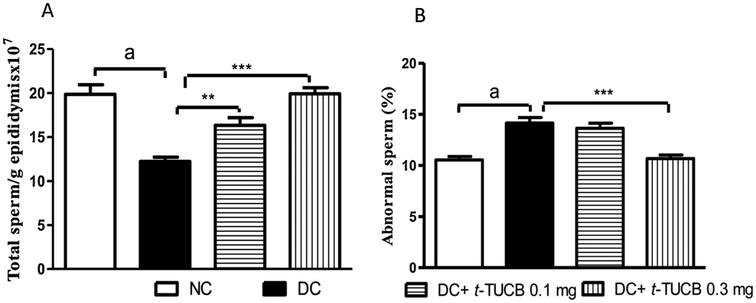
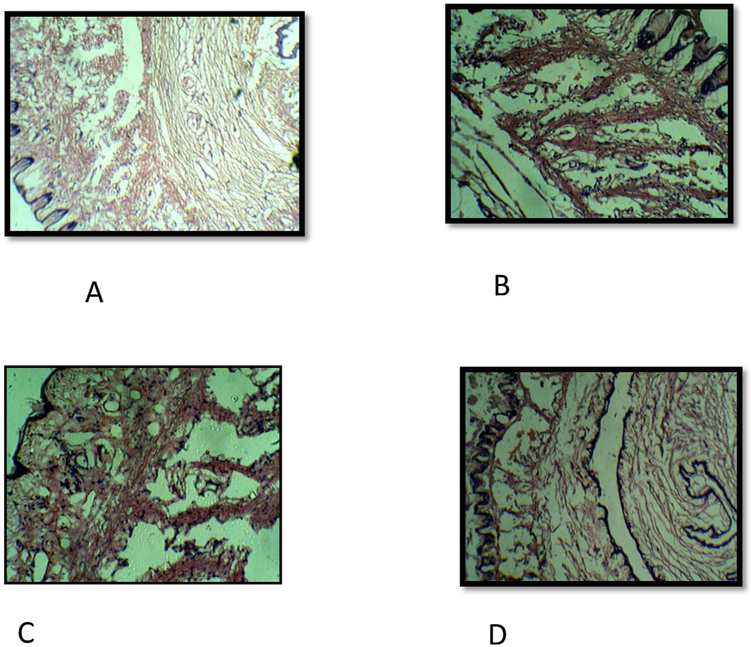
Diabetes-induced male sexual dysfunction is associated with endothelial dysfunction. Inhibition of soluble epoxide hydrolase (sEH) is known to improve endothelial function in diabetes. Therefore, we hypothesized that sEH inhibitor (sEHI), [trans-4-{4-[3-(4-trifluoromethoxyphenyl)-ureido]cyclohexyloxy}benzoic acid] / t-TUCB can restore the male sexual function in diabetic rat. After one week of administration of diabetogenic agent STZ (52 mg/kg i.p) injection, diabetic rats were treated with t-TUCB (0.1 and 0.3 mg/kg, p.o) or vehicle for 8 weeks. The sexual behaviour parameters of the animals were evaluated at the end of dosing period. The levels of testosterone and glucose in serum, and sperm were quantified. Effect of treatment on weight of reproductive organs and histopathology of penile tissue was evaluated. Diabetes had a negative effect on male sexual function, weight of sexual organs and production of sperm with a parallel decrease in the level of testosterone. The sEHI, t-TUCB, significantly preserved the sexual function and minimized an increase in the level of blood glucose in diabetic rats. It also prevented a decrease in the level of testosterone and sperm in diabetic rats, in comparison to diabetic control rats. Further, diabetes induced distortion of corpus cavernosum was attenuated by t-TUCB. Based on our findings, sEHI may delay the development of sexual dysfunction in diabetes.
Keywords: Corpus cavernosum; Diabetes-induced sexual dysfunction; Sperm count; Testosterone; sEH inhibitor t-TUCB.
Copyright © 2019 The Authors. Published by Elsevier Masson SAS.. All rights reserved.
Conflict of interest statement
Conflict of interest
The University Of California, Davis holds patents on soluble epoxide hydrolase inhibitors. Professor Bruce D. Hammock is a co-founder of Eicosis LLC, a company for promoting the use of sEH inhibitors in humans and companion animals.
Other authors have no conflict to declare
Figures
References
-
- NIH consensus development panel on impotence, Impotence. JAMA 270 (1993) 83–90. - PubMed
-
- Feldman HA, Goldstein I, Hatzichristou DG, Krane RJ, McKinlay JB, Impotence and its medical and psychosocial correlates: results of the Massachusetts Male Aging Study, J. Urol 151 (1) (1994) 54–61. - PubMed
-
- Penson DF, Latini DM, Lubeck DP, Wallace KL, Henning JM, Lue TF, Comprehensive Evaluation of Erectile Dysfunction (ExCEED) database do impotent men with diabetes have more severe erectile dysfunction and worse quality of life than the general population of impotent patients? Results from the Exploratory Comprehensive Evaluation of Erectile Dysfunction (ExCEED) database, Diabetes Care 26 (4) (2003) 1093–1099. - PubMed
-
- Liu G, Sun X, Dai Y, Heng FZ, Wang D, Huang Y, Bian J, Deng C, ChronicadministrationofsildenafilmodifiedtheimpairedVEGFsystem and improved the erectile function in rats with diabetic erectile dysfunction, J. Sex. Med 7 (2010) 3868–3878. - PubMed
-
- Andrews KL, Pannirselvam M, Anderson TJ, Jenkins AJ, Triggle CR, Hill MA, The vascular endothelium in diabetes: a practical target for drug treatment? Expert Opin. Ther. Targets 9 (2005) 101–117. - PubMed
MeSH terms
Substances
Grants and funding
LinkOut - more resources
Full Text Sources
Other Literature Sources
Medical
