


Sequential drug delivery to modulate macrophage behavior and enhance implant integration
- PMID: 31103451
- PMCID: PMC6858522
- DOI: 10.1016/j.addr.2019.05.005
Sequential drug delivery to modulate macrophage behavior and enhance implant integration
Abstract
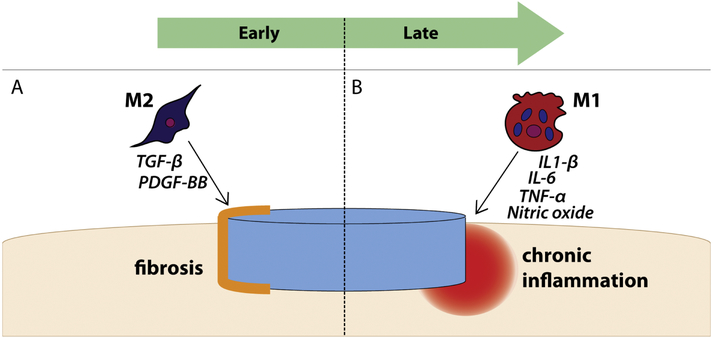
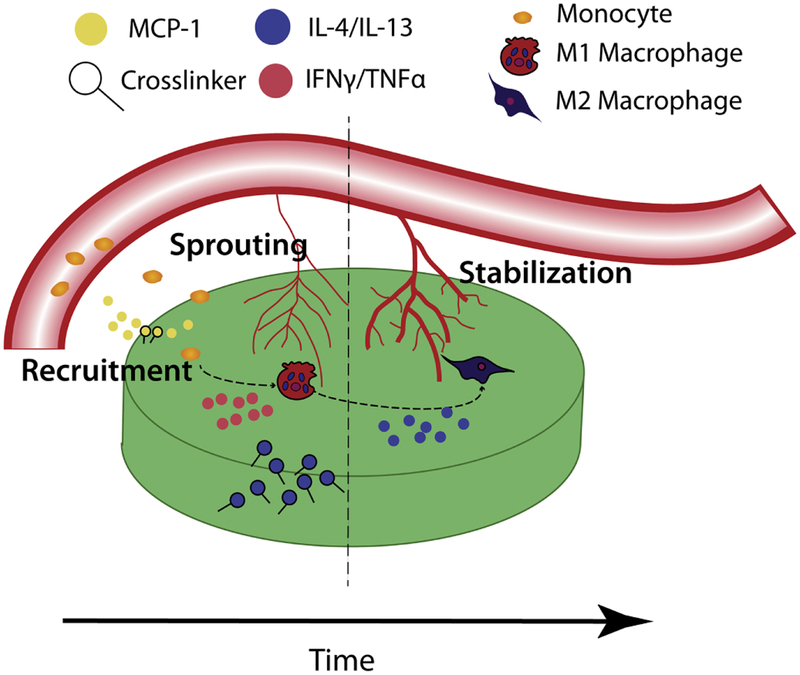
Macrophages are major upstream regulators of the inflammatory response to implanted biomaterials. Sequential functions of distinct macrophage phenotypes are essential to the normal tissue repair process, which ideally results in vascularization and integration of implants. Improper timing of M1 or M2 macrophage activation results in dysfunctional healing in the form of chronic inflammation or fibrous encapsulation of the implant. Thus, biphasic drug delivery systems that modulate macrophage behavior are an appealing approach to promoting implant integration. In this review, we describe the timing and roles of macrophage phenotypes in healing, then highlight current drug delivery systems designed to sequentially modulate macrophage behavior.
Keywords: Angiogenesis; Implant integration; Macrophage.
Copyright © 2019 Elsevier B.V. All rights reserved.
Figures
References
-
- Anderson JM, McNally AK, Biocompatibility of implants: lymphocyte/macrophage interactions, Seminars in Immunopathology, 33 (2011) 221–233. - PubMed
-
- Jain RK, Au P, Tam J, Duda DG, Fukumura D, Engineering vascularized tissue, Nature Biotechnology, 23 (2005) 821–823. - PubMed
-
- Kuttappan S, Mathew D, Jo J, Tanaka R, Menon D, Ishimoto T, Nakano T, Nair SV, Nair MB, Tabata Y, Dual release of growth factor from nanocomposite fibrous scaffold promotes vascularisation and bone regeneration in rat critical sized calvarial defect, Acta Biomaterialia, (2018). - PubMed
Publication types
MeSH terms
Grants and funding
LinkOut - more resources
Full Text Sources
