


The effect of aging methods on the fracture toughness and physical stability of an oxirane/acrylate, ormocer, and Bis-GMA-based resin composites
- PMID: 31104114
- PMCID: PMC6859191
- DOI: 10.1007/s00784-019-02912-1
The effect of aging methods on the fracture toughness and physical stability of an oxirane/acrylate, ormocer, and Bis-GMA-based resin composites
Abstract
Purpose: To determine the effect of aging methods on the fracture toughness of a conventional Bis-GMA-based resin composite (Filtek Supreme), an ormocer-based resin composite (Admira), and an experimental hydrophobic oxirane/acrylate interpenetrating network resin system (OASys)-based composite.
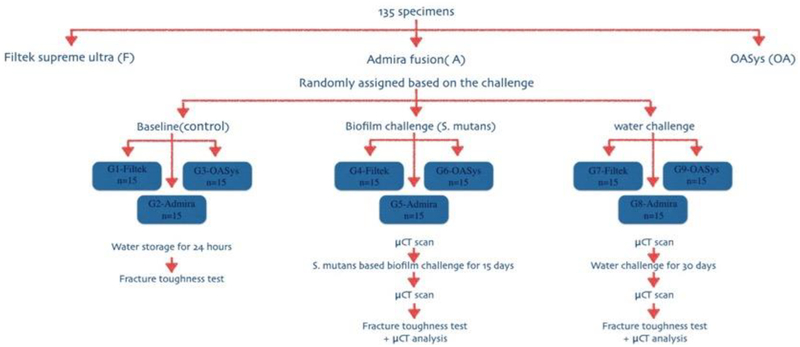
Methods: A 25 × 5 × 2.8-mm stainless-steel mold with 2.5 mm single-edge center notch, following ASTM standards [E399-90], was used to fabricate 135 specimens (n = 15) of the composite materials and randomly distributed into groups. For the baseline group, specimens were fabricated and then tested after 24-h storage in water. For the biofilm challenge, specimens were randomly placed in a six-well tissue culture plate and kept at 37 °C with bacterial growth media (Brain Heart Infusion (BHI); Streptococcus mutans) changed daily for 15 days. For the water storage challenge, specimens were kept in 5 ml of deionized distilled autoclaved water for 30 days at 37 °C. μCT evaluation by scanning the specimens was performed before and after the proposed challenge. Fracture toughness (KIc) testing was carried out following the challenges.
Results: μCT surface area and volume analyses showed no significant changes regardless of the materials tested or the challenge. Filtek and Admira fracture toughness was significantly lower after the biofilm and water storage challenges. OASys mean fracture toughness values after water aging were significantly higher than that of baseline. Toughness values for OASys composites after biofilm aging were not statistically different when compared to either water or baseline values.
Conclusion: The fracture toughness of Bis-GMA and ormocer-based dental resin composites significantly decreased under water and bacterial biofilm assault. However, such degradation in fracture toughness was not visible in OASys-based composites.
Clinical significance: Current commercial dental composites are affected by the oral environment, which might contribute to the long-term performance of these materials.
Keywords: Biofilm challenge; Dental composites; Fracture toughness; Micro-CT.
Conflict of interest statement
Figures
References
-
- Martos J, Osinaga PWR, Oliveira E, Castro LAS (2003) Hydrolytic Degradation of Composite Resins: Effects on the Microhardness. Materials Research 6:99–604.
-
- Arikawa H, Kuwahata H, Seki H, Kanie T, Fujii K and Inoue K (1995) Deterioration of mechanical properties of composite resins. Dent Mater J 14:78–83. - PubMed
-
- Tjaderhane L, Nascimento FD, Breschi L, Mazzoni A, Tersariol IL, Geraldeli S, Tezvergil-Mutluay A, Carrilho M, Carvalho RM, Tay FR and Pashley DH (2013) Strategies to prevent hydrolytic degradation of the hybrid layer-A review. Dent Mater 29:999–1011. doi: 10.1016/j.dental.2013.07.016 - DOI - PMC - PubMed
MeSH terms
Substances
Grants and funding
LinkOut - more resources
Full Text Sources
Miscellaneous
