


Muscle-bone crosstalk and potential therapies for sarco-osteoporosis
- PMID: 31106446
- PMCID: PMC7331460
- DOI: 10.1002/jcb.28946
Muscle-bone crosstalk and potential therapies for sarco-osteoporosis
Abstract
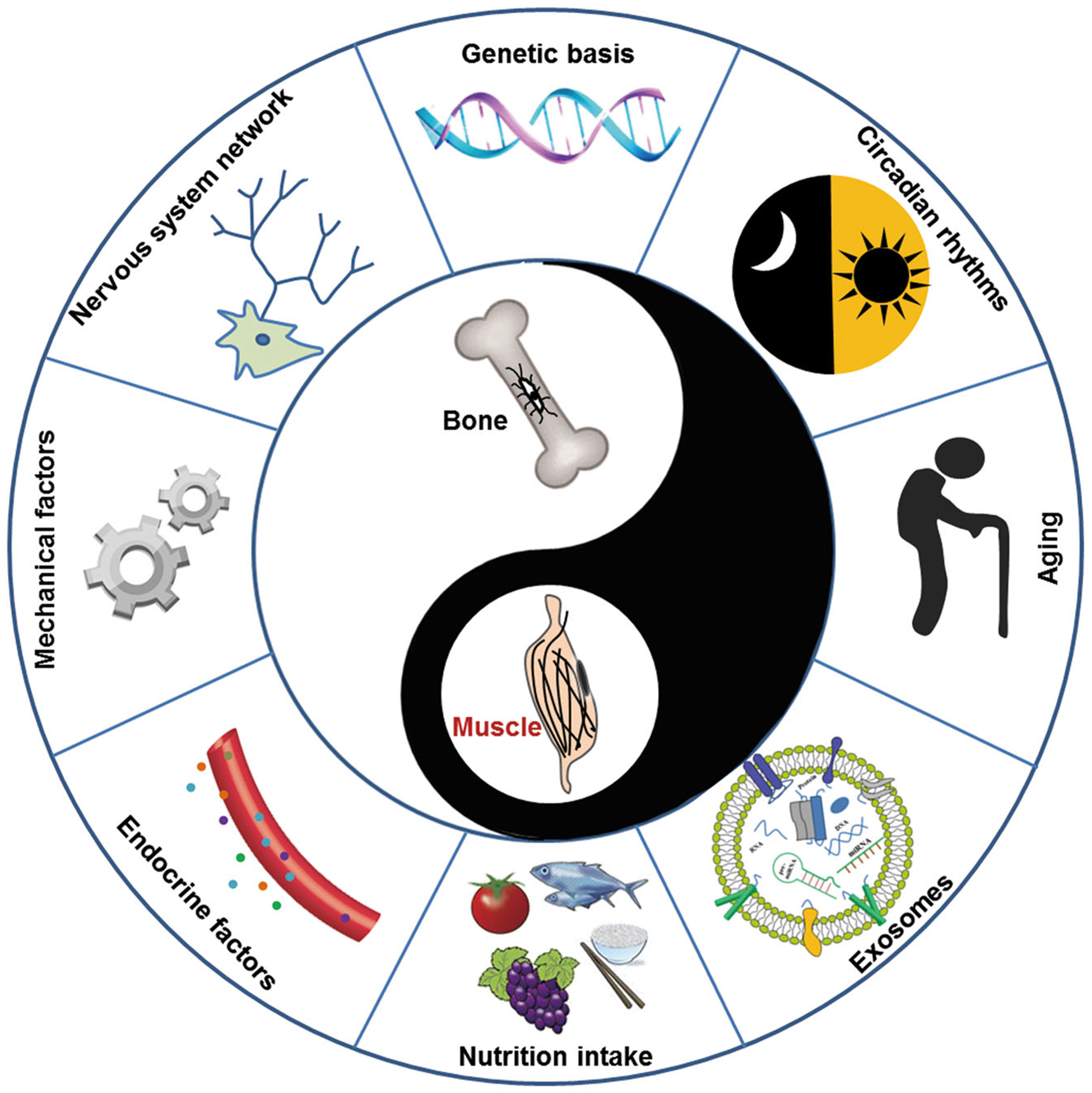
The nature of muscle-bone crosstalk has been historically considered to be only mechanical, where the muscle is the load applier while bone provides the attachment sites. However, this dogma has been challenged with the emerging notion that bone and muscle act as secretory endocrine organs affect the function of each other. Biochemical crosstalk occurs through myokines such as myostatin, irisin, interleukin (IL)-6, IL-7, IL-15, insulin-like growth factor-1, fibroblast growth factor (FGF)-2, and β-aminoisobutyric acid and through bone-derived factors including FGF23, prostaglandin E2 , transforming growth factor β, osteocalcin, and sclerostin. Aside from the biochemical and mechanical interaction, additional factors including aging, circadian rhythm, nervous system network, nutrition intake, and exosomes also have effects on bone-muscle crosstalk. Here, we summarize the current research progress in the area, which may be conductive to identify potential novel therapies for the osteoporosis and sarcopenia, especially when they develop in parallel.
Keywords: bone; crosstalk; muscle; myokines; osteoporosis; sarcopenia.
© 2019 Wiley Periodicals, Inc.
Conflict of interest statement
CONFLICT OF INTERESTS
The authors declare that there are no conflict of interests.
Figures
References
Publication types
MeSH terms
Substances
Grants and funding
LinkOut - more resources
Full Text Sources
Medical
