


Whole genome sequencing Mycobacterium tuberculosis directly from sputum identifies more genetic diversity than sequencing from culture
- PMID: 31109296
- PMCID: PMC6528373
- DOI: 10.1186/s12864-019-5782-2
Whole genome sequencing Mycobacterium tuberculosis directly from sputum identifies more genetic diversity than sequencing from culture
Erratum in
-
Correction to: Whole genome sequencing Mycobacterium tuberculosis directly from sputum identifies more genetic diversity than sequencing from culture.BMC Genomics. 2019 May 29;20(1):433. doi: 10.1186/s12864-019-5841-8. BMC Genomics. 2019. PMID: 31142261 Free PMC article.
Abstract
Background: Repeated culture reduces within-sample Mycobacterium tuberculosis genetic diversity due to selection of clones suited to growth in culture and/or random loss of lineages, but it is not known to what extent omitting the culture step altogether alters genetic diversity. We compared M. tuberculosis whole genome sequences generated from 33 paired clinical samples using two methods. In one method DNA was extracted directly from sputum then enriched with custom-designed SureSelect (Agilent) oligonucleotide baits and in the other it was extracted from mycobacterial growth indicator tube (MGIT) culture.
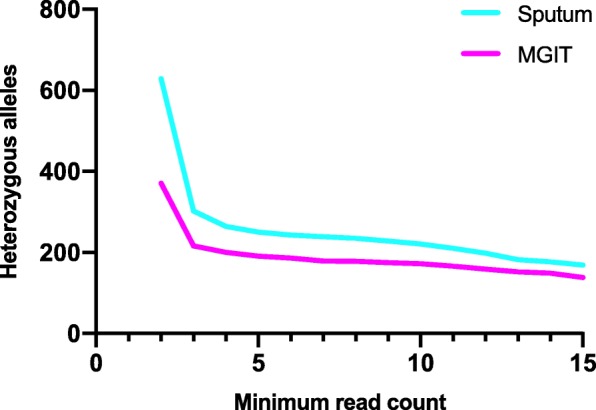
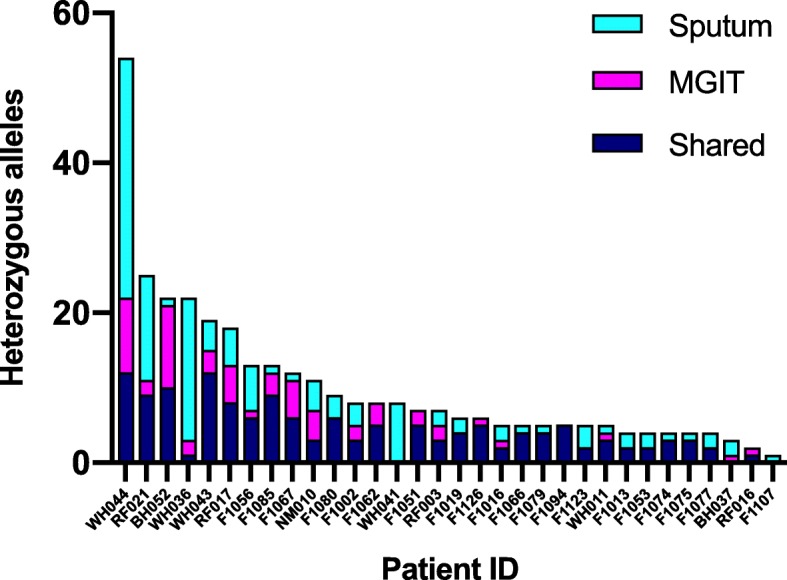
Results: DNA directly sequenced from sputum showed significantly more within-sample diversity than that from MGIT culture (median 5.0 vs 4.5 heterozygous alleles per sample, p = 0.04). Resistance associated variants present as HAs occurred in four patients, and in two cases may provide a genotypic explanation for phenotypic resistance.
Conclusions: Culture-free M. tuberculosis whole genome sequencing detects more within-sample diversity than a leading culture-based method and may allow detection of mycobacteria that are not actively replicating.
Keywords: Drug-resistant tuberculosis; Heteroresistance; Mycobacterium tuberculosis; Sputum; Whole genome sequencing; Within-patient diversity.
Conflict of interest statement
The authors declare that they have no competing interests.
Figures
References
-
- Global Tuberculosis Report 2018. Geneva: World Health Organization; 2018 2018.
-
- Murray CJ, Ortblad KF, Guinovart C, Lim SS, Wolock TM, Roberts DA, et al. Global, regional, and national incidence and mortality for HIV, tuberculosis, and malaria during 1990-2013: a systematic analysis for the global burden of disease study 2013. Lancet. 2014;384(9947):1005–1070. doi: 10.1016/S0140-6736(14)60844-8. - DOI - PMC - PubMed
-
- Dheda K, Gumbo T, Maartens G, Dooley KE, McNerney R, Murray M, et al. The epidemiology, pathogenesis, transmission, diagnosis, and management of multidrug-resistant, extensively drug-resistant, and incurable tuberculosis. Lancet Respir Med. 2017;5(4):291–360. - PubMed
-
- WHO treatment guidelines for drug-resistant tuberculosis. World Health Organization; 2016. - PubMed
MeSH terms
Grants and funding
LinkOut - more resources
Full Text Sources
