


Effectiveness of surgical fixation for lateral compression type one (LC-1) fragility fractures of the pelvis: a systematic review
- PMID: 31110085
- PMCID: PMC6530388
- DOI: 10.1136/bmjopen-2018-024737
Effectiveness of surgical fixation for lateral compression type one (LC-1) fragility fractures of the pelvis: a systematic review
Abstract
Objectives: To undertake a systematic review of the evidence base for the effectiveness of surgical fixation of lateral compression (LC-1) fragility fractures of the pelvis compared with non-surgical approaches.
Searches: MEDLINE, EMBASE, the Cochrane Central Register of Controlled Trials and two international trials registers were searched up to January 2017 (MEDLINE to February 2019) for studies of internal or external fixation of fragility fractures of the pelvis.
Participants: Patients with lateral compression pelvic fractures, sustained as the result of a low-energy mechanism, defined as a fall from standing height or less.
Interventions: Surgery using either external or internal fixation devices. Conservative non-surgical treatment was the defined comparator.
Outcome measures: Outcomes of interest were patient mobility and function, pain, quality of life, fracture union, mortality, hospital length of stay and complications (additional operative procedures, number and type of adverse events and serious adverse events).
Quality assessment and synthesis: The Joanna Briggs Institute Checklist for Case Series was used to assess the included studies. Results were presented in a narrative synthesis.
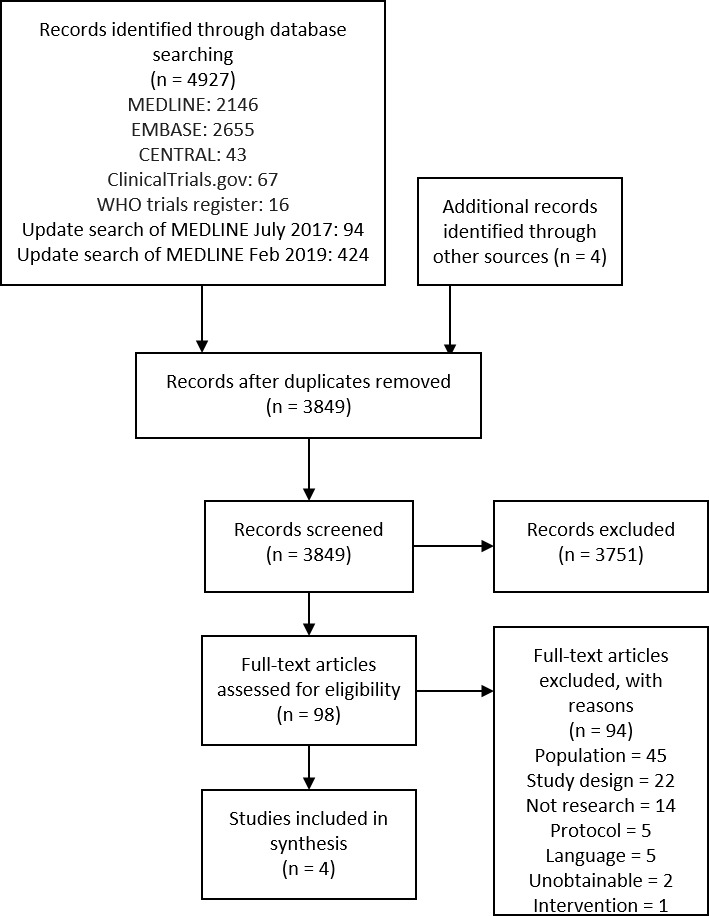
Results: Of 3421 records identified, four retrospective case series met the inclusion criteria. Fixation types were not consistent between studies or within studies and most patients had more than one type of pelvic fixation. Where reported, mobility and function improved post-surgery, and a reduction in pain was recorded. Length of hospital stay ranged from 4 days to 54 days for surgical fixation of any type. Reported complications and adverse outcomes included: infections, implant loosening, pneumonia and thrombosis. Use of analgesia was not reported.
Conclusions: There is insufficient evidence to support guidance on the most effective treatment for patients who fail to mobilise after sustaining an LC-1 fragility fracture.
Trial registration number: CRD42017055872.
Keywords: external fixation; fragility fracture; internal fixation; pelvis; surgery; systematic review.
© Author(s) (or their employer(s)) 2019. Re-use permitted under CC BY-NC. No commercial re-use. See rights and permissions. Published by BMJ.
Conflict of interest statement
Competing interests: HMAI, MN, EC, MH, IK, CH declare they have no conflicts of interest. Since starting this review, AB, JK, PB and CM have received funding for a trial of surgical fixation compared to non-surgical treatment in a LC1 FFP population.
References
-
- National Osteoporosis Society. Effective secondary prevention of fragility fractures: clinical standards for fracture liaison services. Bath: National Osteoporosis Society, 2015.
Publication types
MeSH terms
Grants and funding
LinkOut - more resources
Full Text Sources
Medical
Miscellaneous
