


Effects of different ascorbic acid doses on the mortality of critically ill patients: a meta-analysis
- PMID: 31111241
- PMCID: PMC6527630
- DOI: 10.1186/s13613-019-0532-9
Effects of different ascorbic acid doses on the mortality of critically ill patients: a meta-analysis
Abstract
Background: Low levels of ascorbic acid (AA) have been detected in critically ill patients in which AA supplementation leads to promising outcomes. However, the ability of AA to reduce mortality in critically ill patients remains controversial. In this study, we have performed a meta-analysis to evaluate the effects of AA dose on the mortality of critically ill adults.
Methods: Electronic databases were searched for trials in which AA had been intravenously administered to critically ill patients regardless of the dose or the co-administration of antioxidant agents. The predefined primary outcome included all-cause mortality at final follow-up.
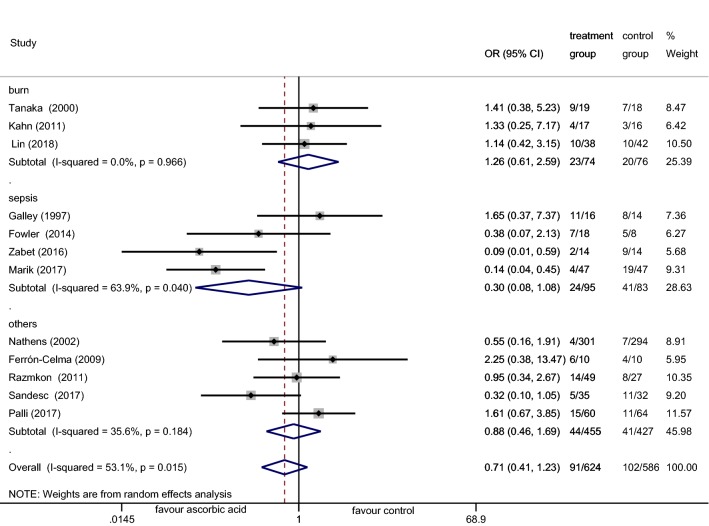
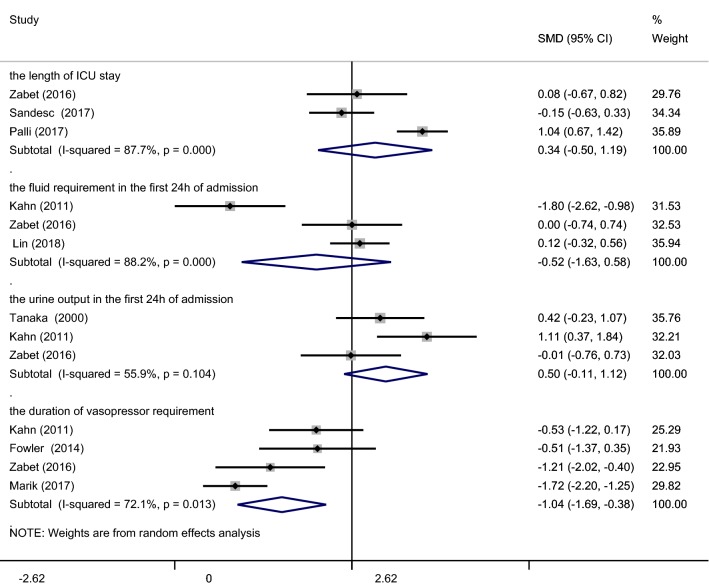
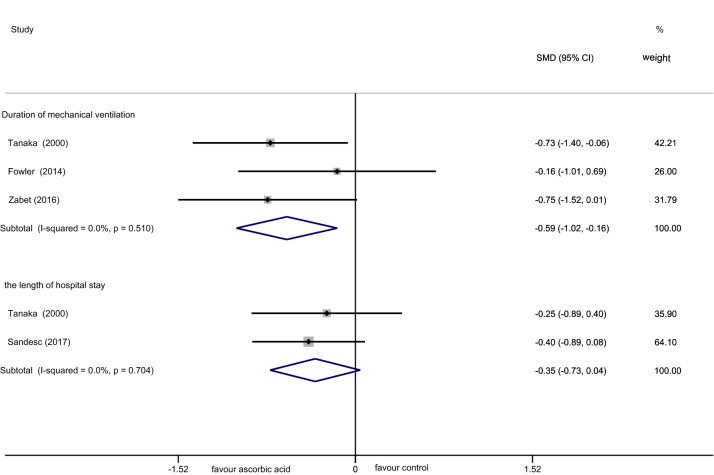
Results: The included trials enrolled a total of 1210 patients. Intravenous (IV) AA doses of 3-10 g/d reduced the mortality of critically ill patients (OR 0.25; 95% CI (0.14-0.46); p < 0.001; I2 = 0.0%), while low (< 3 g/d) and high AA doses (≥ 10 g/d) had no effect (OR 1.44; 95% CI (0.79-2.61); p = 0.234; I2 = 0.0% versus OR 1.12; 95% CI (0.62-2.03); p = 0.700; I2 = 0.0%). AA was associated with a decreased duration of vasopressor support and mechanical ventilation, but did not influence fluid requirement or urine output during the first 24 h of admission. The number of patients suffering from acute kidney injury and the length of intensive care unit or hospital stays were also unaffected by the AA.
Conclusion: Intravenous AA reduces the duration of vasopressor support and mechanical ventilation; 3-10 g AA results in lower overall mortality rates. Given the limitations of the primary literature, further studies are required to fully clarify the effectiveness of AA during the management of critically ill patients.
Keywords: Ascorbic acid; Burn; Critical illness; Sepsis; Septic shock.
Conflict of interest statement
The authors have no competing of interest nor any financial interest in any product mentioned in this paper.
Figures

References
-
- Goode HF, Webster NR. Free radicals and antioxidants in sepsis. Crit Care Med. 1993;21(11):1770. - PubMed
-
- Wu F, Schuster DP, Tyml K, et al. Ascorbate inhibits NADPH oxidase subunit p47phox expression in microvascular endothelial cells. Free Radic Biol Med. 2007;42(1):124–131. - PubMed
-
- Long CL, Maull KI, Krishnan RS, et al. Ascorbic acid dynamics in the seriously ill and injured. J Surg Res. 2003;109(2):144–148. - PubMed
-
- Schorah CJ, Downing C, Piripitsi A, et al. Total vitamin C, ascorbic acid, and dehydroascorbic acid concentrations in plasma of critically ill patients. Am J Clin Nutr. 1996;63(5):760–765. - PubMed
Publication types
LinkOut - more resources
Full Text Sources
Medical
