


Epidemiology and clinical impact of viral, atypical, and fungal respiratory pathogens in symptomatic immunocompromised patients: a two-center study using a multi-parameter customized respiratory Taqman® array card
- PMID: 31111372
- PMCID: PMC7087587
- DOI: 10.1007/s10096-019-03579-y
Epidemiology and clinical impact of viral, atypical, and fungal respiratory pathogens in symptomatic immunocompromised patients: a two-center study using a multi-parameter customized respiratory Taqman® array card
Abstract
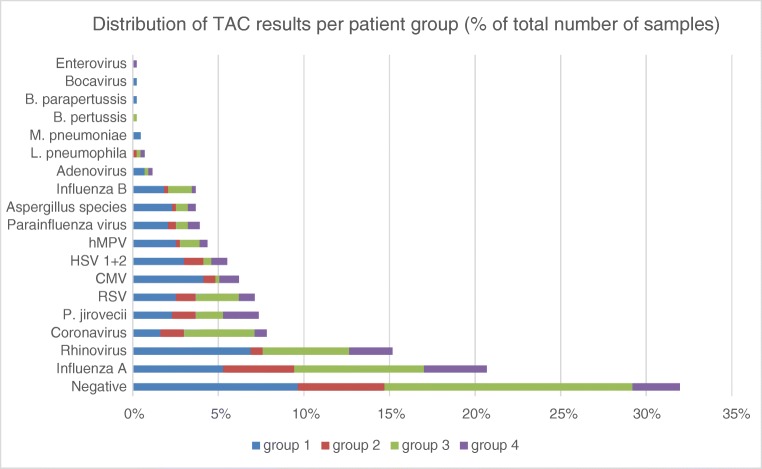
The prevalence of respiratory viruses in immunocompromised adult patients and the association with clinical outcomes is still underexplored. Our goal was to assess the epidemiology and the potential clinical impact of respiratory viral infections in a high-risk patient population. Two large hospitals performed a respiratory Taqman array card (TAC), targeting 24 viruses, 8 bacteria, and 2 fungi simultaneously, on 435 samples from 397 symptomatic immunocompromised patients. Clinical details were collected retrospectively using a structured case report form. An overall positivity rate of 68% was found (51% mono- and 17% co-infections). Pathogen distribution was as follows: influenza A (20.7%), rhinoviruses (15.2%), coronaviruses (7.8%), Pneumocystis jirovecii (7.4%), RSV (7.1%), and CMV (6.0%) were the most frequently encountered, followed by HSV (5.5%), hMPV (4.4%), parainfluenza viruses (3.9%), influenza B (3.7%), and Aspergillus species (3.7%). Other pathogens were not detected or detected only in ≤ 1% of samples. Hospital and ICU admission rates were 84% and 11%, respectively. The presence of a pathogen was strongly associated with higher need for supplemental oxygen (p = 0.001), but it had no impact on ICU admission, mechanical ventilation requirement, antibacterial therapy, or mortality. In conclusion, our study described the epidemiology of respiratory pathogens in a large group of symptomatic immunocompromised patients and provides evidence of a relationship between pathogen detection and the need for supplemental oxygen. This association was still found after the exclusion of the results positive for influenza viruses, suggesting that non-influenza viruses contribute to severe respiratory illness in patients with compromised immunity.
Keywords: Clinical impact; Epidemiology; Immunocompromised host; Respiratory tract infections.
Conflict of interest statement
The authors declare that they have no conflict of interest.
Figures
References
-
- Magnusson J, Westin J, Andersson LM, Brittain-Long R, Riise GC. The impact of viral respiratory tract infections on long-term morbidity and mortality following lung transplantation: a retrospective cohort study using a multiplex PCR panel. Transplantation. 2013;95(2):383–388. doi: 10.1097/TP.0b013e318271d7f0. - DOI - PubMed
-
- Steensels D, Reynders M, Descheemaeker P, Curran MD, Jacobs F, Denis O, Delforge M-L, Montesinos I. Clinical evaluation of a multi-parameter customized respiratory TaqMan® array card compared to conventional methods in immunocompromised patients. J Clin Virol. 2015;72:36–41. doi: 10.1016/j.jcv.2015.08.022. - DOI - PMC - PubMed
Publication types
MeSH terms
LinkOut - more resources
Full Text Sources
Medical
