


Chronic Spinal Cord Injury Reduces Gastrin-Releasing Peptide in the Spinal Ejaculation Generator in Male Rats
- PMID: 31111794
- PMCID: PMC6892439
- DOI: 10.1089/neu.2019.6509
Chronic Spinal Cord Injury Reduces Gastrin-Releasing Peptide in the Spinal Ejaculation Generator in Male Rats
Abstract
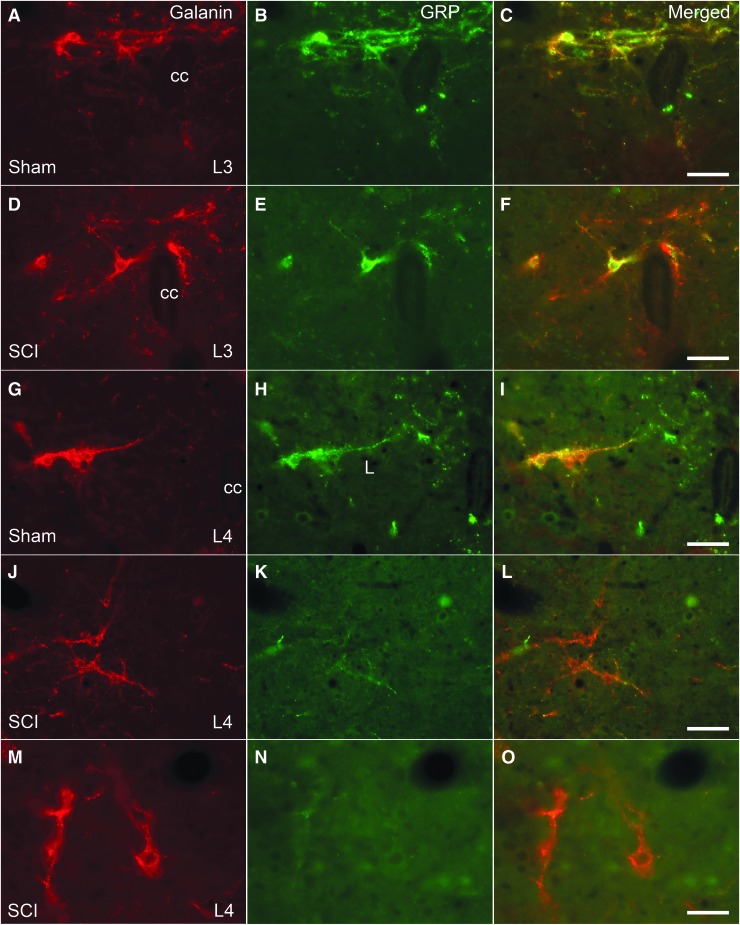
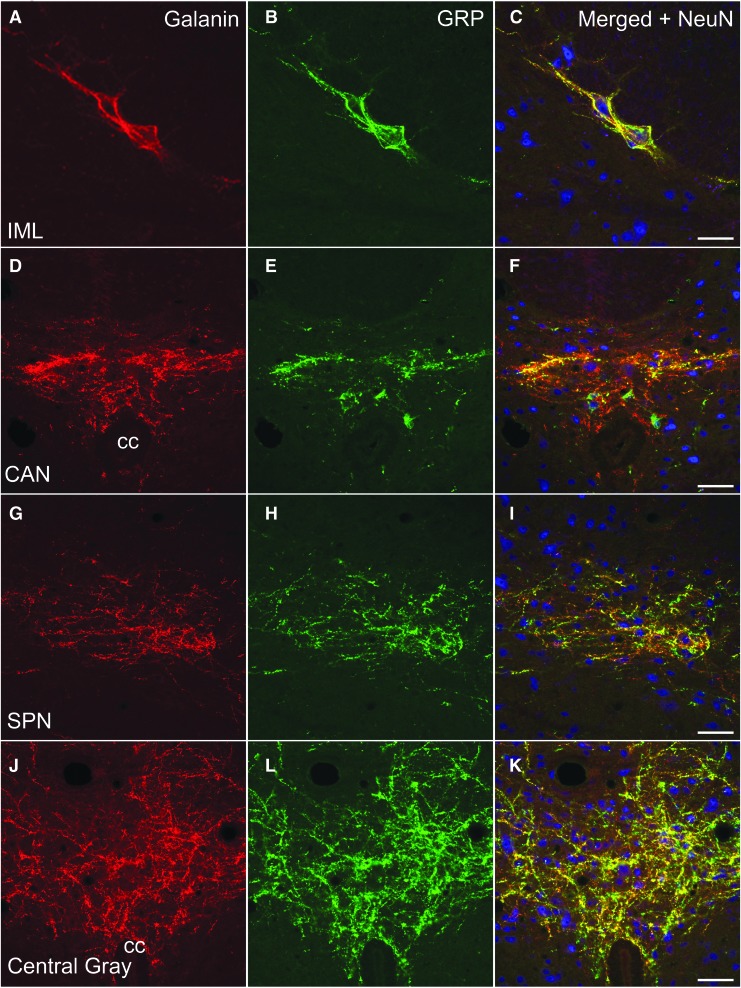
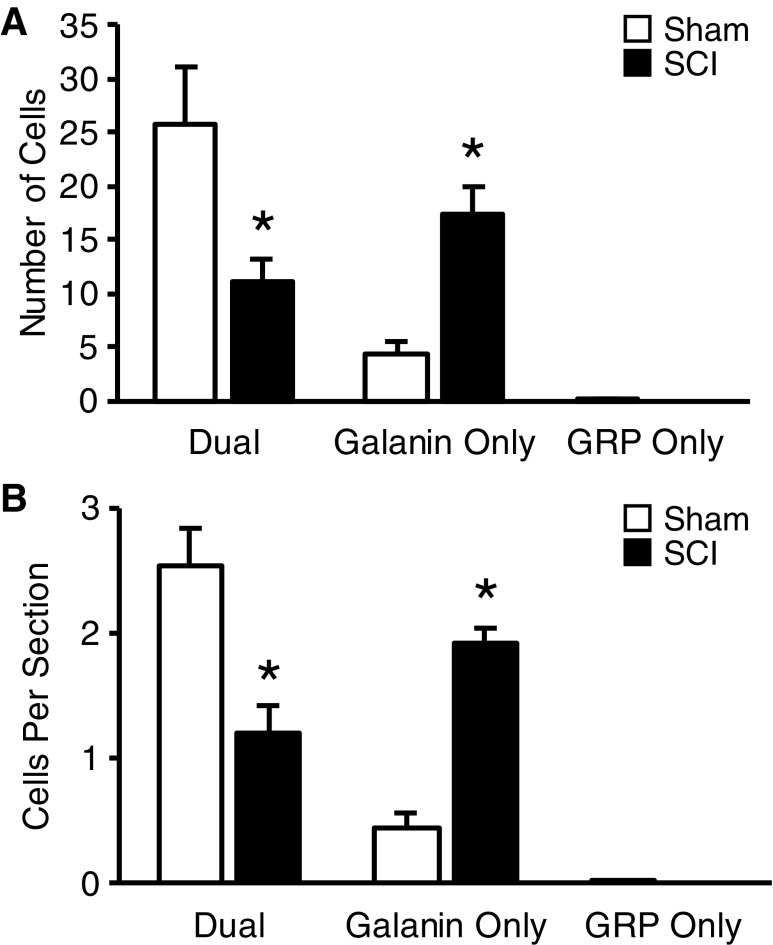
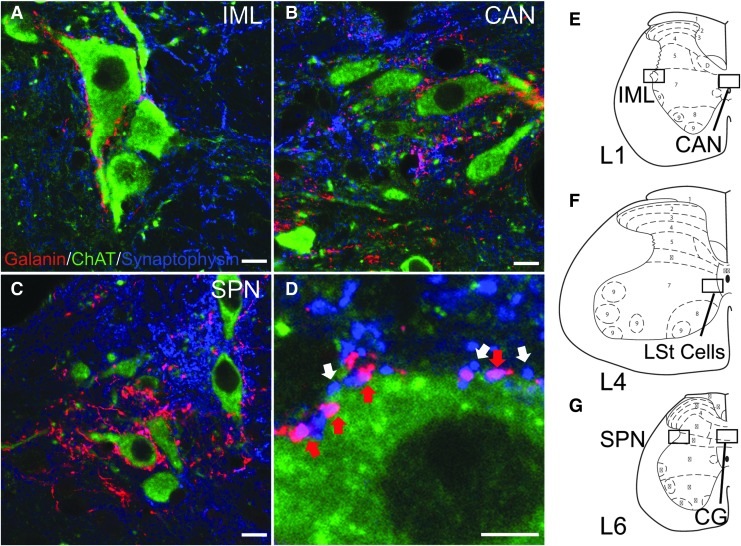
Spinal cord injury (SCI) causes sexual dysfunction, including anejaculation in men. Likewise, chronic mid-thoracic contusion injury impairs ejaculatory reflexes in male rats. Ejaculation is controlled by a spinal ejaculation generator (SEG) comprised of a population of lumbar spinothalamic (LSt) neurons. LSt neurons co-express four neuropeptides, including gastrin-releasing peptide (GRP) and galanin and control ejaculation via release of these peptides in lumbar and sacral autonomic and motor nuclei. Here, we tested the hypothesis that contusion injury causes a disruption of the neuropeptides that are expressed in LSt cell bodies and axon terminals, thereby causing ejaculatory dysfunction. Male Sprague Dawley rats received contusion or sham surgery at spinal levels T6-7. Five to six weeks later, animals were perfused and spinal cords were immunoprocessed for galanin and GRP. Results showed that numbers of cells immunoreactive for galanin were not altered by SCI, suggesting that LSt cells are not ablated by SCI. In contrast, GRP immunoreactivity was decreased in LSt cells following SCI, evidenced by fewer GRP and galanin/GRP dual labeled cells. However, SCI did not affect efferent connections of LSt, cells as axon terminals containing galanin or GRP in contact with autonomic cells were not reduced following SCI. Finally, no changes in testosterone plasma levels or androgen receptor expression were noted after SCI. In conclusion, chronic contusion injury decreased immunoreactivity for GRP in LSt cell soma, but did not affect LSt neurons per se or LSt connections within the SEG. Since GRP is essential for triggering ejaculation, such loss may contribute to ejaculatory dysfunction following SCI.
Keywords: anejaculation; contusion injury; lumbar spinal cord; sexual dysfunction; urogenital.
Conflict of interest statement
No competing financial interests exist.
Figures
References
-
- Anderson K.D., Borisoff J.F., Johnson R.D., Stiens S.A., and Elliott S.L. (2007). The impact of spinal cord injury on sexual function: concerns of the general population. Spinal Cord 45, 328–337 - PubMed
-
- Anderson K.D., Borisoff J.F., Johnson R.D., Stiens S.A., and Elliott S.L. (2007). Long-term effects of spinal cord injury on sexual function in men: implications for neuroplasticity. Spinal Cord 45, 338–348 - PubMed
-
- Brackett N.L., Ferrell S.M., Aballa T.C., Amador M.J., Padron O.F., Sonksen J., and Lynne C.M. (1998). An analysis of 653 trials of penile vibratory stimulation in men with spinal cord injury. J. Urol. 159, 1931–1934 - PubMed
-
- Brackett N.L., Ibrahim E., Iremashvili V., Aballa T.C., and Lynne C.M. (2010). Treatment for ejaculatory dysfunction in men with spinal cord injury: an 18-year single center experience. J. Urol. 183, 2304–2308 - PubMed
-
- Brackett N.L., Lynne C.M., Ibrahim E., Ohl D.A., and Sonksen J. (2010). Treatment of infertility in men with spinal cord injury. Nat. Rev. Urol. 7, 162–172 - PubMed
Publication types
MeSH terms
Substances
Grants and funding
LinkOut - more resources
Full Text Sources
Medical
