


The role of the endothelial glycocalyx in advanced age and cardiovascular disease
- PMID: 31112922
- PMCID: PMC7055464
- DOI: 10.1016/j.coph.2019.04.011
The role of the endothelial glycocalyx in advanced age and cardiovascular disease
Abstract
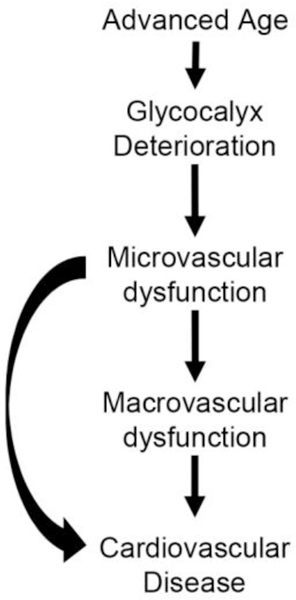
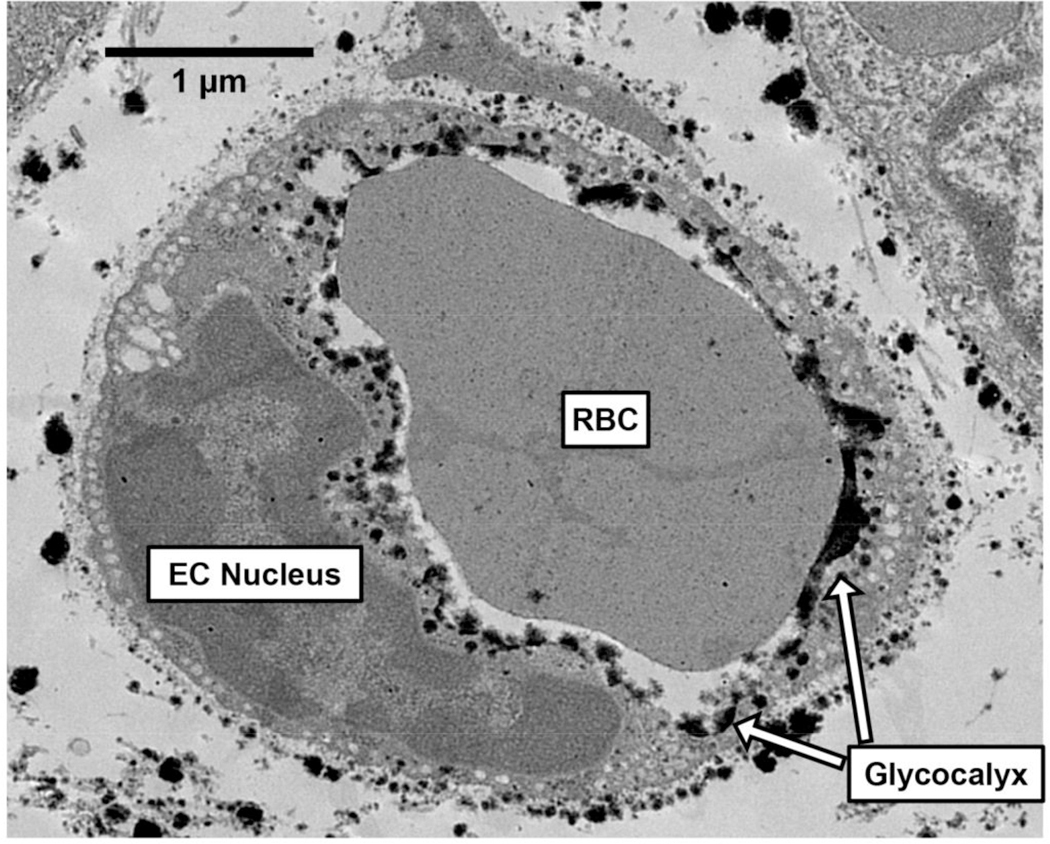
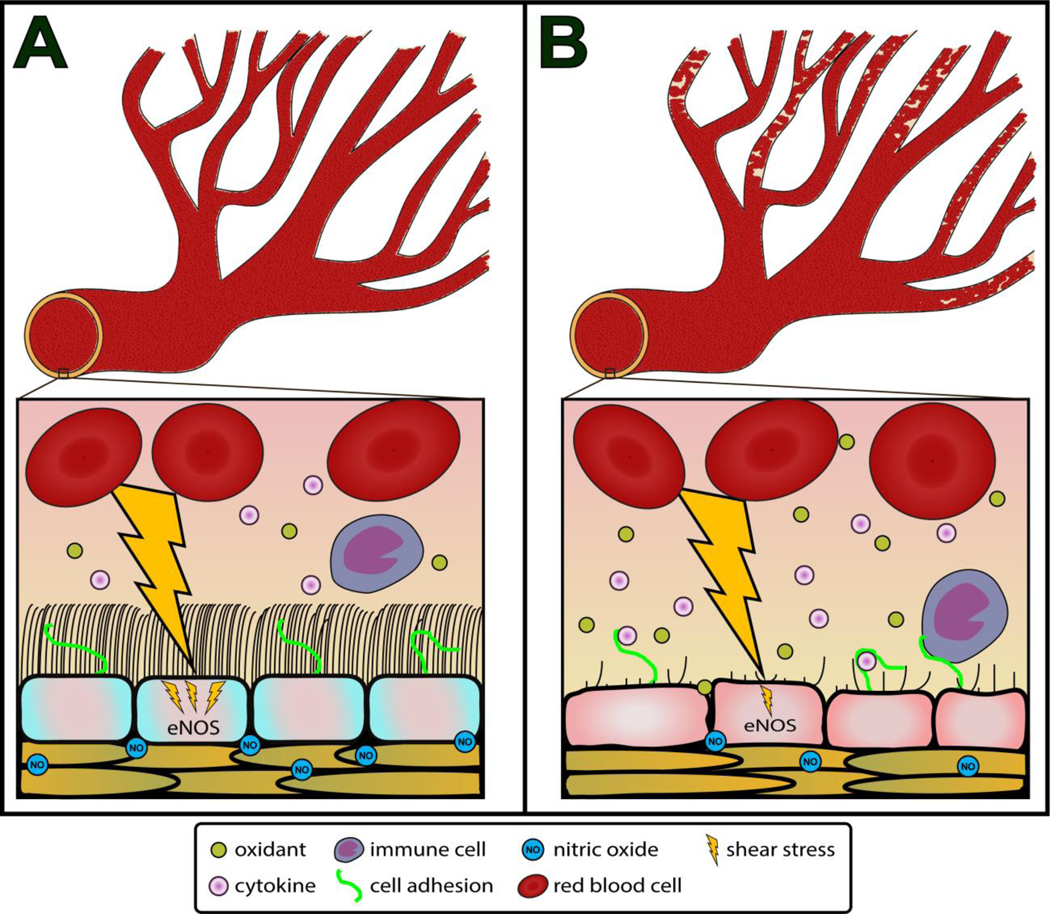
The endothelial glycocalyx is a gel-like structure that is bound to the luminal surface of the vascular endothelium. At the interface between flowing blood and endothelial cells, the glycocalyx has several functions that are critical for the maintenance of a healthy vasculature, particularly in regard to the vascular endothelium. Within the vasculature, the glycocalyx modulates vascular resistance to maintain blood flow homogeneity in the microcirculation, mechanotransduces fluid shear stress to the endothelium, and buffers endothelial cells from plasma oxidants, cytokines, and circulating immune cells. In advanced age and cardiovascular disease (CVD), the glycocalyx is deteriorated. Moreover, glycocalyx deterioration may precede traditional measurements of age-related vascular dysfunction, such as impaired endothelium-dependent dilation and large artery stiffness, suggesting that a deteriorated glycocalyx could initiate age-related CVD pathology.
Copyright © 2019 Elsevier Ltd. All rights reserved.
Figures
References
-
- Pries AR, Secomb TW: Microvascular blood viscosity in vivo and the endothelial surface layer. Am J Physiol Heart Circ Physiol 2005, 289:H2657–2664. - PubMed
-
-
McClatchey PM, Schafer M, Hunter KS, Reusch JE: The endothelial glycocalyx promotes homogenous blood flow distribution within the microvasculature. Am J Physiol Heart Circ Physiol 2016, 311:H168–176.
**This study found that the endothelial glycocalyx promotes a more homogenous blood flow throughout the microcirculation by passively modulating flow resistance at microvessel bifurcations.
-
-
- Pries AR, Secomb TW, Gaehtgens P: The endothelial surface layer. Pflugers Arch 2000, 440:653–666. - PubMed
-
- Yao Y, Rabodzey A, Dewey CF: Glycocalyx modulates the motility and proliferative response of vascular endothelium to fluid shear stress. Am J Physiol Heart Circ Physiol 2007, 293:H1023-H1030. - PubMed
Publication types
MeSH terms
Grants and funding
LinkOut - more resources
Full Text Sources
Medical
