


GC-Recomposition-Olfactometry (GC-R) and multivariate study of three terpenoid compounds in the aroma profile of Angostura bitters
- PMID: 31113980
- PMCID: PMC6529406
- DOI: 10.1038/s41598-019-44064-y
GC-Recomposition-Olfactometry (GC-R) and multivariate study of three terpenoid compounds in the aroma profile of Angostura bitters
Abstract
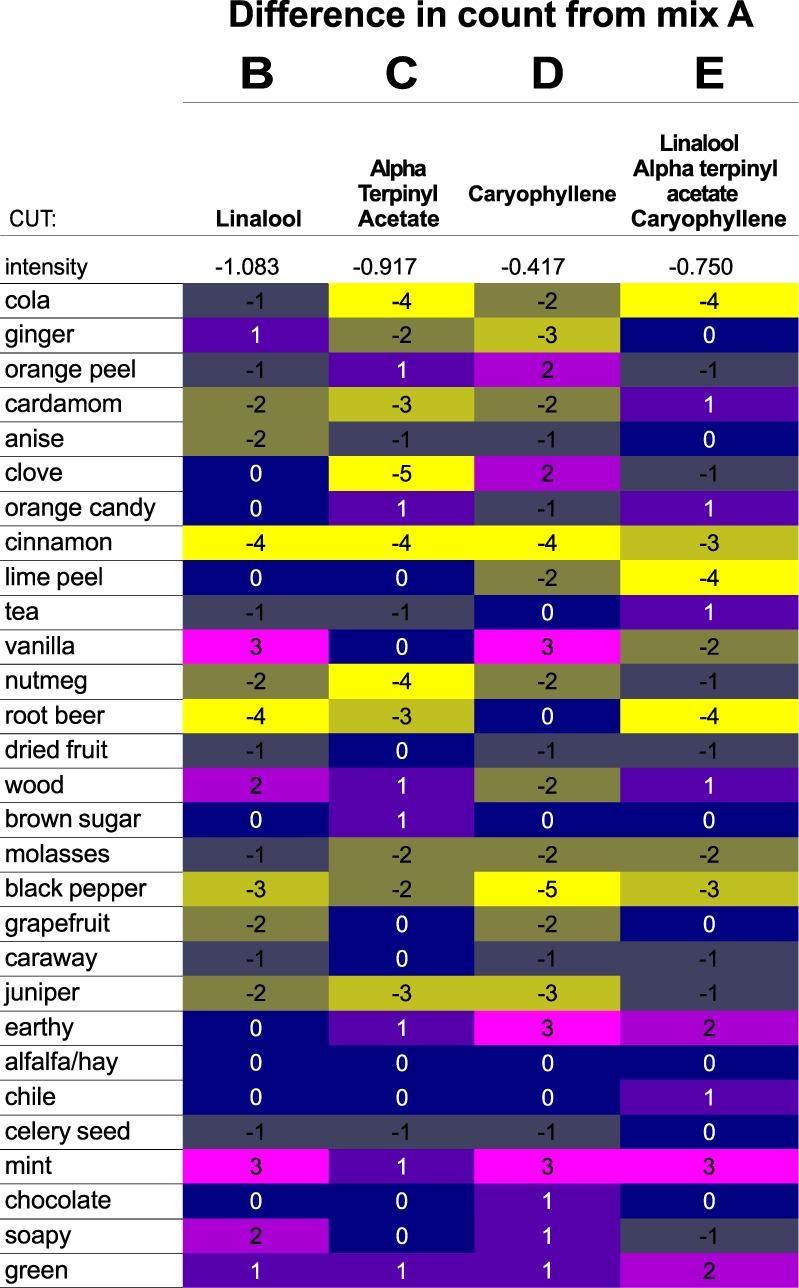
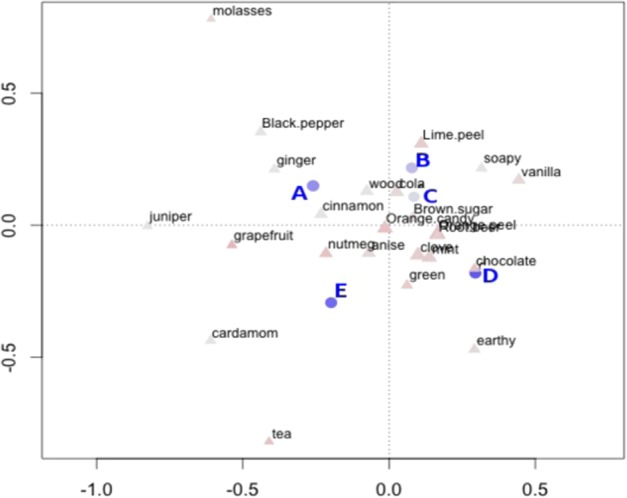
Foods and beverage aroma results from multicomponent mixtures of volatile compounds present in the food that interact with olfactory receptors and produce a perceptual response in the brain. However, the perceptual interactions that occur when complex odor mixtures are combined are not well understood. Here we used Gas chromatography-Recomposition-Olfactometry (GC-R) to better understand the role that individual compounds have on the perceived sensory aroma of bitters. Bitters are the concentrated alcoholic extract of flavorful plant materials with a wide range of complex sensory and chemical aroma profiles that have not been extensively studied. Previously, we demonstrated that Angostura bitters are characterized by complex aroma attributes described as cola, ginger, orange peel, and black pepper and that the volatile composition of Angostura bitters is predominantly composed of terpenoids. Using GC-R to create in-instrument mixtures of the Angostura headspace extracts, the sensory attributes of Angostura extracts with linalool, α-terpinyl-acetate and caryophyllene omitted were evaluated. The omission experiments demonstrated direct and indirect effects of the individual compounds on the aroma attributes of Angostura bitters, through masking, additive, and synergistic interactions. Caryophyllene in particular, which was present in the headspace extracts at concentration only slightly above sensory threshold levels, had a large and unexpected impact on the sensory properties of the mixtures and may be most responsible for the aromas associated with the whole sample. The GC-R and statistical approaches used here provided valuable tools to reveal relationships among individual compounds and aroma attributes of foods that have not been currently theorized using existing analytical approaches.
Conflict of interest statement
The authors declare no competing interests.
Figures

References
-
- Wilson, D. A. & Stevenson, R. J. Learning to Smell: Olfactory Perception from Neurobiology to Behavior (JHU Press, 2006).
-
- Magnasco, M. O., Keller, A. & Vosshall, L. B. On the dimensionality of olfactory space. bioRxiv pre-print, 10.1101/022103 (2015).
Publication types
MeSH terms
Substances
LinkOut - more resources
Full Text Sources
Miscellaneous
