


Esophageal cancer genetics in South Africa
- PMID: 31114287
- PMCID: PMC6485038
- DOI: 10.2147/CEG.S182000
Esophageal cancer genetics in South Africa
Abstract
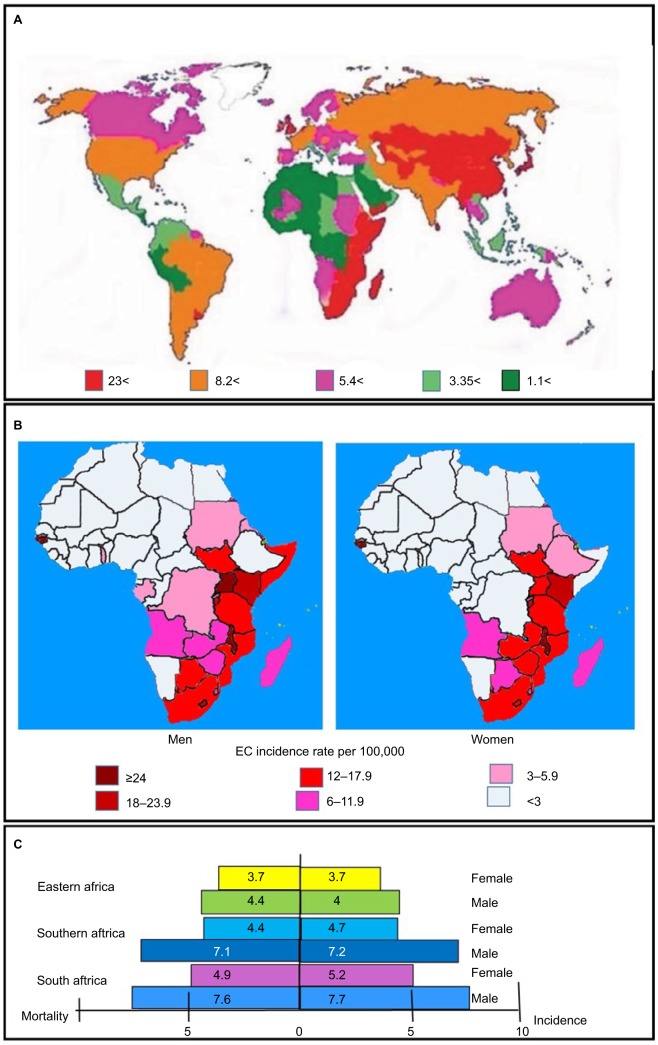
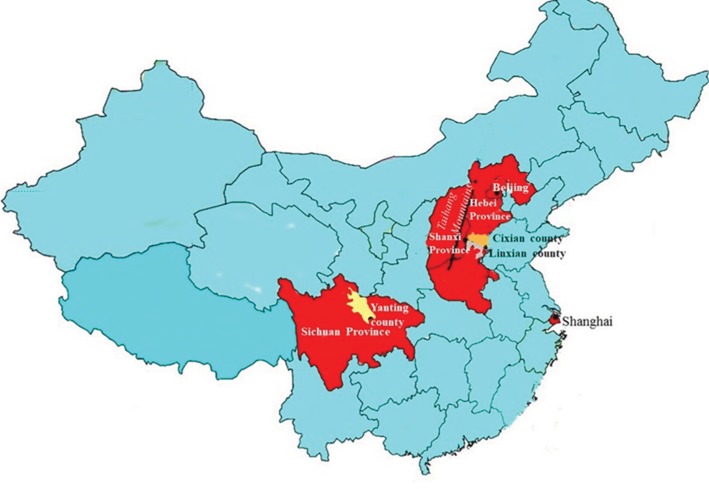
Esophageal cancer (EC) is an extremely aggressive cancer with one of the highest mortality rates. The cancer is generally only diagnosed at the later stages and has a poor 5-year survival rate due to the limited treatment options. China and South Africa are two countries with a very high prevalence rate of EC. EC rates in South Africa have been on the increase, and esophageal squamous cell carcinoma is the predominant subtype and a primary cause of cancer-related deaths in the black and male mixed ancestry populations in South Africa. The incidence of EC is highest in the Eastern Cape Province, especially in the rural areas such as the Transkei, where the consumption of foods contaminated with Fusarium verticillioides is thought to play a major contributing role to the incidence of EC. China is responsible for almost half of all new cases of EC globally. In China, the prevalence of EC varies greatly. However, the two main areas of high prevalence are the southern Taihang Mountain area (Linxian, Henan Province) and the north Jiangsu area. In both countries, environmental toxins play a major role in increasing the chance that an individual will develop EC. These associative factors include tobacco use, alcohol consumption, nutritional deficiencies and exposure to environmental toxins. However, genetic polymorphisms also play a role in predisposing individuals to EC. These include single-nucleotide polymorphisms that can be found in both protein-coding genes and in non-coding sequences such as miRNAs. The aim of this review is to summarize the contribution of genetic polymorphisms to EC in South Africa and to compare and contrast this to the genetic polymorphisms observed in EC in the most comprehensively studied population group, the Chinese.
Keywords: China; ESCC; South Africa; adenocarcinoma; alcohol; diet; esophageal squamous cell carcinoma; smoking.
Conflict of interest statement
Disclosure The authors report no conflicts of interest in this work.
Figures
References
-
- Strickland NJ, Matsha T, Erasmus RT, Zaahl MG. Molecular analysis of ceruloplasmin in a South African cohort presenting with oesophageal cancer. Int J Cancer. 2012;131(3):623–632. - PubMed
-
- World Health Organization . Global Status Report on Alcohol and Health. Geneva: World Health Organization; 2014. [Accessed May 12, 2017]. Available from: https://www.who.int/substance_abuse/publications/global_alcohol_report/en/
-
- Parkin DM, Bray F, Ferlay J, Pisani P. Global cancer statistics, 2002. CA Cancer J Clin. 2005;55(2):74–108. - PubMed
-
- Ferlay J, Shin HR, Bray F, Forman D, Mathers C, Parkin DM. Estimates of worldwide burden of cancer in 2008: GLOBOCAN 2008. Int J Cancer. 2010;127(12):2893–2917. - PubMed
-
- Pennathur A, Gibson MK, Jobe BA, Luketich JD. Oesophageal carcinoma. Lancet. 2013;381(9864):400–412. - PubMed
Publication types
LinkOut - more resources
Full Text Sources
