


High CD3D/CD4 ratio predicts better survival in muscle-invasive bladder cancer
- PMID: 31114346
- PMCID: PMC6489580
- DOI: 10.2147/CMAR.S191105
High CD3D/CD4 ratio predicts better survival in muscle-invasive bladder cancer
Abstract
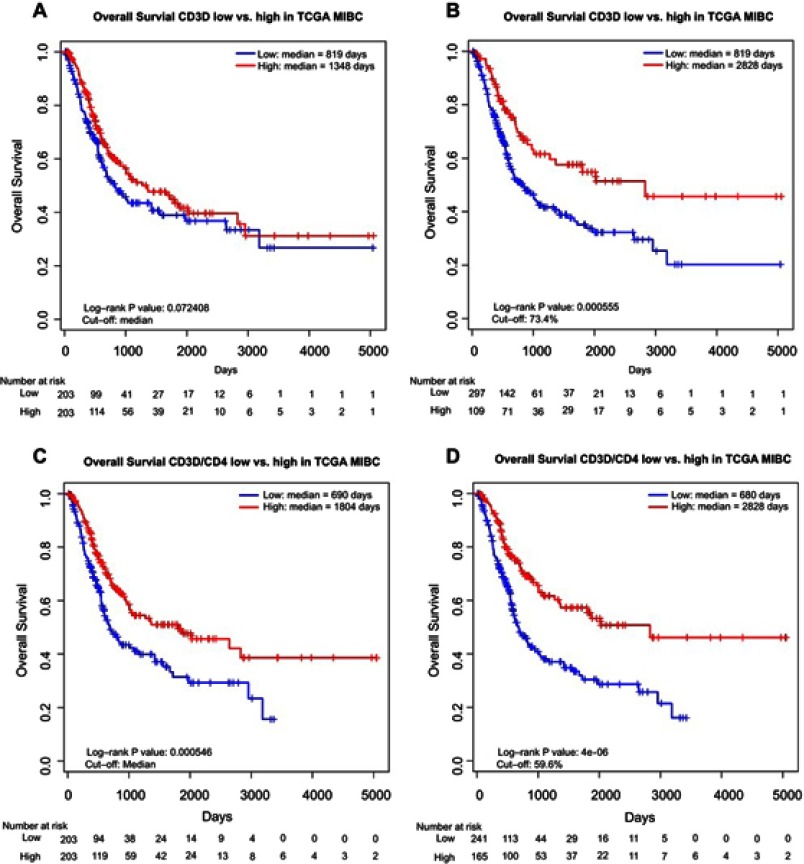
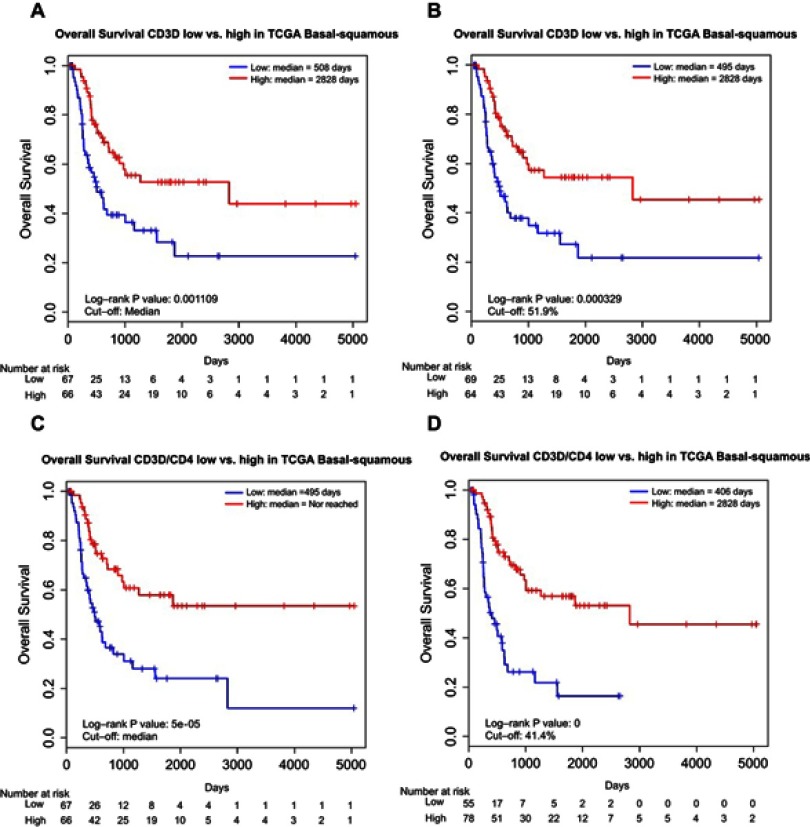
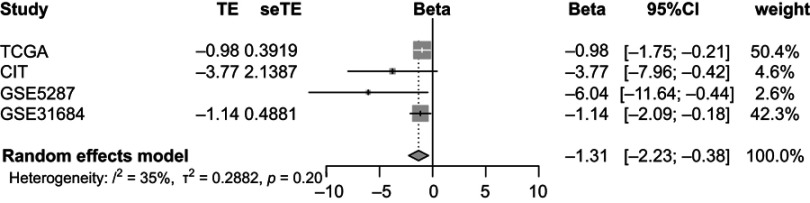
Background: Bladder cancer is a common malignancy that affects the human urinary tract. Muscle-invasive bladder cancer (MIBC) is aggressive and has poor prognosis. Previous studies have reported that the tumor-infiltrating lymphocytes (TILs) were associated with MIBC outcome; however, inconsistency remains and mRNA level TIL markers' prognostic significance in MIBC is unclear. Materials and methods: In the present study, we reanalyzed data from four public datasets (the Cancer Genome Atlas for investigation; and CIT, GSE5287, and GSE31684 for validation) to examine the prognostic significance of CD3D, CD4, CD8A, CD3D/CD4 and CD3D/CD8A in MIBC. Results: We found that the CD3D/CD4 ratio was a stable independent prognostic factor in MIBC (beta = -0.87, P = 0.025); high CD3D/CD4 ratio predicted better survival in MIBC, and the power of this association was much stronger in basal-squamous tumors (beta = -4.73, P = 2.67E-06). We also noted that the CD4 expression was significantly higher than CD3D (P < 0.05), indicating the presence of CD3-CD4+ cells which could be immune-suppressing. Conclusion: The CD3D/CD4 ratio can be viewed as a prognostic marker and a rough measurement for the interaction between immune-effecting CD3+ TILs and immune-suppressing CD3-CD4+ cells in MIBC, and this interaction may play a particularly important role in anti-cancer immunity in basal-squamous tumors as it has a very strong association with survival in this subtype, and may be used to select potential responders to immunotherapy.
Keywords: CD3; CD4; CD8; basal-squamous subtype; bladder cancer; immunotherapy; muscle-invasive; prognosis; tumor-infiltrating lymphocytes.
Conflict of interest statement
The authors report no conflicts of interest in this work.
Figures

References
LinkOut - more resources
Full Text Sources
Research Materials
