


Key Role of Inflammation in Myeloproliferative Neoplasms: Instigator of Disease Initiation, Progression. and Symptoms
- PMID: 31119475
- PMCID: PMC7746200
- DOI: 10.1007/s11899-019-00508-w
Key Role of Inflammation in Myeloproliferative Neoplasms: Instigator of Disease Initiation, Progression. and Symptoms
Abstract
Purpose of review: Chronic inflammation is a characteristic feature of myeloproliferative neoplasm (MPN) and impacts many aspects of the disease including initiation, progression, and symptomatology.
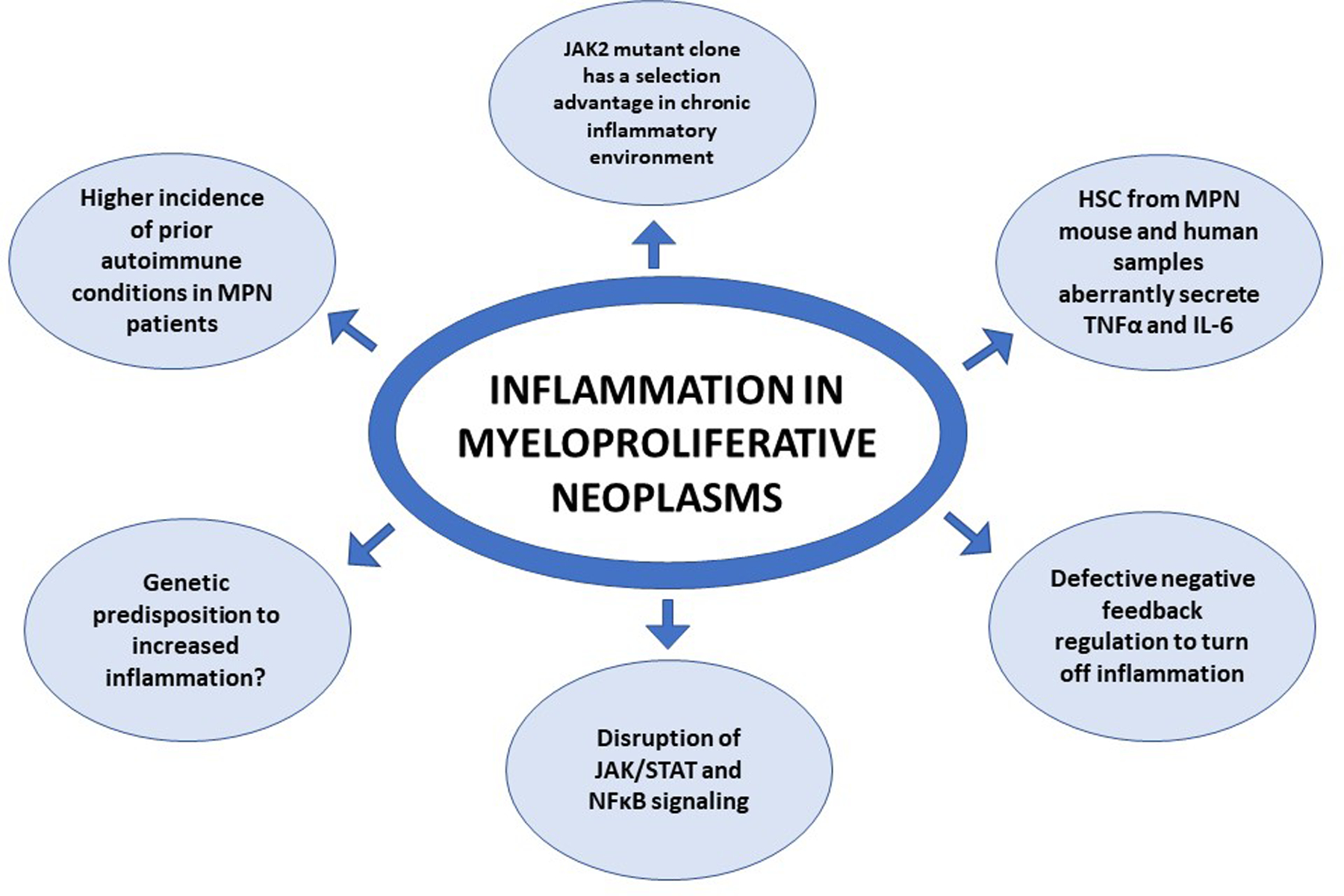
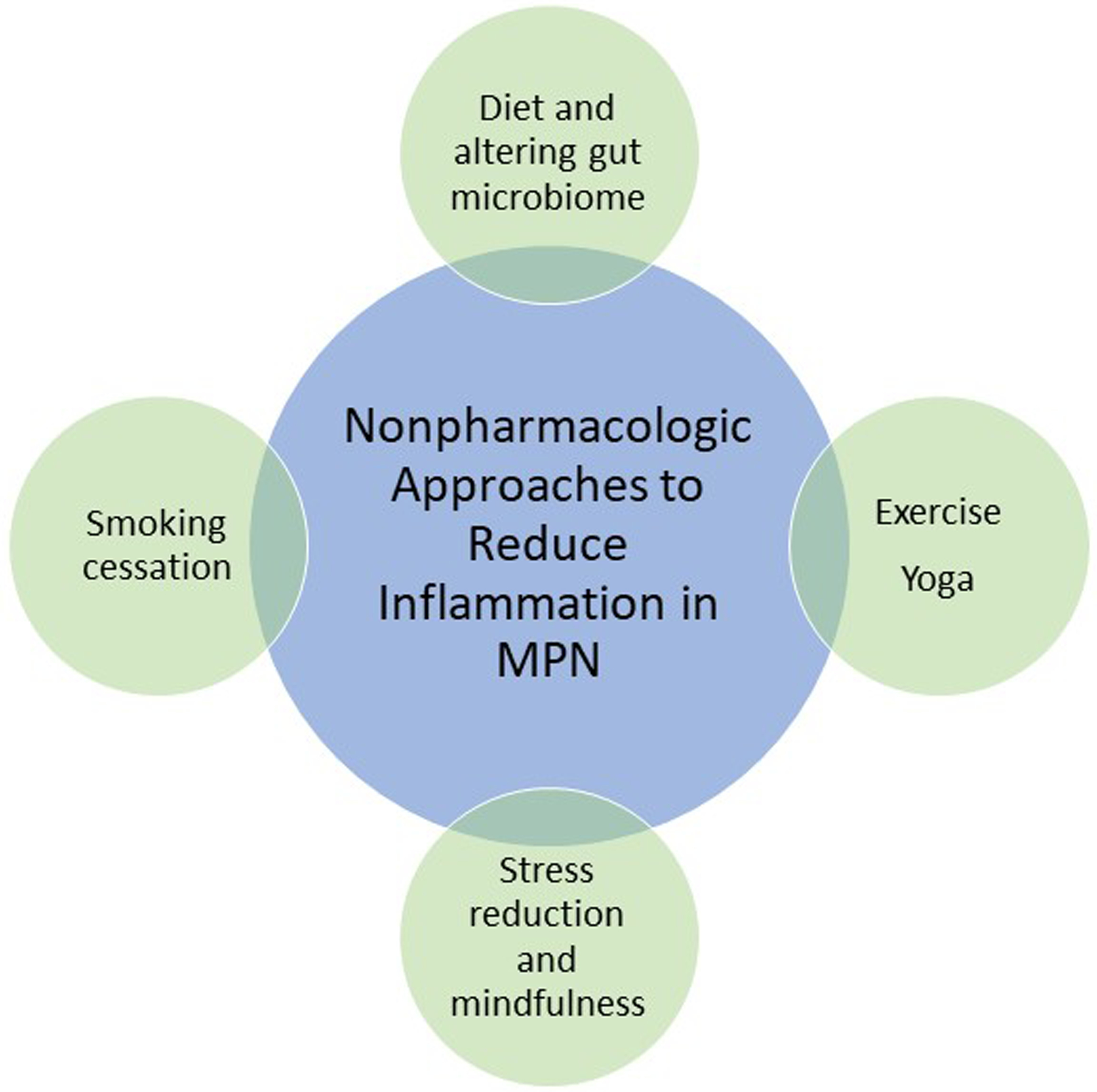
Recent findings: The chronic inflammatory state of MPN results from disruption of immune signaling pathways leading to overproduction of inflammatory cytokines by both the neoplastic clones and bystander immune cells. This chronic inflammation may allow for the neoplastic clone to gain a selective advantage. The symptomatic burden felt by MPN patients may be a result of the chronic inflammation associated with MPN, as several cytokines have been linked with different symptoms. Pharmacologic as well as nonpharmacologic treatments of the inflammatory component of this disease may lead to decreased symptomatic burden, prevention of disease progression, and improvement in overall disease trajectory. Inflammation plays a key role in the pathogenesis of MPN and represents an important therapeutic target.
Keywords: Diet in cancer; Fatigue; Inflammation in cancer; Inflammatory cytokines; JAK/STAT signaling; Lifestyle in cancer; Myeloproliferative neoplasm; Nonpharmacological approaches; Quality of life.
Figures
References
-
- Tefferi A, Vaidya R, Caramazza D, Finke C, Lasho T, Pardanani A. Circulating interleukin (IL)-8, IL-2R, IL-12, and IL-15 levels are independently prognostic in primary myelofibrosis: a comprehensive cytokine profiling study. Journal of clinical oncology : official journal of the American Society of Clinical Oncology. 2011;29(10):1356–63. - PubMed
-
- Hasselbalch HC. Chronic inflammation as a promotor of mutagenesis in essential thrombocythemia, polycythemia vera and myelofibrosis. A human inflammation model for cancer development? Leukemia research. 2012. - PubMed
-
- Fleischman AG, Aichberger KJ, Luty SB, Bumm TG, Petersen CL, Doratotaj S, et al. TNFalpha facilitates clonal expansion of JAK2V617F positive cells in myeloproliferative neoplasms. Blood. 2011;118(24):6392–8. - PMC - PubMed
-
This study demonstrates that JAK2 mutant hematopoietic progenitors are resistant to inflammation and that this may allow for the emergence of JAK2 mutant cells in the context of chronic inflammation.
Publication types
MeSH terms
Grants and funding
LinkOut - more resources
Full Text Sources
Research Materials
