


Early recognition and treatment of neuropsychiatric symptoms to improve quality of life in early Alzheimer's disease: protocol of the BEAT-IT study
- PMID: 31122267
- PMCID: PMC6533693
- DOI: 10.1186/s13195-019-0503-2
Early recognition and treatment of neuropsychiatric symptoms to improve quality of life in early Alzheimer's disease: protocol of the BEAT-IT study
Abstract
Background: Neuropsychiatric symptoms (NPS) are very common in patients with mild cognitive impairment (MCI) and Alzheimer's disease (AD) dementia and are associated with various disadvantageous clinical outcomes including a negative impact on quality of life, caregiver burden, and accelerated disease progression. Despite growing evidence of the efficacy of (non)pharmacological interventions to reduce these symptoms, NPS remain underrecognized and undertreated in memory clinics. The BEhavioural symptoms in Alzheimer's disease Towards early Identification and Treatment (BEAT-IT) study is developed to (1) investigate the neurobiological etiology of NPS in AD and (2) study the effectiveness of the Describe, Investigate, Create, Evaluate (DICE) approach to structure and standardize the current care of NPS in AD. By means of the DICE method, we aim to improve the quality of life of AD patients with NPS and their caregivers who visit the memory clinic. This paper describes the protocol for the intervention study that incorporates the latter aim.
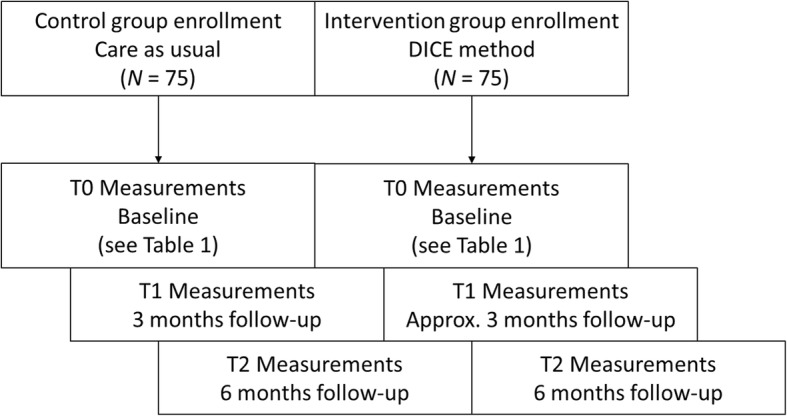
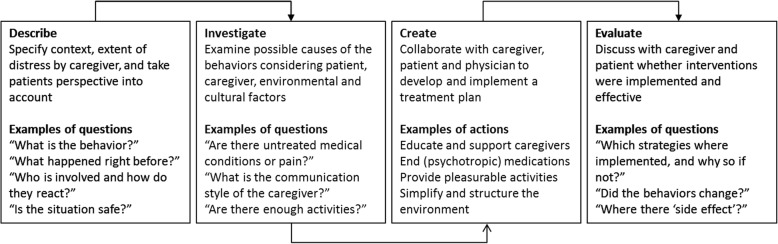
Methods: We aim to enroll a total of 150 community-dwelling patients with MCI or AD and their caregivers in two waves. First, we will recruit a control group who will receive care as usual. Next, the second wave of participants will undergo the DICE method. This approach consists of the following steps: (1) describe the context in which NPS occur, (2) investigate the possible causes, (3) create and implement a treatment plan, and (4) evaluate whether these interventions are effective. Primary outcomes are the quality of life of patients and their caregivers. Secondary outcomes include NPS change, caregiver burden, caregivers' confidence managing NPS, psychotropic medication use, the experiences of patients and caregivers who underwent the DICE method, and the cost-effectiveness of the intervention.
Conclusions: This paper describes the protocol of an intervention study that is part of the BEAT-IT study and aims to improve current recognition and treatment of NPS in AD by structuring and standardizing the detection and treatment of NPS in AD using the DICE approach.
Trial registration: The trial was registered on the Netherlands Trial Registry ( NTR7459 ); registered 6 September 2018.
Keywords: Alzheimer’s disease; Behavior; Caregivers; Cost-benefit analysis; Dementia; Neuropsychiatry; Prospective studies; Quality of life.
Conflict of interest statement
The authors declare that they have no competing interests.
Figures
References
Publication types
MeSH terms
Grants and funding
LinkOut - more resources
Full Text Sources
Medical
