


The skin microbiome of vertebrates
- PMID: 31122279
- PMCID: PMC6533770
- DOI: 10.1186/s40168-019-0694-6
The skin microbiome of vertebrates
Abstract
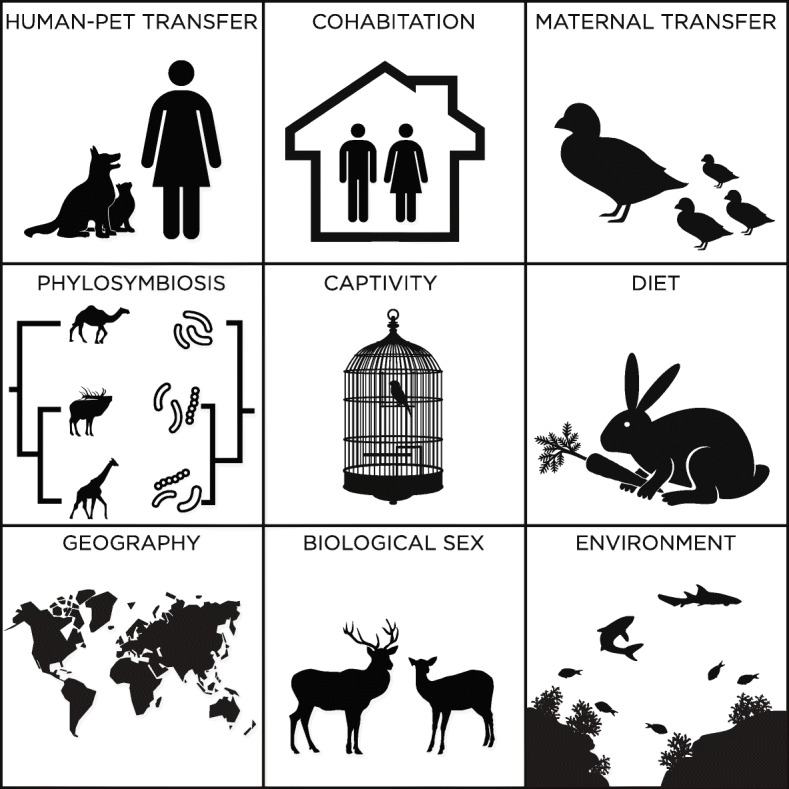
The skin constitutes the primary physical barrier between vertebrates and their external environment. Characterization of skin microorganisms is essential for understanding how a host evolves in association with its microbial symbionts, modeling immune system development, diagnosing illnesses, and exploring the origins of potential zoonoses that affect humans. Although many studies have characterized the human microbiome with culture-independent techniques, far less is known about the skin microbiome of other mammals, amphibians, birds, fish, and reptiles. The aim of this review is to summarize studies that have leveraged high-throughput sequencing to better understand the skin microorganisms that associate with members of classes within the subphylum Vertebrata. Specifically, links will be explored between the skin microbiome and vertebrate characteristics, including geographic location, biological sex, animal interactions, diet, captivity, maternal transfer, and disease. Recent literature on parallel patterns between host evolutionary history and their skin microbial communities, or phylosymbiosis, will also be analyzed. These factors must be considered when designing future microbiome studies to ensure that the conclusions drawn from basic research translate into useful applications, such as probiotics and successful conservation strategies for endangered and threatened animals.
Keywords: 16S rRNA gene; Amphibians; Birds; Fish; High-throughput sequencing; Mammals; Reptiles; Skin microbiome; Vertebrates.
Conflict of interest statement
The authors declare that they have no competing interests.
Figures
References
-
- Mańkowska-Wierzbicka D, Karczewski J, Dobrowolska-Zachwieja A, Adamski Z. The microbiome and dermatological diseases. Postep Hig Med Dosw. 2015;69:978–985. - PubMed
Publication types
MeSH terms
LinkOut - more resources
Full Text Sources
