


Information needs, communication and usage of social media by cancer patients and their relatives
- PMID: 31123824
- PMCID: PMC11810420
- DOI: 10.1007/s00432-019-02929-9
Information needs, communication and usage of social media by cancer patients and their relatives
Abstract
Purpose: The aim of this study was to evaluate cancer patients' need for information, their communication and usage of social media.
Methods: We developed a standardized questionnaire comprising sections on information needs, communication behavior and usage of social media with respect to cancer and combined this with a validated instrument on eHealth literacy for patients. This questionnaire was provided online and with the help of bloggers and leaders of social media groups, distributed in their networks.
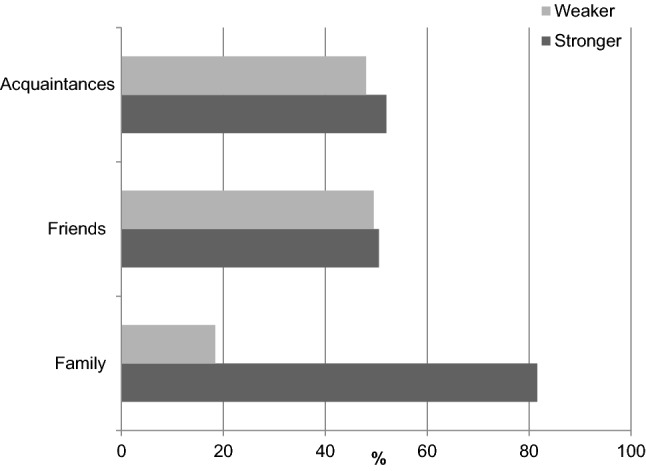
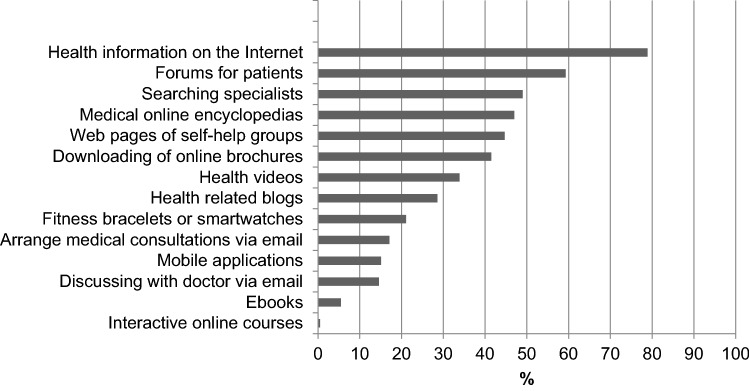
Results: The Internet was the most important information source (n = 308; 77.4%). Yet, most of the participants wanted to get information from their doctor (n = 342; 85.9%). With respect to trust in a source of information, oncologists were named most often (n = 285; 71.6%). On the one hand, many participants got in contact with others, especially peers, via social media (n = 319; 80.3%) with a growing bond to their family members on the other hand (n = 324; 81.6%). The cancer diagnosis was an impulse for starting with active participation in social media for some participants (n = 196; 49.2%).
Conclusions: With social media gaining importance as source of information for patients, improving the quality of information in these networks is an important task in health care systems.
Keywords: Cancer; Patient information; Social media; eHealth literacy; eHealth service.
Conflict of interest statement
The authors declare that they have no conflict of interest.
Figures

References
-
- Abramson K, Keefe B, Chou WY (2015) Communicating about cancer through Facebook: a qualitative analysis of a breast cancer awareness page. J Health Commun 20:237–243 - PubMed
-
- Egestad H (2013) The significance of fellow patients for head and neck cancer patients in the radiation treatment period. Eur J Oncol Nurs 17:618–624 - PubMed
-
- Finney Rutten LJ et al (2016) Cancer-related information seeking among cancer survivors: trends over a decade (2003–2013). J Cancer Educ 31:348–357 - PubMed
MeSH terms
LinkOut - more resources
Full Text Sources
Medical
