


Macrophages in Systemic Sclerosis: Novel Insights and Therapeutic Implications
- PMID: 31123840
- PMCID: PMC7444604
- DOI: 10.1007/s11926-019-0831-z
Macrophages in Systemic Sclerosis: Novel Insights and Therapeutic Implications
Abstract
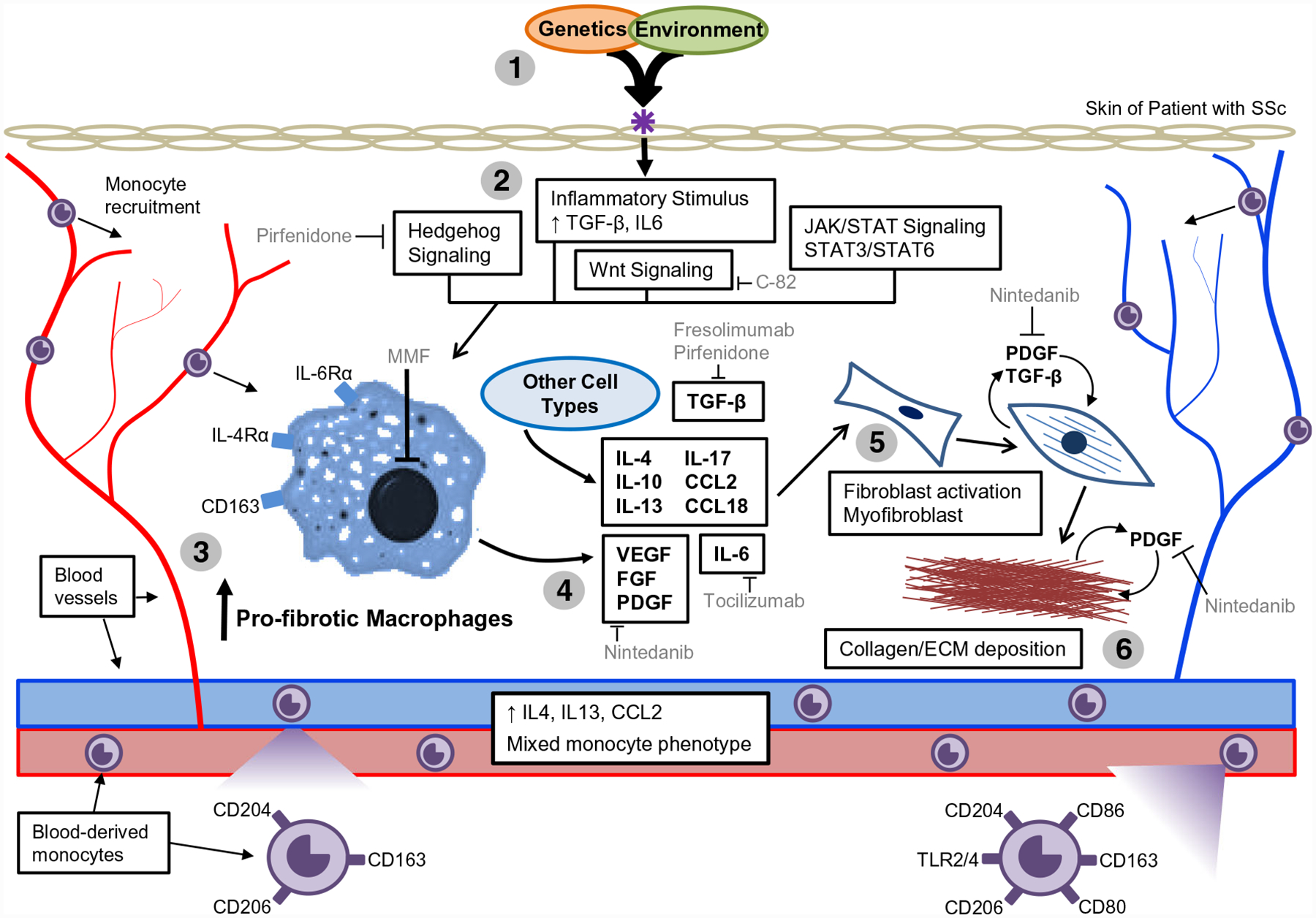
Purpose of review: Macrophages play key roles in tissue homeostasis and immune surveillance, mobilizing immune activation in response to microbial invasion and promoting wound healing to repair damaged tissue. However, failure to resolve macrophage activation can lead to chronic inflammation and fibrosis, and ultimately to pathology. Activated macrophages have been implicated in the pathogenesis of systemic sclerosis (SSc), although the triggers that induce immune activation in SSc and the signaling pathways that underlie aberrant macrophage activation remain unknown.
Recent findings: Macrophages are implicated in fibrotic activation in SSc. Targeted therapeutic interventions directed against SSc macrophages may ameliorate inflammation and fibrosis. While current studies have begun to elucidate the role of macrophages in disease initiation and progression, further work is needed to address macrophage subset heterogeneity within and among SSc end-target tissues to determine the disparate functions mediated by these subsets and to identify additional targets for therapeutic intervention.
Keywords: Fibrosis; Innate immunity; Macrophages; Monocytes; Scleroderma; Systemic sclerosis.
Conflict of interest statement
Dr. Pioli reports grants from Celdara Medical, LLC, grants from NIH/NIAMS, and grants from Scleroderma Foundation, during the conduct of the study; in addition, Dr. Pioli has a patent Cellular Based Therapies Targeting Disease-Associated Molecular Mediators of Fibrotic, Inflammatory, and Autoimmune Conditions pending.
Figures
References
-
- Taroni JN, Greene CS, Martyanov V, Wood TA, Christmann RB, Farber HW, et al. A novel multi-network approach reveals tissue-specific cellular modulators of fibrosis in systemic sclerosis. Genome Med. 2017;9:27. - PMC - PubMed
-
A meta-analysis combining multiple gene expression datasets from different SSc-affected tissues, identifying a cluster of genes associated with alternatively activated macrophages.
-
- Hinchcliff M, Toledo DM, Taroni JN, Wood TA, Franks JM, Ball MS, et al. Mycophenolate mofetil treatment of systemic sclerosis reduces myeloid cell numbers and attenuates the inflammatory gene signature in skin. J Invest Dermatol. 2018;138:1301–10 - PMC - PubMed
-
This study focuses on the molecular effects of long-term MMF therapy on the macrophages in SSc patient skin.
Publication types
MeSH terms
Grants and funding
LinkOut - more resources
Full Text Sources
Medical
Research Materials
