


Longitudinal circulating placental growth factor (PlGF) and soluble FMS-like tyrosine kinase-1 (sFlt-1) concentrations during pregnancy in Asian women: a prospective cohort study
- PMID: 31129598
- PMCID: PMC6537992
- DOI: 10.1136/bmjopen-2018-028321
Longitudinal circulating placental growth factor (PlGF) and soluble FMS-like tyrosine kinase-1 (sFlt-1) concentrations during pregnancy in Asian women: a prospective cohort study
Abstract
Objectives: To analyse the placental growth factor (PlGF) and soluble FMS-like tyrosine kinase-1 (sFlt-1) trends in the normal pregnant Asian population in Singapore.
Design: A prospective study was conducted.
Setting: The largest tertiary hospital in Singapore.
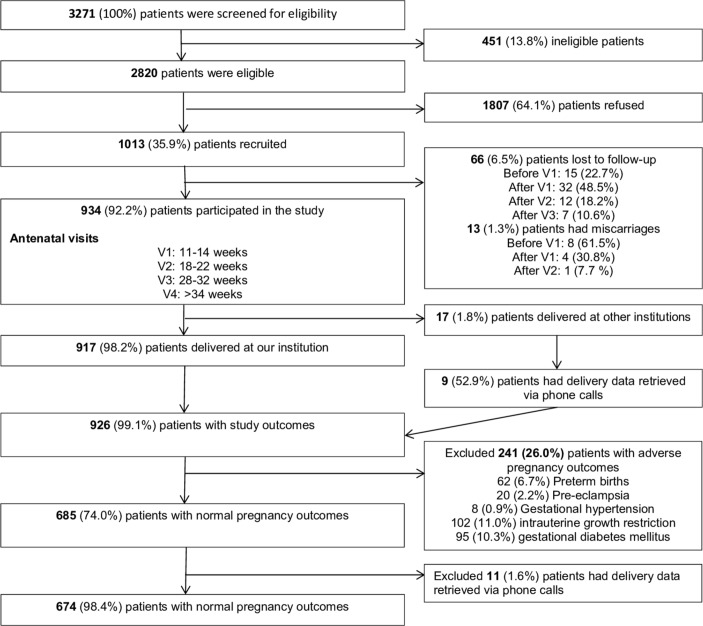
Methods: Women with single viable pregnancies, less than 14 weeks of gestation, were recruited between September 2010 and November 2013 in KK Women's and Children's Hospital. They were followed up from recruitment till their postnatal discharge from the hospital. There were four antenatal visits: gestational age (GA) less than 14+0 weeks of gestation (V1), GA 18+0 to 22+0 weeks (V2), GA 28+0 to 32+0 weeks (V3) and GA 34+0 and above (V4). Serum biochemical markers (sFlt-1, PlGF) were measured at each visit.
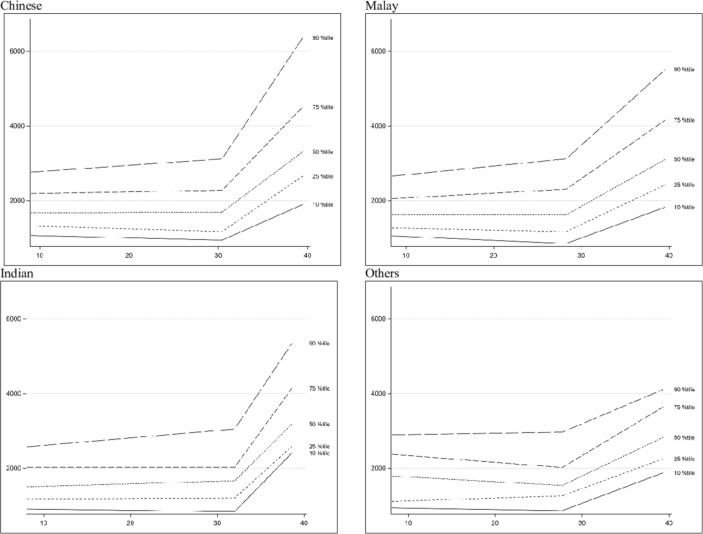
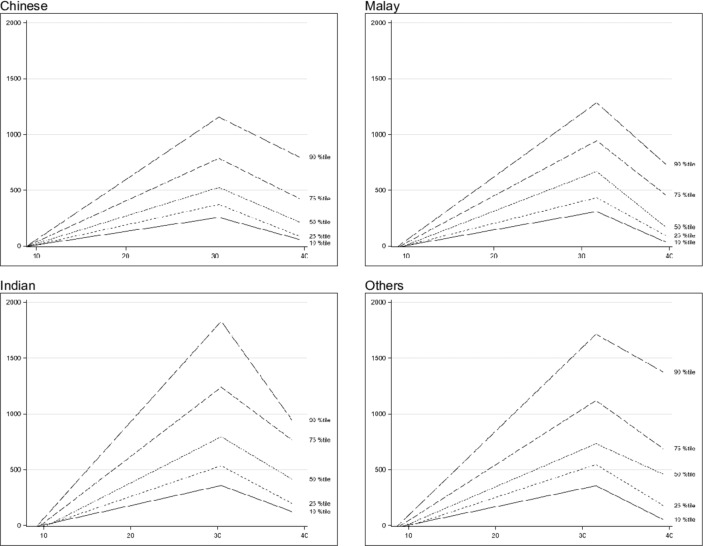
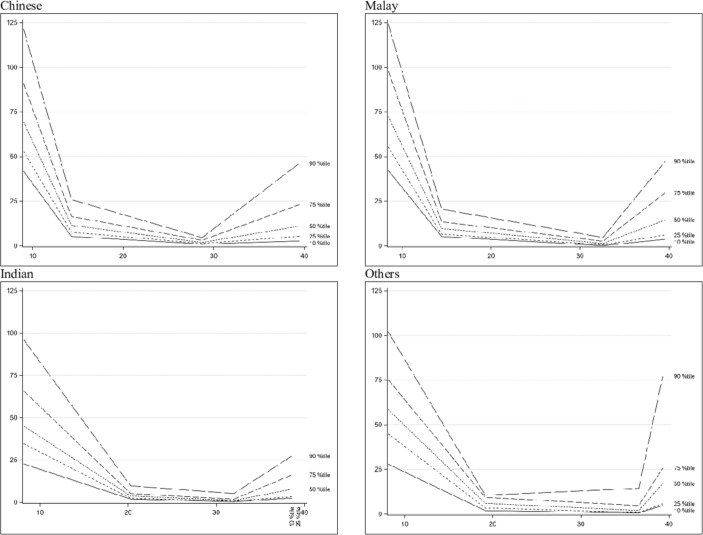
Results: There were 934 participants in the study, of which 674 had normal pregnancy outcomes. The sFlt-1 remained relatively constant till GA 28-32 weeks before it increased (p<0.001). The sFlt-1 levels increased earlier before 30 weeks' of gestation among the Malay participants and the other ethnicities. For PlGF, the levels increased from the first to the third trimester, peaking at 30-32 weeks before decreasing (p<0.001). Its serum levels significantly differed among the Indian participants and other ethnicities as compared with the Malay and Chinese participants at V3 and V4, (p=0.04 and p<0.001, respectively).
Conclusion: There are significant differences in the PlGF and sFlt-1 concentrations during pregnancy between different ethnicities, which should be taken into consideration when using these references values for further research.
Keywords: placental biomarkers; pre-eclampsia; prenatal diagnosis.
© Author(s) (or their employer(s)) 2019. Re-use permitted under CC BY-NC. No commercial re-use. See rights and permissions. Published by BMJ.
Conflict of interest statement
Competing interests: None declared.
Figures
References
-
- Kusanovic JP, Romero R, Chaiworapongsa T, et al. . A prospective cohort study of the value of maternal plasma concentrations of angiogenic and anti-angiogenic factors in early pregnancy and midtrimester in the identification of patients destined to develop preeclampsia. J Matern Fetal Neonatal Med 2009;22:1021–38. 10.3109/14767050902994754 - DOI - PMC - PubMed
Publication types
MeSH terms
Substances
LinkOut - more resources
Full Text Sources
Miscellaneous
