


Epidemiology and Burden of Diabetic Foot Ulcer and Peripheral Arterial Disease in Korea
- PMID: 31130633
- PMCID: PMC6571707
- DOI: 10.3390/jcm8050748
Epidemiology and Burden of Diabetic Foot Ulcer and Peripheral Arterial Disease in Korea
Abstract
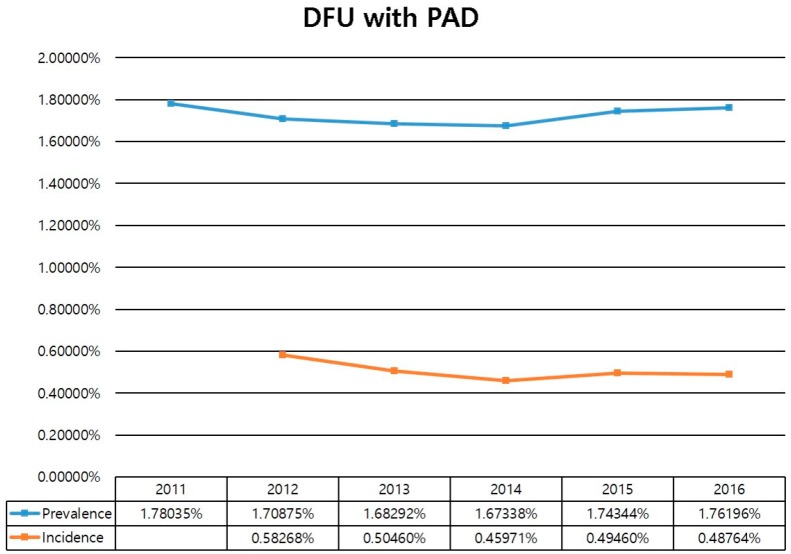
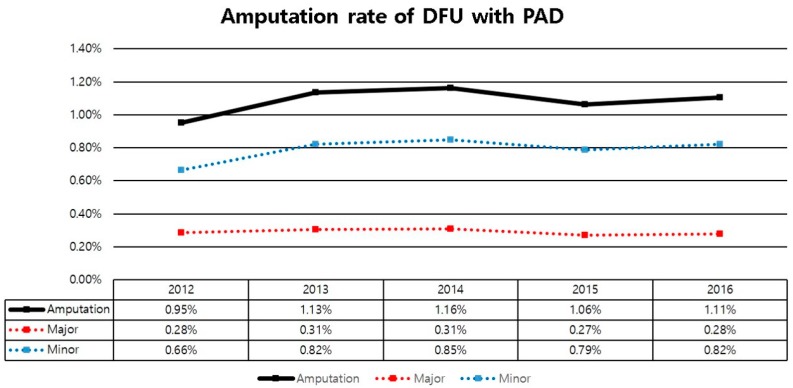
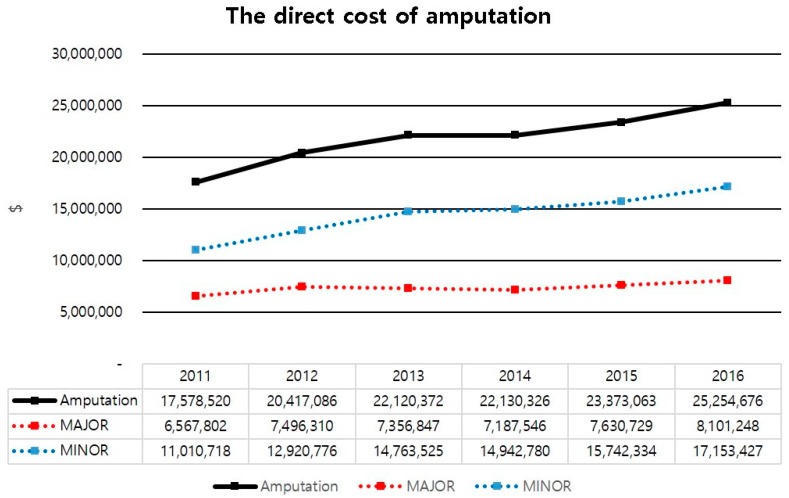
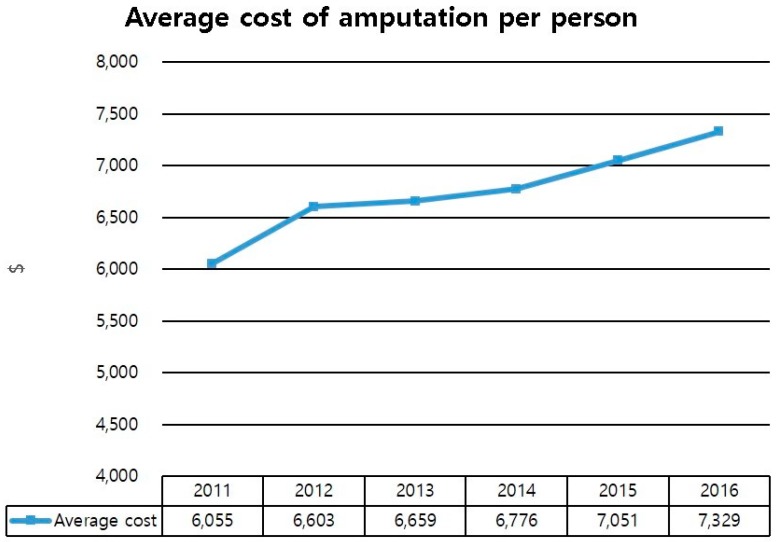
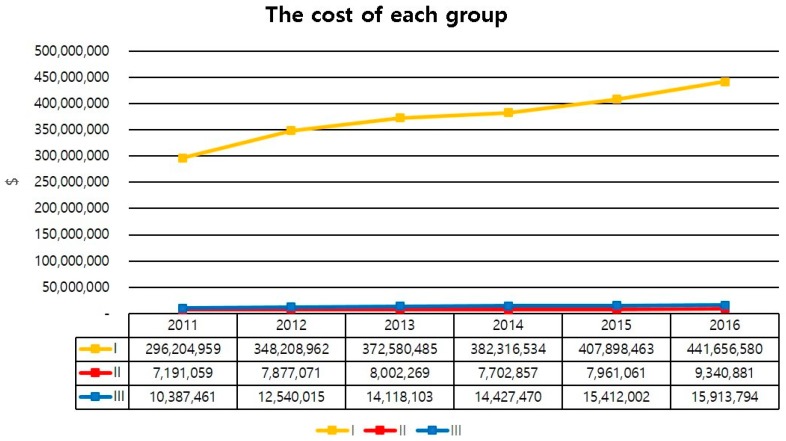
Information about the epidemiology of diabetic foot ulcer (DFU) with peripheral arterial disease (PAD) is likely to be crucial for predicting future disease progression and establishing a health care budget. We investigated the incidence and prevalence of DFU and PAD in Korea. In addition, we examined costs of treatments for DFU and PAD. This study was conducted using data from Health Insurance Review and Assessment Service from 1 January 2011 to 31 December 2016. The incidence of DFU with PAD was 0.58% in 2012 and 0.49% in 2016. The prevalence of DFU with PAD was 1.7% in 2011 to 1.8% in 2016. The annual amputation rate of DFU with PAD was 0.95% in 2012 and 1.10% in 2016. Major amputation was decreased, while minor amputation was increased. The direct cost of each group was increased, especially the limb saving group. which was increased from 296 million dollars in 2011 to 441 million dollars in 2016. The overall incidence of DFU with PAD was about 0.5% of total population in Korea, from 2012 to 2016. Furthermore, costs for treatments of diabetic foot ulcer are increasing, especially those for the limb saving group.
Keywords: National Health Insurance Service data; cost; diabetic foot ulcer; incidence; peripheral arterial disease; prevalence.
Conflict of interest statement
The authors declare no conflict of interest.
Figures
References
-
- Mayfield J.A., Reiber G.E., Sanders L.J., Janisse D., Pogach L.M., American Diabetes A. Preventive foot care in diabetes. Diabetes Care. 2004;27(Suppl. 1):S63–S64. - PubMed
Grants and funding
LinkOut - more resources
Full Text Sources
