


Proteome of fraction from Tityus serrulatus venom reveals new enzymes and toxins
- PMID: 31131005
- PMCID: PMC6483408
- DOI: 10.1590/1678-9199-JVATITD-1482-18
Proteome of fraction from Tityus serrulatus venom reveals new enzymes and toxins
Abstract
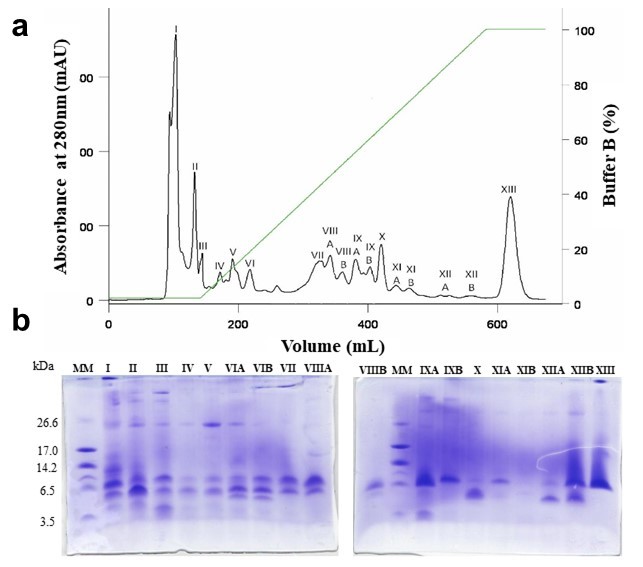
Background: Tityus serrulatus venom (Ts venom) is a complex mixture of several compounds with biotechnological and therapeutical potentials, which highlights the importance of the identification and characterization of these components. Although a considerable number of studies have been dedicated to the characterization of this complex cocktail, there is still a limitation of knowledge concerning its venom composition. Most of Ts venom studies aim to isolate and characterize their neurotoxins, which are small, basic proteins and are eluted with high buffer concentrations on cation exchange chromatography. The first and largest fraction from carboxymethyl cellulose-52 (CMC-52) chromatography of Ts venom, named fraction I (Fr I), is a mixture of proteins of high and low molecular masses, which do not interact with the cation exchange resin, being therefore a probable source of components still unknown of this venom. Thus, the present study aimed to perform the proteome study of Fraction I from Ts venom, by high resolution mass spectrometry, and its biochemical characterization, by the determination of several enzymatic activities.
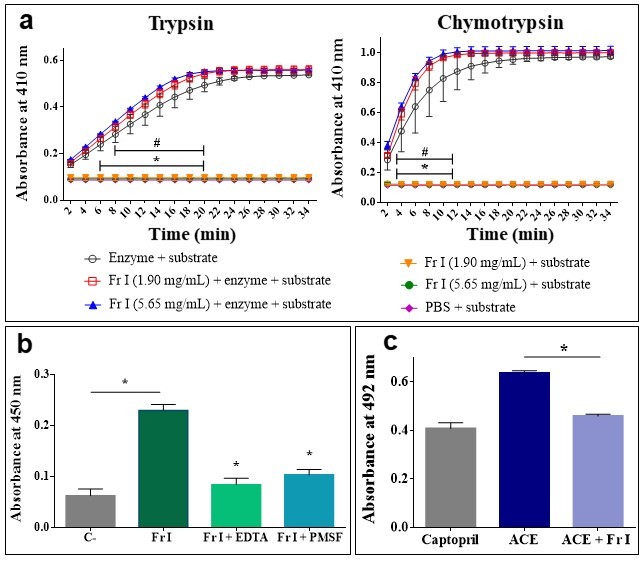
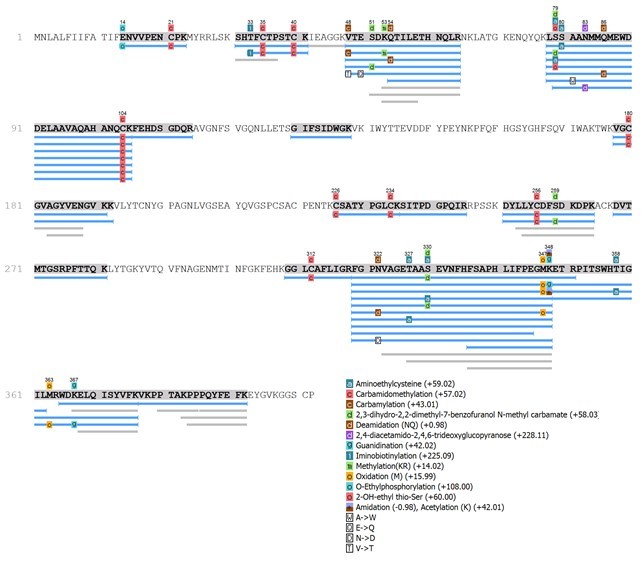
Methods: Fraction I was obtained by a cation exchange chromatography using 50 mg of crude venom. This fraction was subjected to a biochemical characterization, including determination of L-amino acid oxidase, phospholipase, hyaluronidase, proteases activities and inhibition of angiotensin converting enzyme (ACE) activity. Fraction I was submitted to reduction, alkylation and digestion processes, and the tryptic digested peptides obtained were analyzed in a Q-Exactive Orbitrap mass spectrometer. Data analysis was performed by PEAKS 8.5 software against NCBI database.
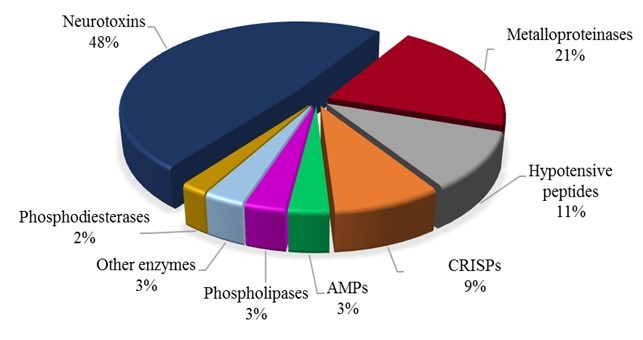
Results: Fraction I exhibits proteolytic activity and it was able to inhibit ACE activity. Its proteome analysis identified 8 different classes of venom components, among them: neurotoxins (48%), metalloproteinases (21%), hypotensive peptides (11%), cysteine-rich venom protein (9%), antimicrobial peptides (AMP), phospholipases and other enzymes (chymotrypsin and lysozymes) (3%) and phosphodiesterases (2%).
Conclusions: The combination of a proteomic and biochemical characterization strategies leads us to identify new components in the T. serrulatus scorpion venom. The proteome of venom´s fraction can provide valuable direction in the obtainment of components in their native forms in order to perform a preliminary characterization and, consequently, to promote advances in biological discoveries in toxinology.
Keywords: ACE inhibitors; Tityus serrulatus; enzymes; proteases; proteome; scorpion venom.
Conflict of interest statement
Competing interests: The authors declare that there are no competing interests.
Figures
References
-
- Pimenta AM, Stöcklin R, Favreau P, Bougis PE, Martin-Eauclaire MF. Moving pieces in a proteomic puzzle: mass fingerprinting of toxic fractions from the venom of Tityus serrulatus (Scorpiones, Buthidae) Rapid Commun Mass Spectrom. 2001;15(17):1562–1572. - PubMed
-
- Vasconcelos F, Lanchote VL, Bendhack LM, Giglio JR, Sampaio SV, Arantes EC. Effects of voltage-gated Na+ channel toxins from Tityus serrulatus venom on rat arterial blood pressure and plasma catecholamines. Comp Biochem Physiol C Toxicol Pharmacol. 2005;141(1):85–92. - PubMed
LinkOut - more resources
Full Text Sources
Miscellaneous