


Laparoscopic endoscopic cooperative surgery (LECS) for the gastrointestinal tract: Updated indications
- PMID: 31131352
- PMCID: PMC6524076
- DOI: 10.1002/ags3.12238
Laparoscopic endoscopic cooperative surgery (LECS) for the gastrointestinal tract: Updated indications
Abstract
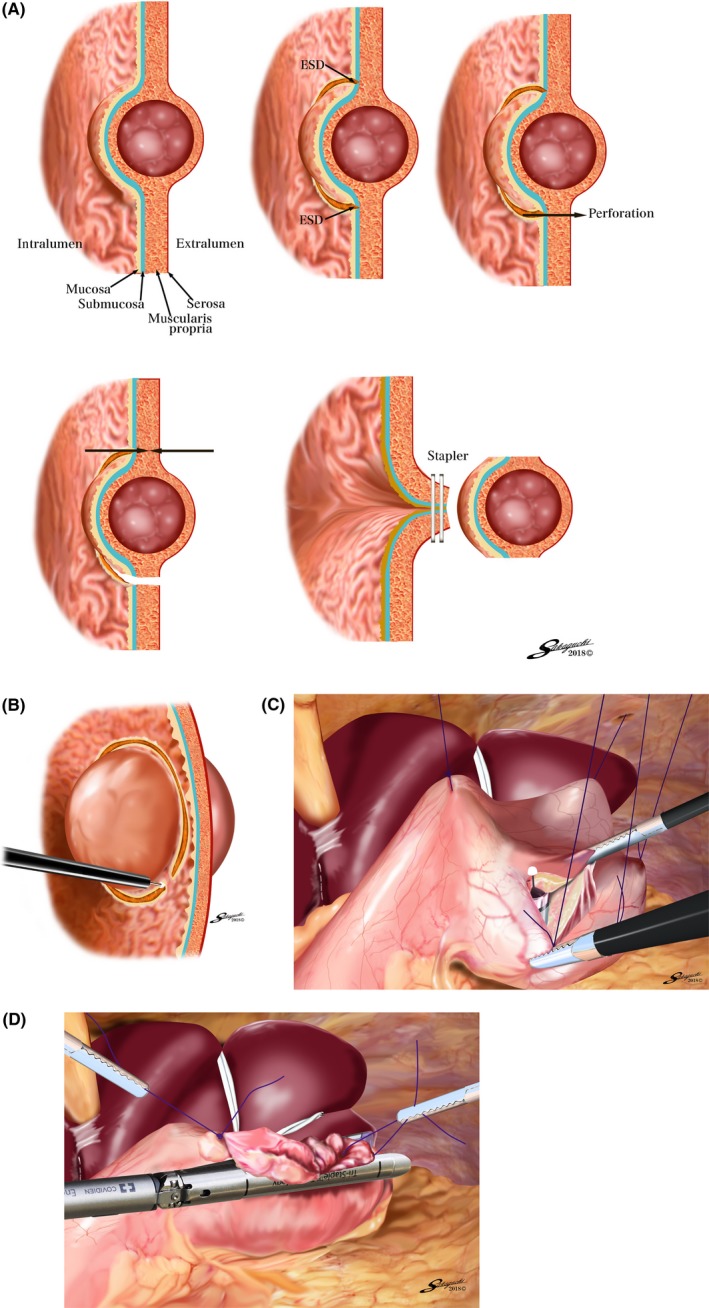
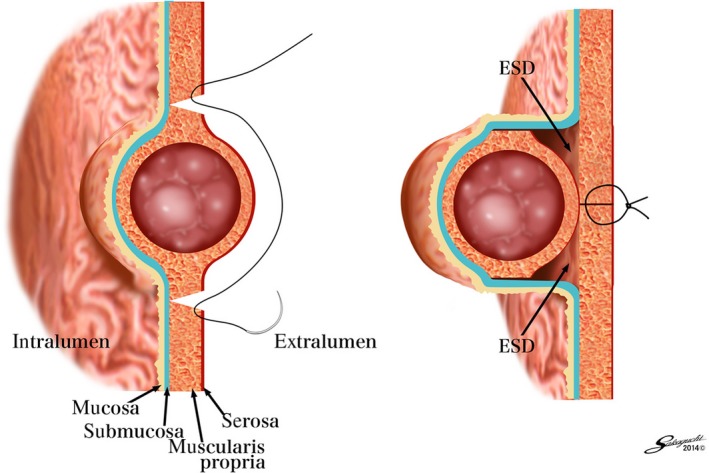
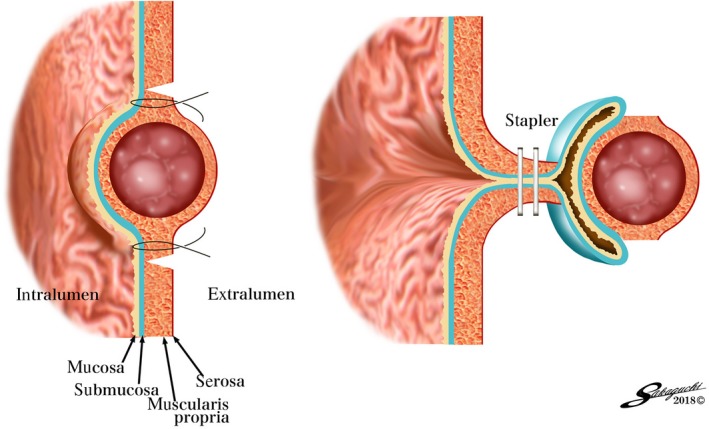
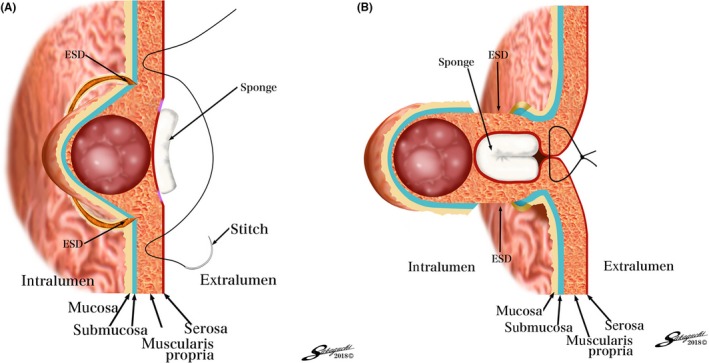
Laparoscopic and endoscopic cooperative surgery (LECS) is a procedure combining laparoscopic gastric resection with endoscopic submucosal dissection for local resection of gastric tumors with appropriate, minimal surgical resection margins. The LECS concept was initially developed from the classical LECS procedure for gastric submucosal tumor resection. Many researchers reported that classical LECS was a safe and feasible technique for resection of gastric submucosal tumors, regardless of tumor location, including the esophagogastric junction. Recently, LECS was approved for insurance coverage by Japan's National Health Insurance plan and widely applied for gastric submucosal tumor resection. However, the limitations of classical LECS are the risk of abdominal infection, scattering of tumor cells in the abdominal cavity, and tumor cell seeding in the peritoneum. The development of modified LECS procedures, such as inverted-LECS, non-exposed endoscopic wall-inversion surgery, a combination of laparoscopic and endoscopic approaches to neoplasia with a non-exposure technique, and closed-LECS, has almost resolved these drawbacks. This has led to a recent increase in the indication of modified LECS to include patients with gastric epithelial neoplasms. The LECS concept is also beginning to be applied to tumor excision in other organs, such as the duodenum, colon and rectum. Further evolution of LECS procedures is expected in the future. Sentinel lymph node mapping could also be combined with LECS, resulting in a portion of early gastric cancers being treated by LECS with sentinel node mapping.
Keywords: gastric cancer; laparoscopic endoscopic cooperative surgery; sentinel node navigation surgery; submucosal tumor.
Figures
References
-
- Matsuda T, Hiki N, Nunobe S, et al. Feasibility of laparoscopic and endoscopic cooperative surgery for gastric submucosal tumors (with video). Gastrointest Endosc. 2016;84:47–52. - PubMed
-
- Hu J, Or BH, Hu K, Wang ML. Comparison of the post‐operative outcomes and survival of laparoscopic versus open resections for gastric gastrointestinal stromal tumors: a multi‐center prospective cohort study. Int J Surg. 2016;33(Pt A):65–71. - PubMed
-
- Eisenberg D, Bell R. Intraoperative endoscopy: a requisite tool for laparoscopic resection of unusual gastrointestinal lesions‐a case series. J Surg Res. 2009;155:318–20. - PubMed
-
- Ludwig K, Wilhelm L, Scharlau U, Amtsberg G, Bernhardt J. Laparoscopic‐endoscopic rendezvous resection of gastric tumors. Surg Endosc. 2002;16:1561–5. - PubMed
-
- Ridwelski K, Pross M, Schubert S, et al. Combined endoscopic intragastral resection of a posterior stromal gastric tumor using an original technique. Surg Endosc. 2002;16:537. - PubMed
Publication types
LinkOut - more resources
Full Text Sources
