


GC-MS analysis of volatile organic compounds from Bambara groundnut rhizobacteria and their antibacterial properties
- PMID: 31134356
- PMCID: PMC6536467
- DOI: 10.1007/s11274-019-2660-7
GC-MS analysis of volatile organic compounds from Bambara groundnut rhizobacteria and their antibacterial properties
Abstract
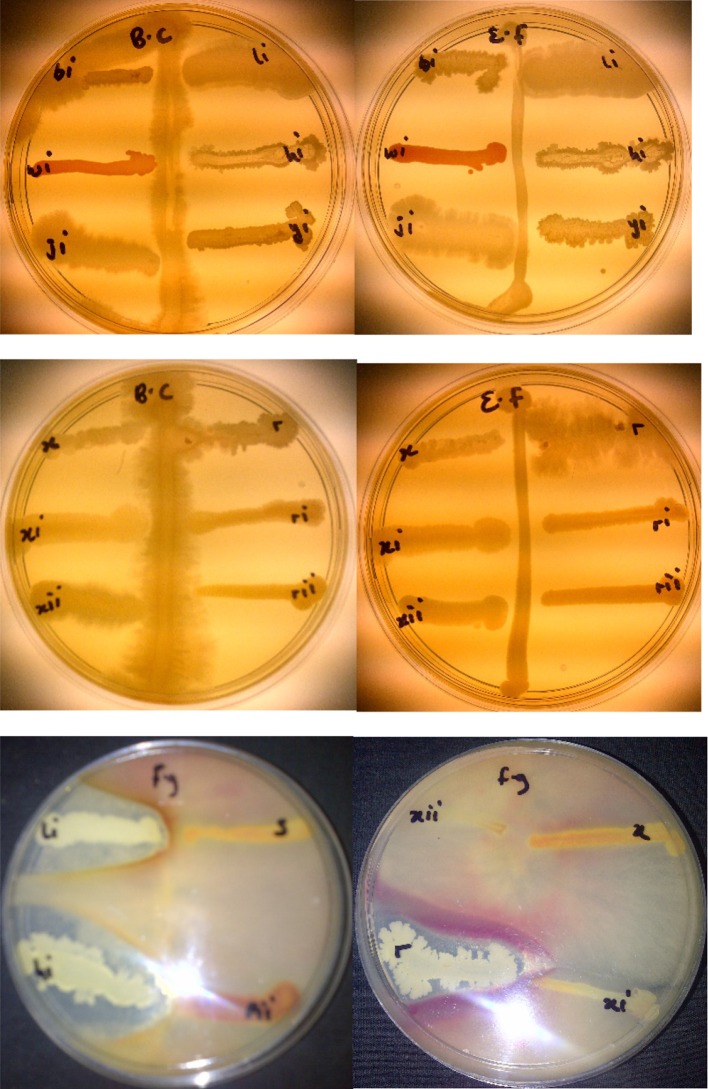
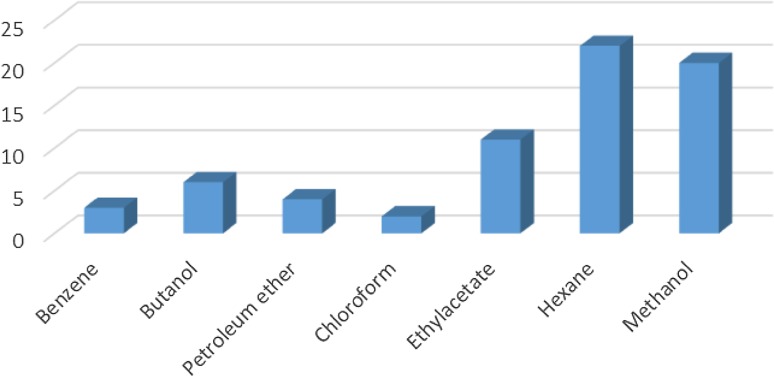
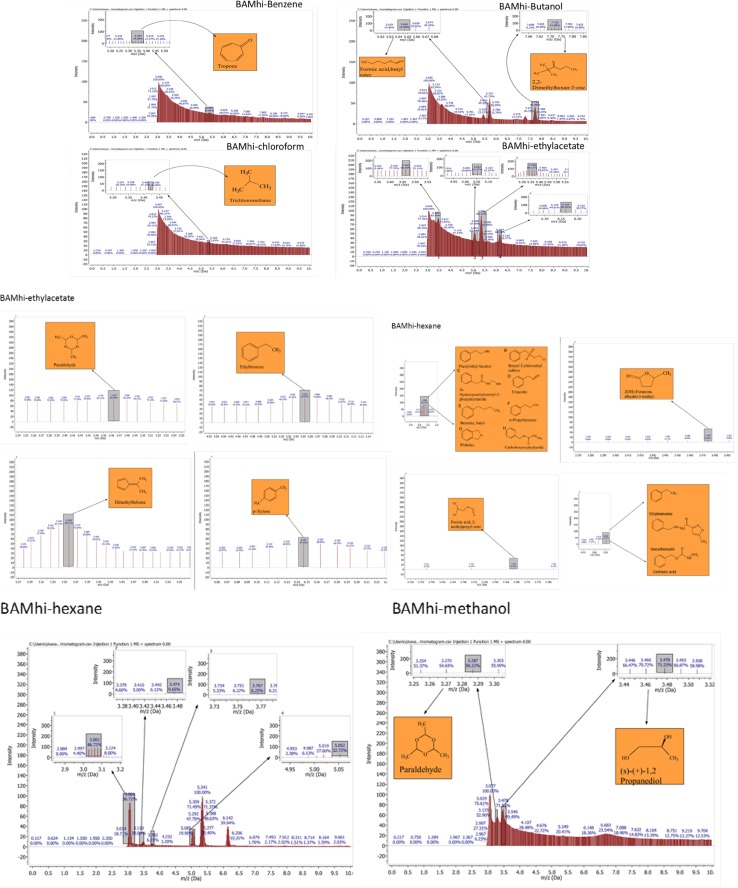
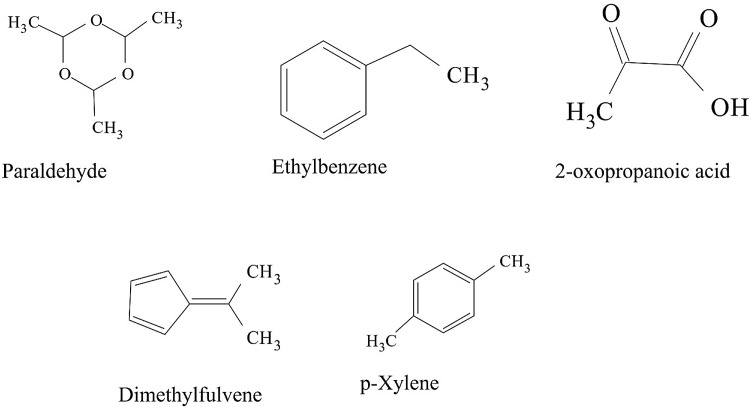
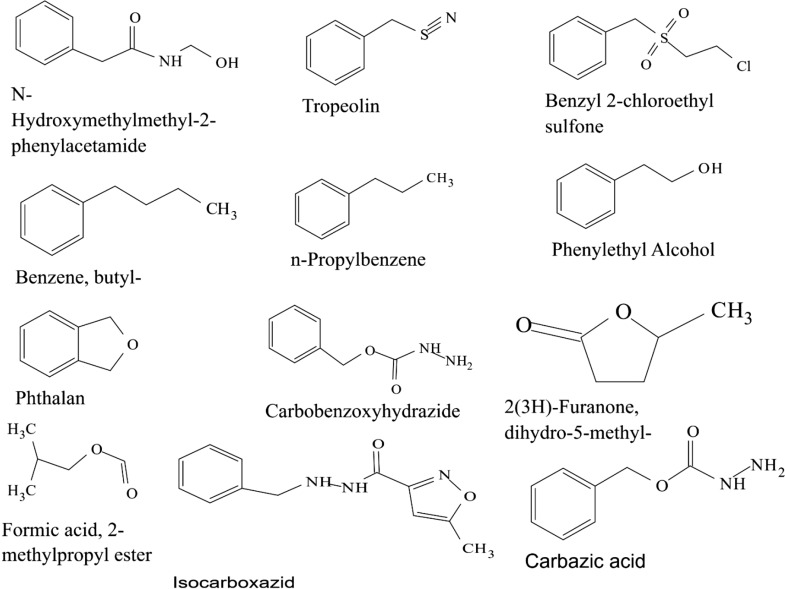
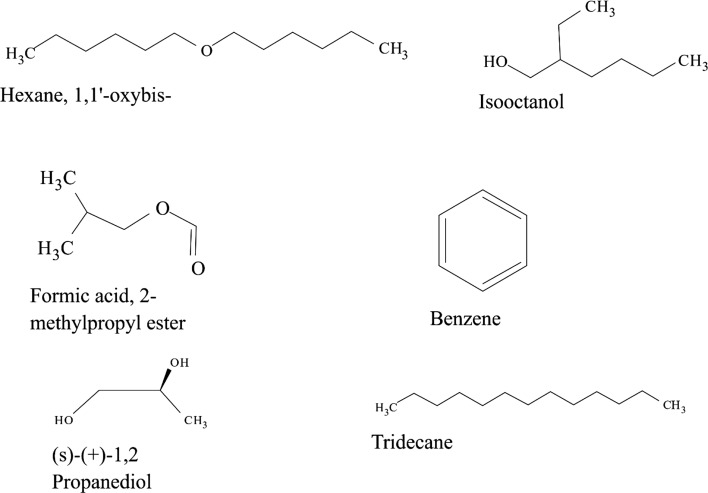
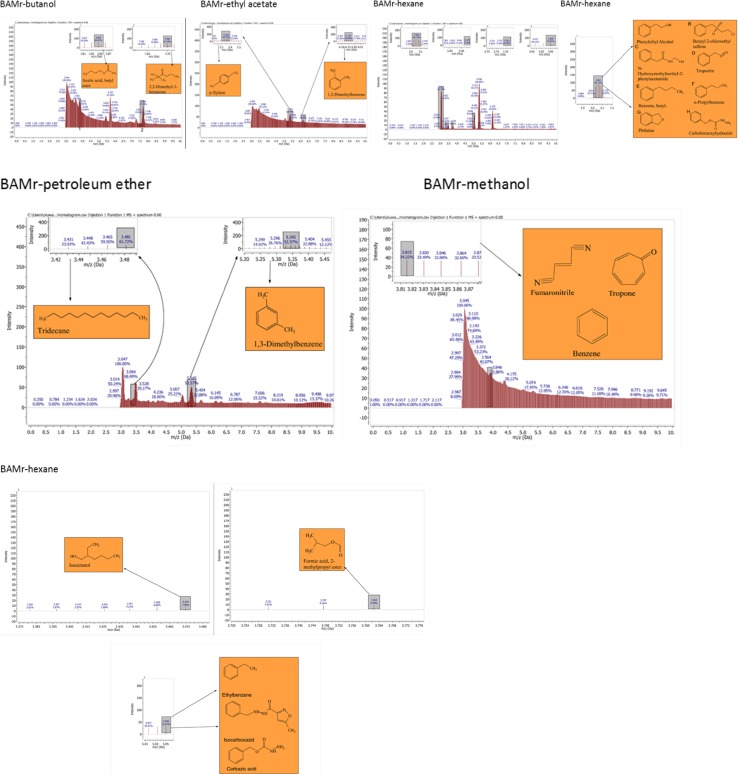
Bacterial metabolites have been observed to be important in new drug formulation for both plant, animals and human beings. The aim of this study was to identify the different bioactive compounds found in three rhizobacterial isolates (B. amyloliquefaciens, B. thuringiensis and Bacillus sp.) from the rhizosphere of Bambara groundnut and to assay for their antibacterial properties. Gas chromatography mass spectrometry (GC-MS) was used to carry out the analysis using seven extraction solvents. In the GC-MS analysis, 68 compounds were identified based on peak area percentage, retention time and structure. From the bioactive compounds in B. amyloliquefaciens and B. thuringiensis, the peak area percentage shows that dimethylfuvene from ethyl acetate extraction had the highest relative abundance with 89.11% while Formic acid 2-methylpropyl ester from hexane extraction had the lowest with 6.25%. Others are tridecane, acetic acid butyl ester, paraldehyde, s-(+)-1,2 propanediol, tropone, phthalan and p-xylene with relative abundance of 61.72%, 60.41%, 83.79%, 71.53%, 24.06%, 86.72% and 64.33% respectively. These extracts inhibited the growth of the four test organisms, Bacillus cereus, Pseudomonas aeruginosa, Micrococcus cryophilus and Enterococcus feacalis. Butanol extract from B. amyloliquefaciens had 28 mm zone of inhibition against B. cereus compared to 18 mm and 16 mm by Bacillus sp. and B. thuringiensis respectively. Its zone of inhibition was 24 mm zone against M. cryophilus compared to 12 mm and 19 mm by Bacillus sp. and B. thuringiensis respectively. Butanol extract from B. thuringiensis suppressed E. feacalis and P. aeruginosa having 23 mm and 26 mm zones of inhibition respectively. This was higher compared to Bacillus sp. and B. amyloliquefaciens having 18 mm/15 mm and 21 mm/15 mm against E. feacalis and P. aeruginosa respectively. Hexane and ethyl acetate extract from Bacillus sp. suppressed P. aeruginosa with 12 mm and 17 mm inhibition zones respectively compared to no inhibition zones from hexane extract of B. amyloliquefaciens and B. thuringiensis. Zones of inhibition of 2 mm and 6 mm were observed against P. aeruginosa from ethyl acetate extract of B. amyloliquefaciens and B. thuringiensis respectively. These results suggest that the three isolates are quite rich in the production of bioactive compounds that are also very effective antibacterial agents. These volatile organic compounds are promising compounds for more antibacterial bioactivity development.
Keywords: Antibacterial; Bambara groundnut; GC–MS; Secondary metabolites; Volatile organic compounds.
Conflict of interest statement
The authors declare no conflict of interest.
Figures




References
-
- Abdulkadir M, Waliyu S. Screening and isolation of the soil bacteria for ability to produce antibiotics. Eur J Appl Sci. 2012;4:211–215.
-
- Adegboye MF, Babalola OO. Phylogenetic characterization of culturable antibiotic producing Streptomyces from rhizospheric soils. Mol Biol. 2013;S1:001. doi: 10.4172/2168-9547.S1-001. - DOI
-
- Ahemad M, Kibret M. Mechanisms and applications of plant growth promoting rhizobacteria. Curr Perspect J King Saud Univ-Sci. 2014;26:1–20. doi: 10.1016/j.jksus.2013.05.001. - DOI
MeSH terms
Substances
LinkOut - more resources
Full Text Sources
Medical
Miscellaneous
