


The 2017 Oslo conference report on neglected tropical diseases and emerging/re-emerging infectious diseases - focus on populations underserved
- PMID: 31138293
- PMCID: PMC6537383
- DOI: 10.1186/s40249-019-0550-8
The 2017 Oslo conference report on neglected tropical diseases and emerging/re-emerging infectious diseases - focus on populations underserved
Abstract
Background: In 2017, the Centre for Global Health (CGH) at the University of Oslo in collaboration with the Coalition for Epidemic Preparedness Innovations (CEPI) and the Norwegian Agency for Development Cooperation (Norad) held a meeting to discuss together with leading figures in disease control, research and development the issue of neglected tropical diseases and emerging/re-emerging infectious diseases. This commentary has taken up this discussion and the conclusions drawn at this meeting to make a case for the opportunity the Sustainable Development Goals (SDGs) provide in highlighting the interconnectedness of factors that are relevant in the successful fight against neglected tropical diseases (NTDs) and emerging infectious diseases (EIDS).
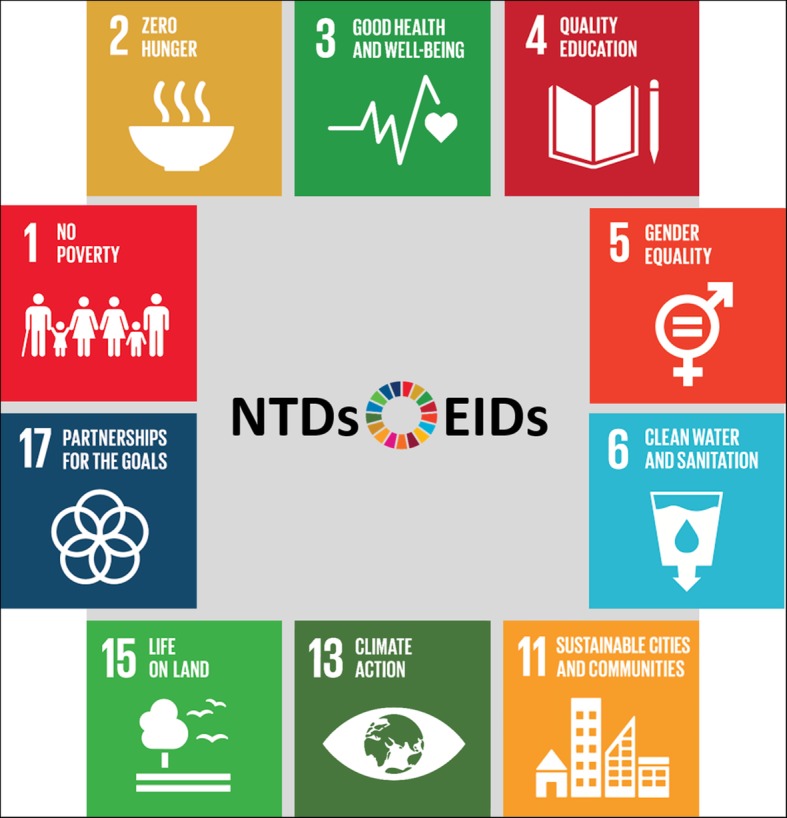
Main body: Despite NTDs being endemic and EIDS being epidemic, in order to prevent both disease groups effectively, it is important to appreciate that they share essential health determining factors, namely: neglect, poverty, a lack of access to clean water and sanitation facilities and an absence of or severely limited provision of healthcare as well as in many cases a zoonotic nature. Instead of looking to "simple disease management" for the answer, the SDGs help to understand the interplay of multiple priority areas and thereby help to promote a more holistic approach to addressing these two disease groups.
Conclusions: Their commonalities mean that the Global Health community should leverage opportunities and efforts in the prevention and elimination of both NTDs and EIDs. Doing so using a One Health approach is considered to offer a "public health best-buy". Concrete solutions are proposed.
Keywords: Emerging infectious diseases; Neglect; Neglected tropical diseases; One health; Poverty; SDGs.
Conflict of interest statement
The authors declare that they have no competing interests.
Figures
References
-
- Amuasi J. The classical NTDs and their current political momentum. 2017.
Publication types
MeSH terms
LinkOut - more resources
Full Text Sources
