


The neuroinflammatory component of negative affect in patients with chronic pain
- PMID: 31138890
- PMCID: PMC7001732
- DOI: 10.1038/s41380-019-0433-1
The neuroinflammatory component of negative affect in patients with chronic pain
Abstract
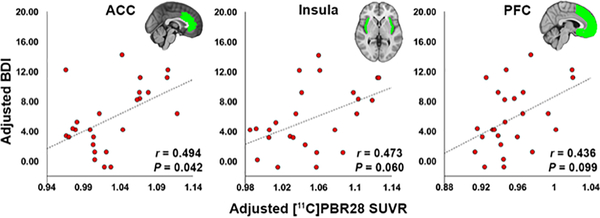
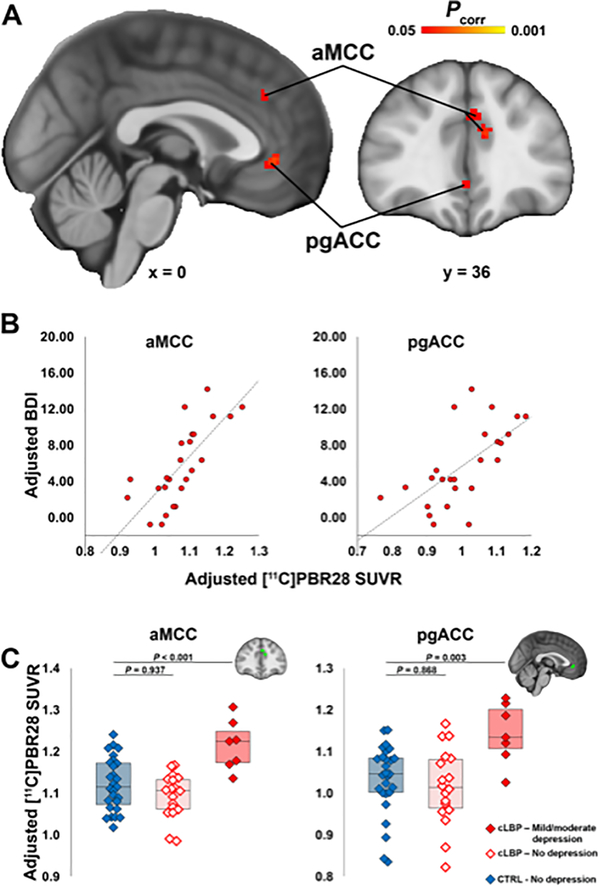
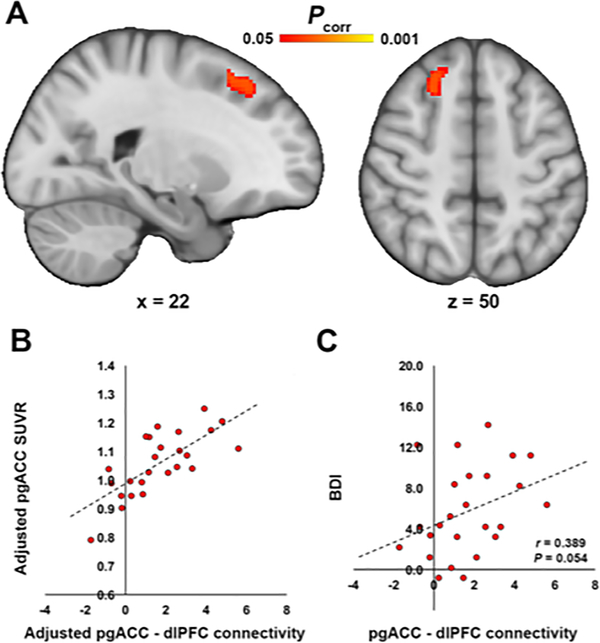
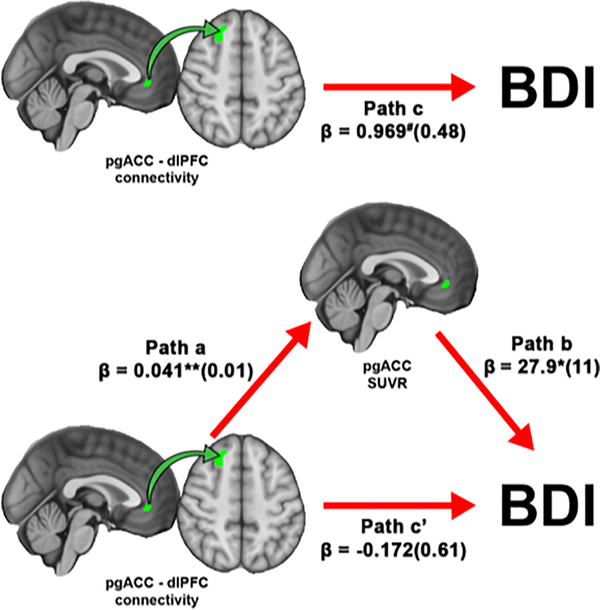
Negative affect (NA) is a significant cause of disability for chronic pain patients. While little is known about the mechanism underlying pain-comorbid NA, previous studies have implicated neuroinflammation in the pathophysiology of both depression and chronic pain. Here, we tested the hypothesis that NA in pain patients is linked to elevations in the brain levels of the glial marker 18 kDa translocator protein (TSPO), and changes in functional connectivity. 25 cLBP patients (42.4 ± 13 years old; 13F, 12M) with chronic low back pain (cLBP) and 27 healthy control subjects (48.9 ± 13 years old; 14F, 13M) received an integrated (i.e., simultaneous) positron emission tomography (PET)/magnetic resonance imaging (MRI) brain scan with the second-generation TSPO ligand [11C]PBR28. The relationship between [11C]PBR28 signal and NA was assessed first with regression analyses against Beck Depression Inventory (BDI) scores in patients, and then by comparing cLBP patients with little-to-no, or mild-to-moderate depression against healthy controls. Further, the relationship between PET signal, BDI and frontolimbic functional connectivity was evaluated in patients with mediation models. PET signal was positively associated with BDI scores in patients, and significantly elevated in patients with mild-to-moderate (but not low) depression compared with controls, in anterior middle and pregenual anterior cingulate cortices (aMCC, pgACC). In the pgACC, PET signal was also associated with this region's functional connectivity to the dorsolateral PFC (pgACC-dlPFC), and mediated of the association between pgACC-dlPFC connectivity and BDI. These observations support a role for glial activation in pain-comorbid NA, identifying in neuroinflammation a potential therapeutic target for this condition.
Conflict of interest statement
CONFLICT OF INTEREST
The authors declare no conflicts of interest.
Figures
References
-
- Leo RJ. Chronic pain and comorbid depression. Curr Treat Options Neurol 2005; 7(5): 403–412. - PubMed
-
- Linton SJ. A review of psychological risk factors in back and neck pain. Spine (Phila Pa 1976) 2000; 25(9): 1148–1156. - PubMed
-
- Pincus T, Burton AK, Vogel S, Field AP. A systematic review of psychological factors as predictors of chronicity/disability in prospective cohorts of low back pain. Spine (Phila Pa 1976) 2002; 27(5): E109–120. - PubMed
-
- Wasan AD, Davar G, Jamison R. The association between negative affect and opioid analgesia in patients with discogenic low back pain. Pain 2005; 117(3): 450–461. - PubMed
Publication types
MeSH terms
Substances
Grants and funding
LinkOut - more resources
Full Text Sources
Medical
Miscellaneous
