. 2019 May 30;14(5):e0217603.
doi: 10.1371/journal.pone.0217603. eCollection 2019.

RNA methyltransferase BCDIN3D is crucial for female fertility and miRNA and mRNA profiles in Drosophila ovaries

Affiliations

RNA methyltransferase BCDIN3D is crucial for female fertility and miRNA and mRNA profiles in Drosophila ovaries

Li Zhu et al. PLoS One. .

Abstract

RNA methyltransferases post-transcriptionally add methyl groups to RNAs, which can regulate their fates and functions. Human BCDIN3D (Bicoid interacting 3 domain containing RNA methyltransferase) has been reported to specifically methylate the 5'-monophosphates of pre-miR-145 and cytoplasmic tRNAHis. Methylation of the 5'-monophosphate of pre-miR-145 blocks its cleavage by the miRNA generating enzyme Dicer, preventing generation of miR-145. Elevated expression of BCDIN3D has been associated with poor prognosis in breast cancer. However, the biological functions of BCDIN3D and its orthologs remain unknown. Here we studied the biological and molecular functions of CG1239, a Drosophila ortholog of BCDIN3D. We found that ovary-specific knockdown of Drosophila BCDIN3D causes female sterility. High-throughput sequencing revealed that miRNA and mRNA profiles are dysregulated in BCDIN3D knockdown ovaries. Pathway analysis showed that many of the dysregulated genes are involved in metabolic processes, ribonucleoprotein complex regulation, and translational control. Our results reveal BCDIN3D's biological role in female fertility and its molecular role in defining miRNA and mRNA profiles in ovaries.


Conflict of interest statement

The authors have declared that no competing interests exist.

Figures
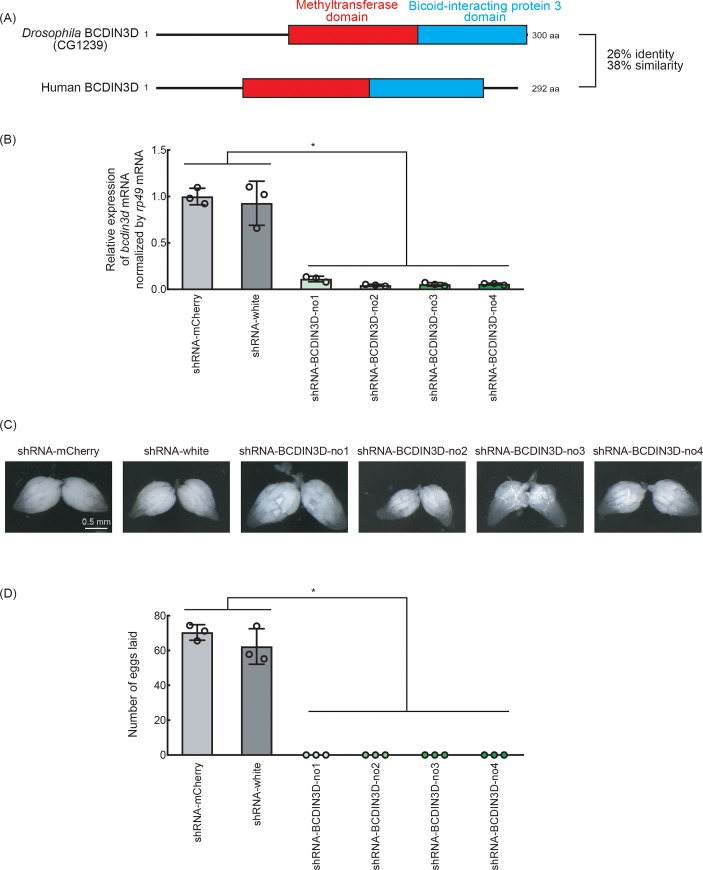
Fig 1
Fig 1. Ovary-specific BCDIN3D knockdown flies cannot lay eggs.
(A) Domain structures of Drosophila BCDIN3D and human BCDIN3D. (B) Relative abundance of BCDIN3D mRNA normalized with rp49 mRNA in the ovaries of ovary-specific BCDIN3D knockdown and control knockdown flies. Mean ± SD for three biological replicates. P-value <0.05 is indicated by * (Student's t-test). (C) Stereomicroscope images of ovaries dissected from control and BCDIN3D knockdown flies. Scale bar shows 0.5 mm. (D) The numbers of eggs laid by control and BCDIN3D knockdown females crossed with OregonR wild-type males. Mean ± SD for three biological replicates. Each biological replicate datum represents the average number of eggs laid per single female in the cage containing 5 females and 3 males. P-value <0.05 is indicated by * (Student's t-test).
Fig 2
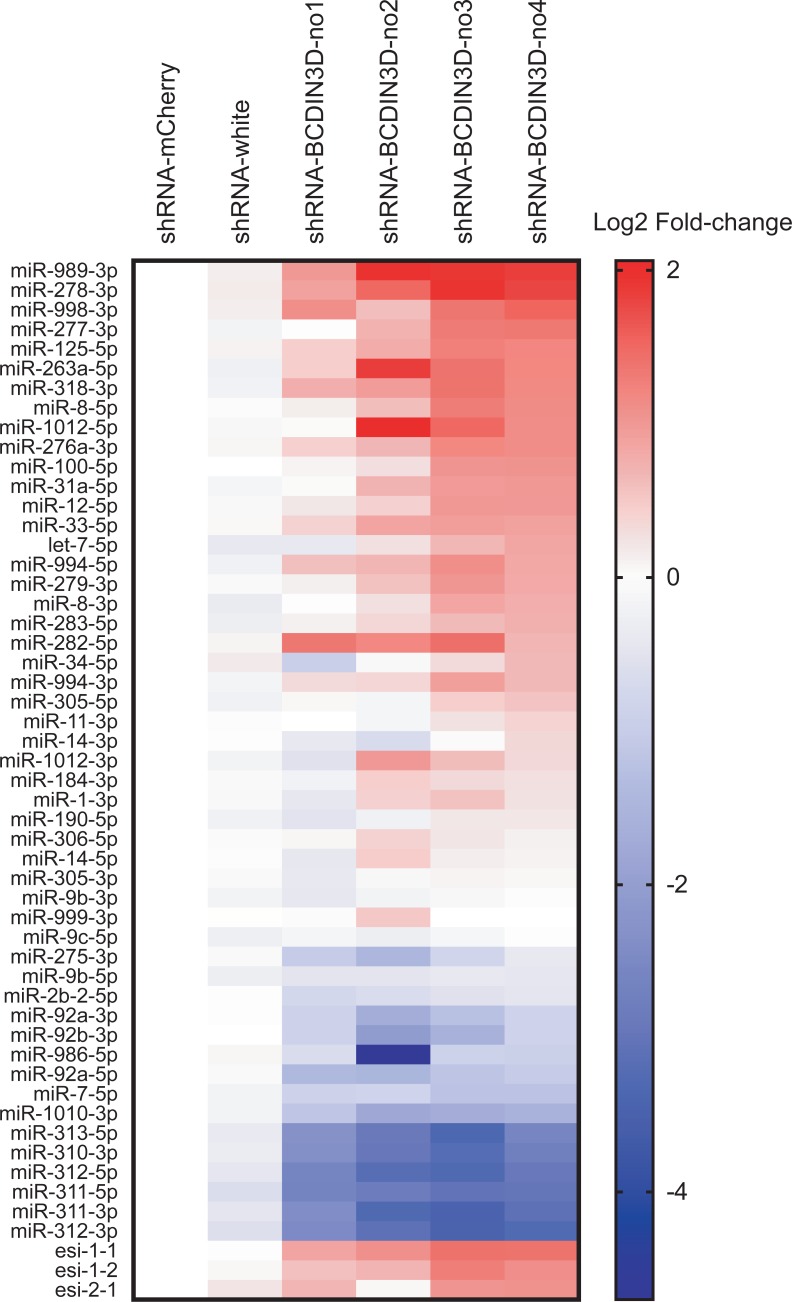
Fig 2. Ovary-specific knockdown of BCDIN3D causes dysregulation of miRNA profile in ovaries.
Heatmap of normalized miRNA and endo-siRNA (esi-1.1, esi-1.2, and esi-2.1) abundance in control and BCDIN3D knockdown ovaries determined by high-throughput sequencing. Mean log2 fold-change of three biological replicates relative to shRNA-mCherry control is shown. miRNAs are sorted in descending order of log2 fold-change in shRNA-BCDIN3D-no4. To eliminate miRNAs with very low expression levels, only miRNAs (n = 50) whose normalized mean abundance was more than 100 reads per million total reads in either of the strains are shown.
Fig 3
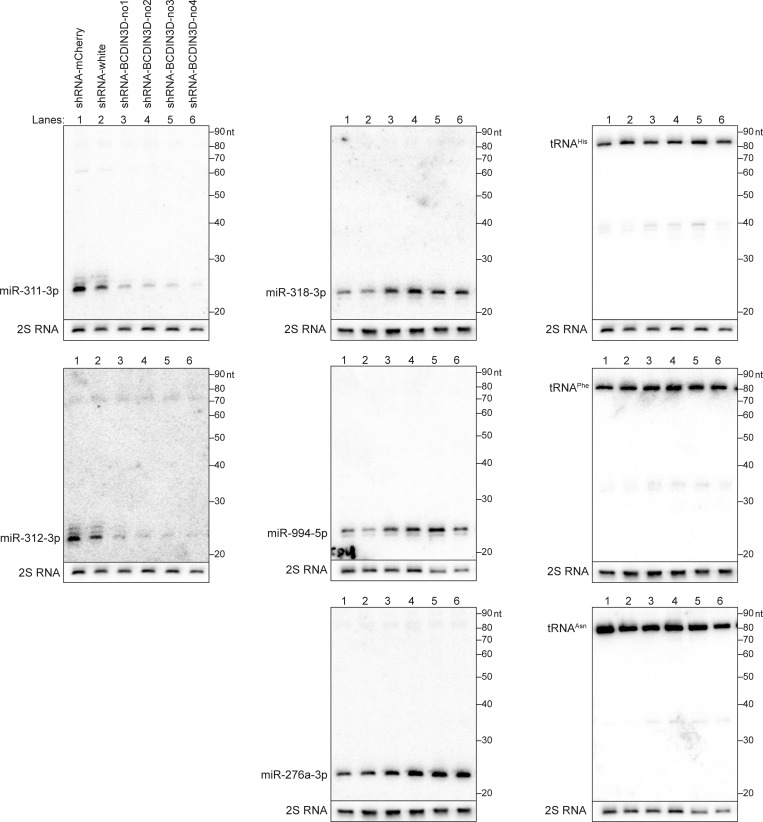
Fig 3. Northern blots of miRNAs and tRNAs confirm dysregulation of miRNA profiles.
Representative images of Northern blots of selected miRNAs and tRNAs in control and BCDIN3D knockdown ovaries. Quantification is shown in Fig 4.
Fig 4
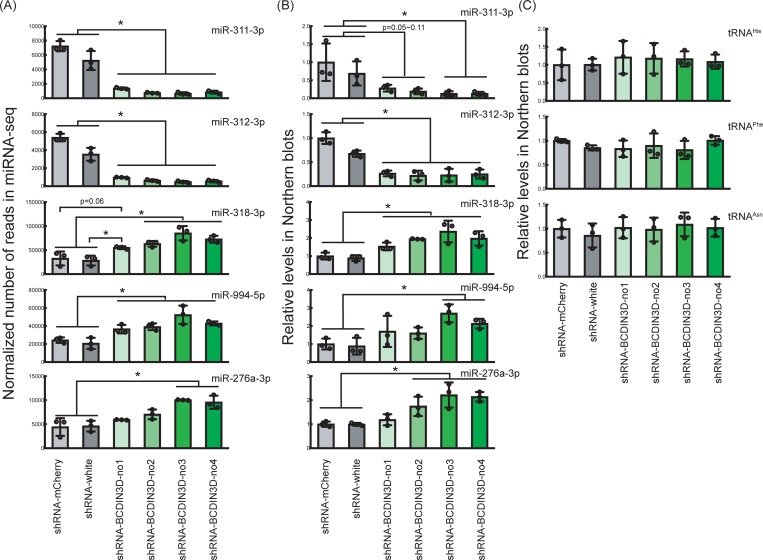
Fig 4. Abundance of dysregulated miRNAs determined by sRNA-seq and Northern blots.
(A) Normalized number of reads of miRNAs in control and BCDIN3D knockdown ovaries determined by sRNA-seq. (B) Relative abundance of miRNAs in control and BCDIN3D knockdown ovaries determined by Northern blots. Representative images are shown in Fig 3. (C) Relative abundance of tRNAs in control and BCDIN3D knockdown ovaries determined by Northern blots. Representative images are shown in Fig 3. Mean ± SD for three biological replicates. P-value <0.05 is indicated by * (Student's t-test).
Fig 5
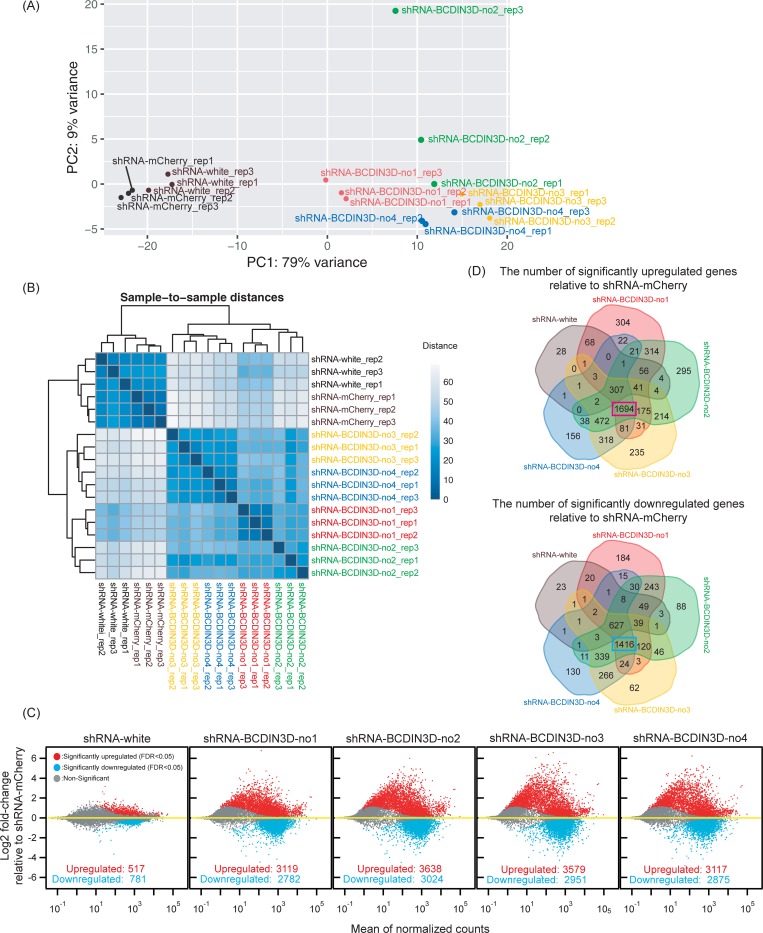
Fig 5. Ovary-specific knockdown of BCDIN3D causes dysregulation of mRNA profile in ovaries.
(A) Principal component analysis of mRNA profiles in ovaries determined by mRNA-seq. Three biological replicates each [rep1, rep2, rep3] for each genotype were tested.(B) Sample-to-sample distance matrix of mRNA profiles in ovaries determined by mRNA-seq.(C) MA plots of mRNA expression. x-axis shows mean of normalized counts among the 6 biological samples tested (3 biological replicates each for two genotypess compared in each graph). y-axis shows log2 fold-change in the normalized counts relative to shRNA-mCherry control. (D) Venn diagrams of the numbers of significantly (FDR<0.05) upregulated genes (top) and downregulated genes (bottom) relative to shRNA-mCherry control.
Fig 6
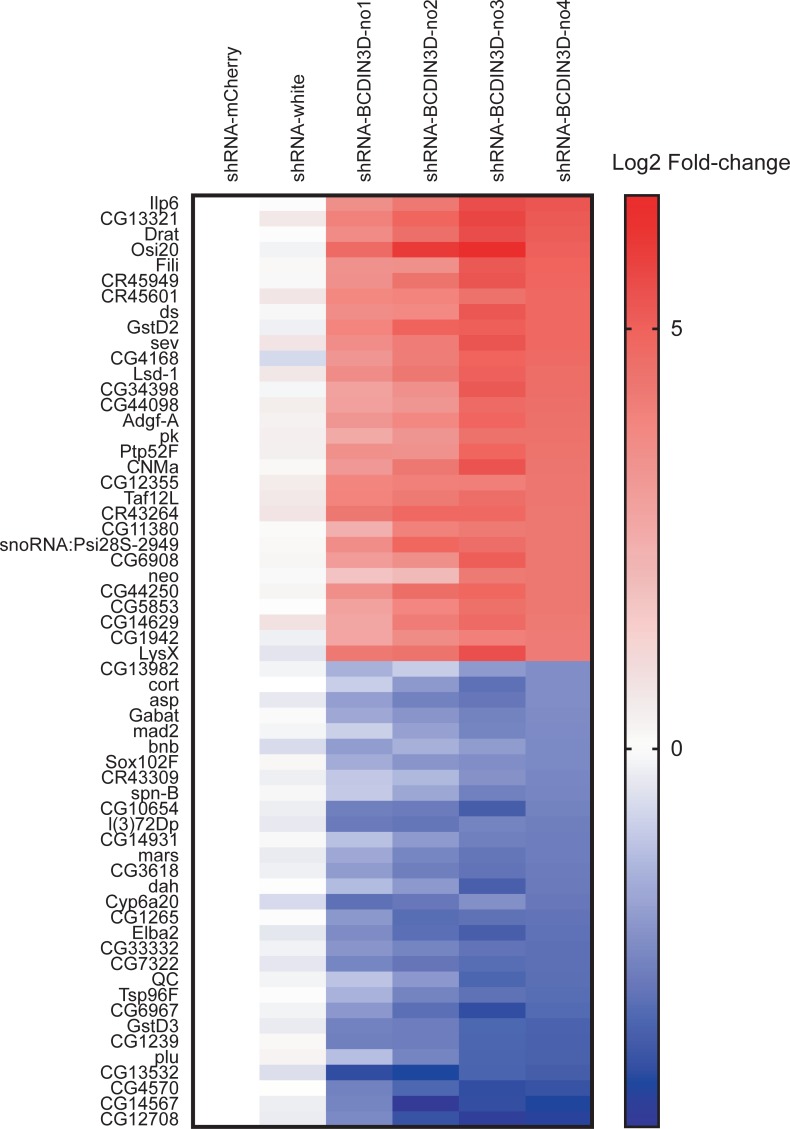
Fig 6. Top30 upregulated and downregulated genes.
Heatmap of relative abundance of top 30 upregulated and top 30 downregulated genes determined by mRNA-seq. Mean log2 fold-change of three biological replicates relative to shRNA-mCherry control is shown. Genes are sorted in descending order of log2 fold-change in shRNA-BCDIN3D-no4.

References

    1. Harcourt EM, Kietrys AM, Kool ET. Chemical and structural effects of base modifications in messenger RNA. Nature. 2017;541(7637):339–46. 10.1038/nature21351 - DOI - PMC - PubMed
    1. Helm M, Motorin Y. Detecting RNA modifications in the epitranscriptome: predict and validate. Nature reviews Genetics. 2017;18(5):275–91. 10.1038/nrg.2016.169 . - DOI - PubMed
    1. Zhao BS, Roundtree IA, He C. Post-transcriptional gene regulation by mRNA modifications. Nature reviews Molecular cell biology. 2017;18(1):31–42. 10.1038/nrm.2016.132 - DOI - PMC - PubMed
    1. Jonkhout N, Tran J, Smith MA, Schonrock N, Mattick JS, Novoa EM. The RNA modification landscape in human disease. Rna. 2017;23(12):1754–69. 10.1261/rna.063503.117 - DOI - PMC - PubMed
    1. Akichika S, Hirano S, Shichino Y, Suzuki T, Nishimasu H, Ishitani R, et al. Cap-specific terminal N (6)-methylation of RNA by an RNA polymerase II-associated methyltransferase. Science. 2019;363(6423). 10.1126/science.aav0080 . - DOI - PubMed

Publication types

MeSH terms