


Indications for increase in caesarean delivery
- PMID: 31146737
- PMCID: PMC6543674
- DOI: 10.1186/s12978-019-0723-8
Indications for increase in caesarean delivery
Abstract
Background: The increasing caesarean delivery rate worldwide is followed by increased maternal morbidity due to pathological placentation, peripartum hysterectomy and obstetric bleeding. The aim of this study was to investigate the indications for caesarean delivery.
Study design: A retrospective observational study. Data were retrieved from the Swedish Pregnancy Register and obstetric records at a tertiary hospital in Sweden between the early 1990s and 2015.
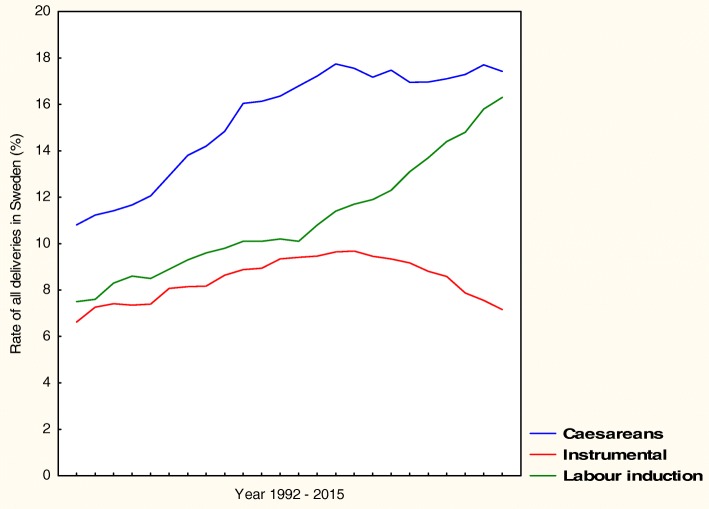
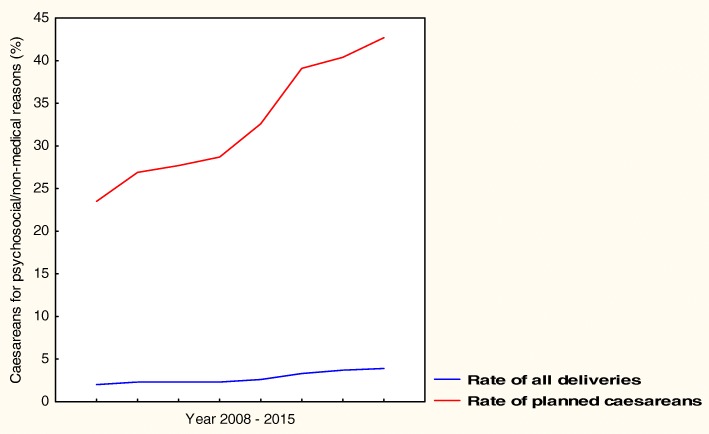
Results: Caesarean delivery in Sweden increased from 10% in the early 1990s to 17% in 2015 concomitantly with decreased instrumental delivery and increased labour induction. Most planned caesareans at the tertiary hospital were performed on maternal request with a rate increasing from 0.6 to 4.6% of all deliveries (p < 0.001), and 60% of these women reported secondary fear of vaginal delivery. The second most common indication previous uterine scar increased from 1.2 to 2.3% (p < 0.001). Most urgent caesareans in 2015 were carried out because of prolonged labour with the rate increasing from 2.1% to 5.4% of all deliveries (p < 0.001). The second most common indication was imminent fetal asphyxia which increased from 2.4 to 2.6% (p < 0.01).
Conclusions: The Swedish caesarean delivery rate increased concomitantly with a decrease in instrumental delivery and an increase in labour induction. Most of the planned caesareans were performed on maternal request and most of the urgent caesareans were carried out because of prolonged labour. These findings emphasise the importance of standardised definitions of maternal request and follow-up after a negative birth experience, as well as adequate definitions of prolonged labour and foetal asphyxia to decrease unnecessary caesareans.
Conflict of interest statement
The authors declare that they have no competing interests.
Figures
References
-
- World Health Organization. WHO statement on cesarean section rates. Geneva, Switzerland 2015. Available at http://www.who.int.
Publication types
MeSH terms
LinkOut - more resources
Full Text Sources
Medical
