


Study-based registers reduce waste in systematic reviewing: discussion and case report
- PMID: 31146776
- PMCID: PMC6542007
- DOI: 10.1186/s13643-019-1035-3
Study-based registers reduce waste in systematic reviewing: discussion and case report
Abstract
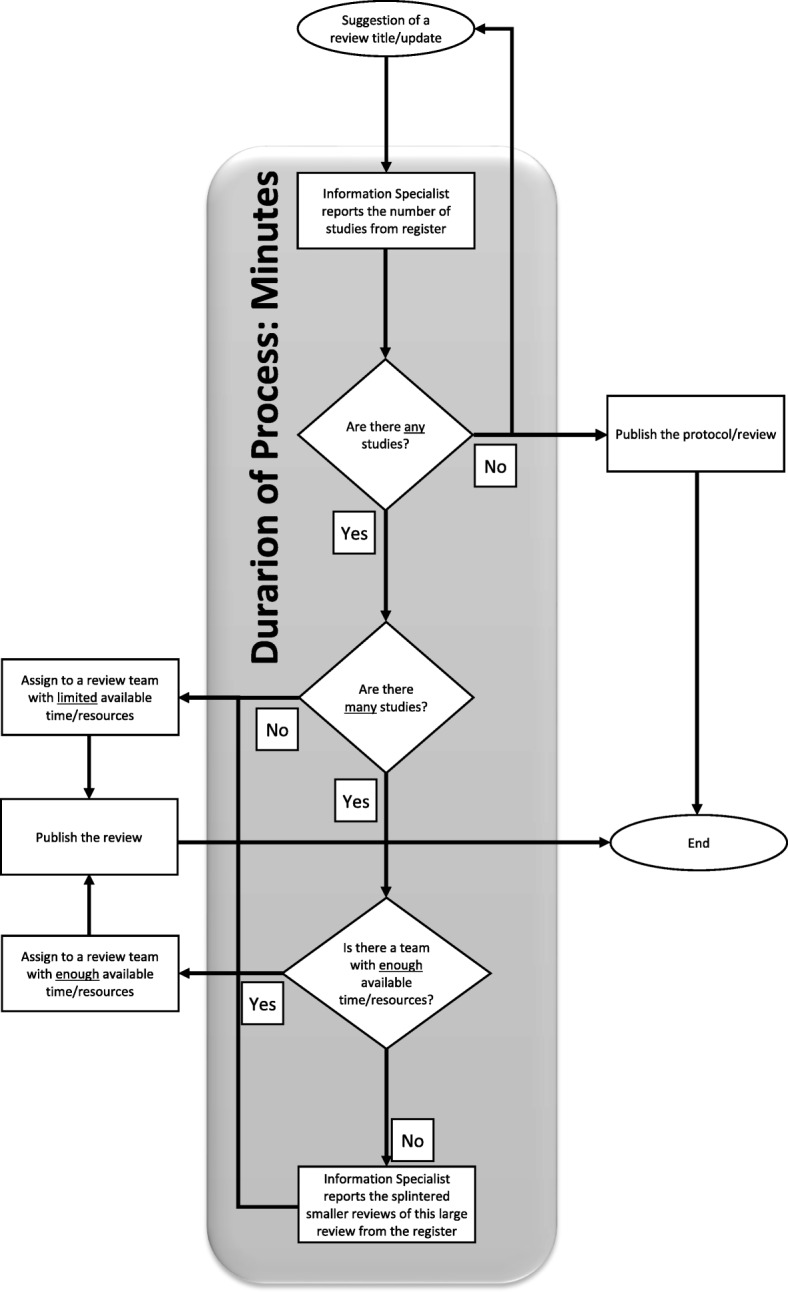
Background: Maintained study-based registers (SBRs) have, at their core, study records linked to, potentially, multiple other records such as references, data sets, standard texts and full-text reports. Such registers can minimise and refine searching, de-duplicating, screening and acquisition of full texts. SBRs can facilitate new review titles/updates and, within seconds, inform the team about the potential workload of each task.
Methods: We discuss the advantages/disadvantages of SBRs and report a case of how such a register was used to develop a successful grant application and deliver results-reducing considerable redundancy of effort.
Results: SBRs saved time in question-setting and scoping and made rapid production of nine Cochrane systematic reviews possible.
Conclusion: Whilst helping prioritise and conduct systematic reviews, SBRs improve quality. Those funding information specialists for literature reviewing could reasonably stipulate the resulting SBR to be delivered for dissemination and use beyond the life of the project.
Keywords: Grant application; Increasing value; Reducing waste; Research prioritisation; Study-based registers; Systematic reviews.
Conflict of interest statement
The authors declare that they have no competing interests. The views expressed in this paper are the authors’ own views not the views of their affiliated organisations.
Figures
References
-
- Chalmers Iain, Bracken Michael B, Djulbegovic Ben, Garattini Silvio, Grant Jonathan, Gülmezoglu A Metin, Howells David W, Ioannidis John P A, Oliver Sandy. How to increase value and reduce waste when research priorities are set. The Lancet. 2014;383(9912):156–165. doi: 10.1016/S0140-6736(13)62229-1. - DOI - PubMed
-
- Chan An-Wen, Song Fujian, Vickers Andrew, Jefferson Tom, Dickersin Kay, Gøtzsche Peter C, Krumholz Harlan M, Ghersi Davina, van der Worp H Bart. Increasing value and reducing waste: addressing inaccessible research. The Lancet. 2014;383(9913):257–266. doi: 10.1016/S0140-6736(13)62296-5. - DOI - PMC - PubMed
-
- Glasziou Paul, Altman Douglas G, Bossuyt Patrick, Boutron Isabelle, Clarke Mike, Julious Steven, Michie Susan, Moher David, Wager Elizabeth. Reducing waste from incomplete or unusable reports of biomedical research. The Lancet. 2014;383(9913):267–276. doi: 10.1016/S0140-6736(13)62228-X. - DOI - PubMed
-
- Ioannidis John P A, Greenland Sander, Hlatky Mark A, Khoury Muin J, Macleod Malcolm R, Moher David, Schulz Kenneth F, Tibshirani Robert. Increasing value and reducing waste in research design, conduct, and analysis. The Lancet. 2014;383(9912):166–175. doi: 10.1016/S0140-6736(13)62227-8. - DOI - PMC - PubMed
Publication types
MeSH terms
Grants and funding
LinkOut - more resources
Full Text Sources
