


Gait alterations during walking with partial body weight supported on a treadmill and over the ground
- PMID: 31148585
- PMCID: PMC6544641
- DOI: 10.1038/s41598-019-44652-y
Gait alterations during walking with partial body weight supported on a treadmill and over the ground
Abstract
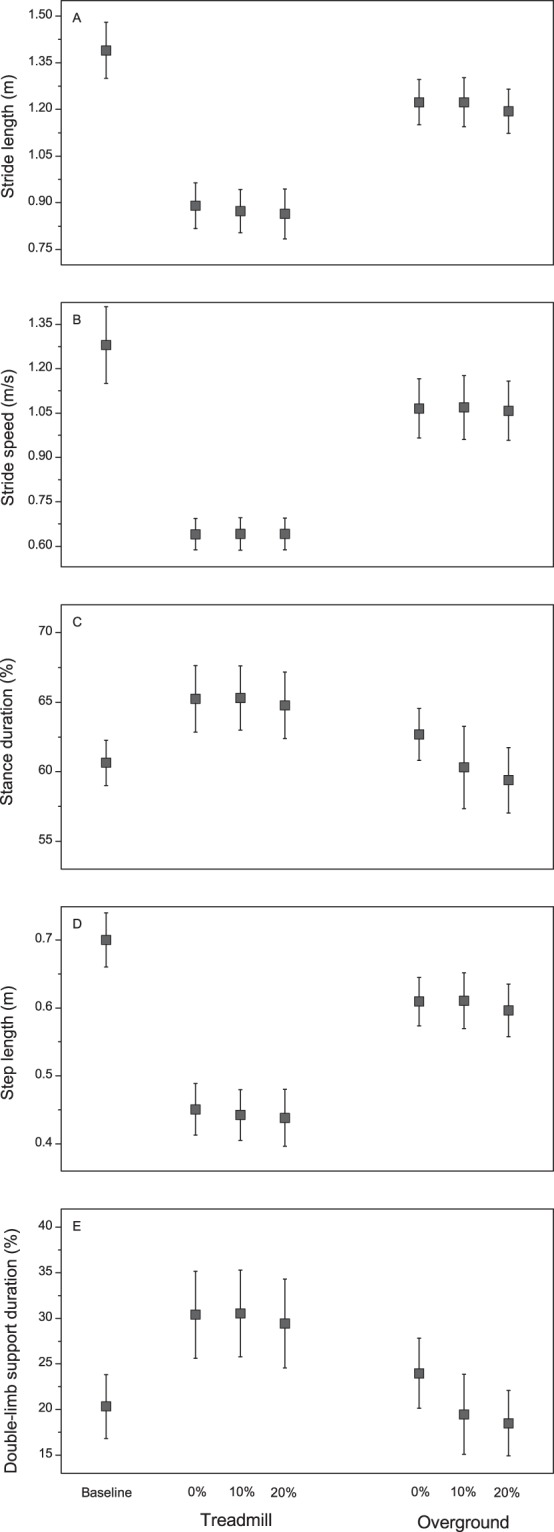
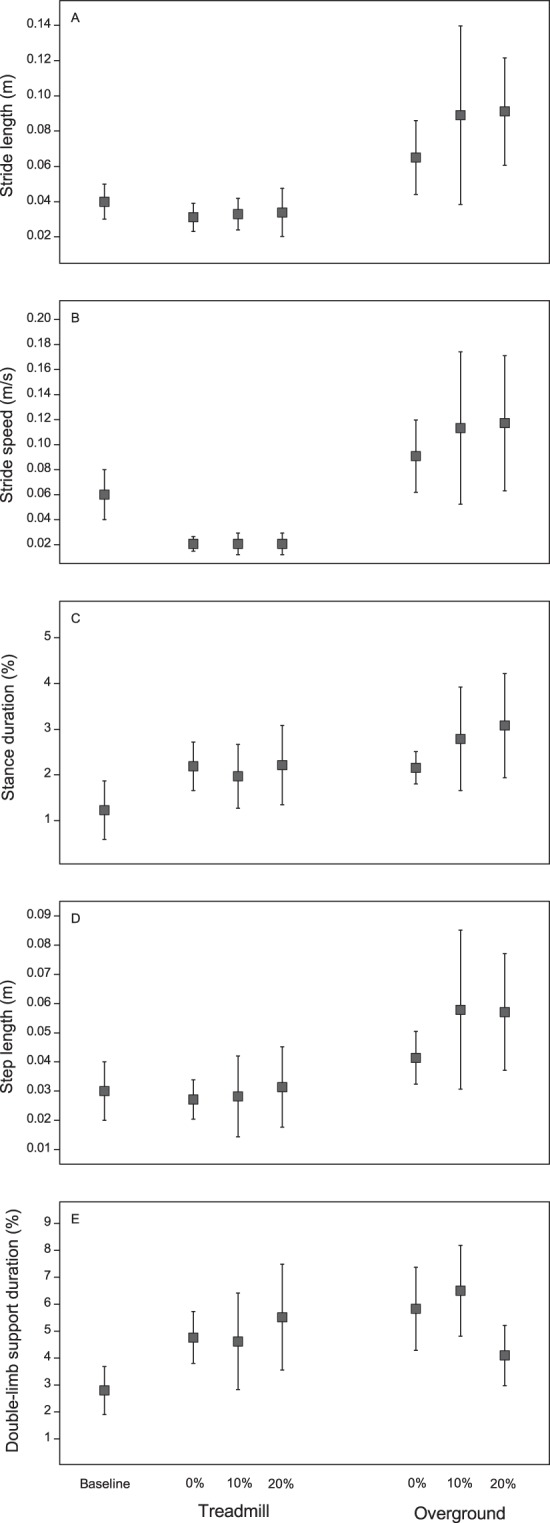
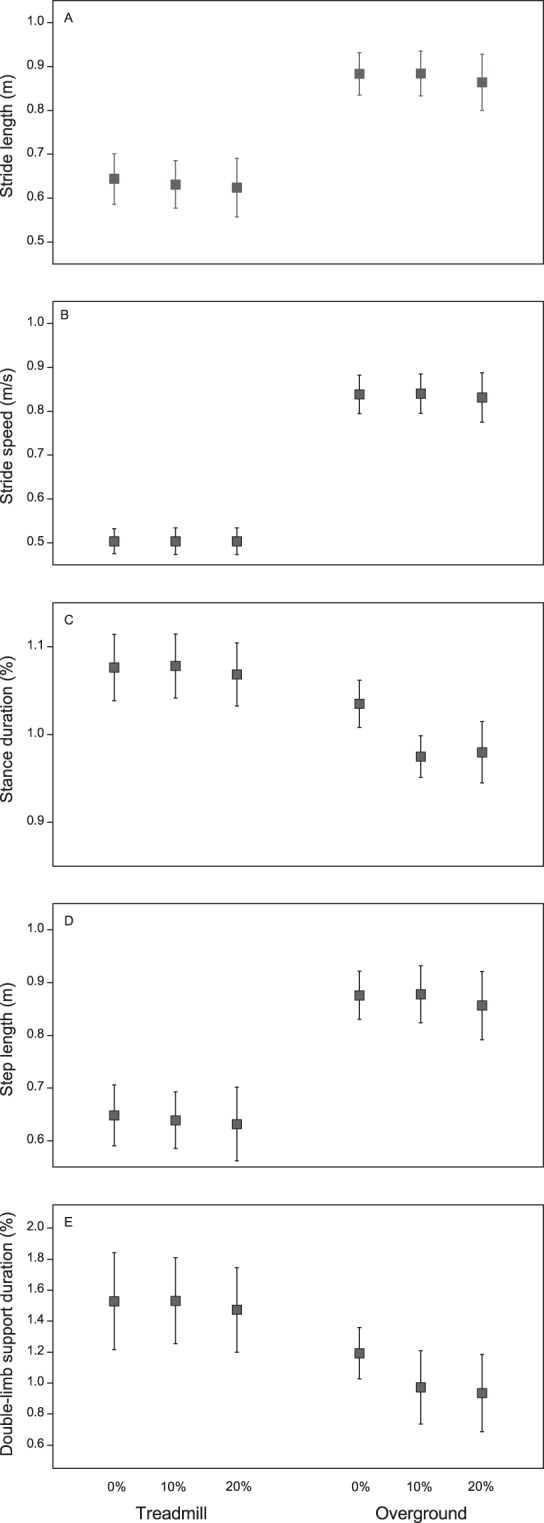
Understanding the changes induced by body weight support (BWS) systems when non-disabled adults walk can help develop appropriate rehabilitation protocols. The purpose of this study was to investigate spatial-temporal gait alterations during walking with BWS on a treadmill and over the ground. Fourteen non-disabled young adults (including seven women) walked over the ground and on a treadmill with 0%, 10%, and 20% of BWS at 80% of their self-selected comfortable walking speed (baseline). The stride length and speed, step length, and stance and double-limb support durations were calculated and compared among the different conditions. The non-disabled adults modulated their spatial-temporal gait parameters according to the surface and percentage of BWS. They walked with shorter and slower strides and shorter steps and spent more time in contact with the support surface as they walked on the treadmill than as they did over the ground. Walking on the treadmill promoted less variability and a higher rate of change than did walking over the ground. Both the surface and amount of BWS should be taken into consideration when using BWS systems for (re)learning and/or reestablishing gait.
Conflict of interest statement
The authors declare no competing interests.
Figures
References
-
- DePaul VG, Wishart LR, Richardson J, Lee TD, Thabane L. Varied overground walking-task practice versus body-weight-supported treadmill training in ambulatory adults within one year of stroke: a randomized controlled trial protocol. BMC Neurol. 2011;11:129. doi: 10.1186/1471-2377-11-129. - DOI - PMC - PubMed
Publication types
MeSH terms
LinkOut - more resources
Full Text Sources
Medical
