


Myeloproliferative neoplasms (MPNs) - Part 1: An overview of the diagnosis and treatment of the "classical" MPNs
- PMID: 31148835
- PMCID: PMC6516940
- DOI: 10.5737/23688076284262268
Myeloproliferative neoplasms (MPNs) - Part 1: An overview of the diagnosis and treatment of the "classical" MPNs
Abstract
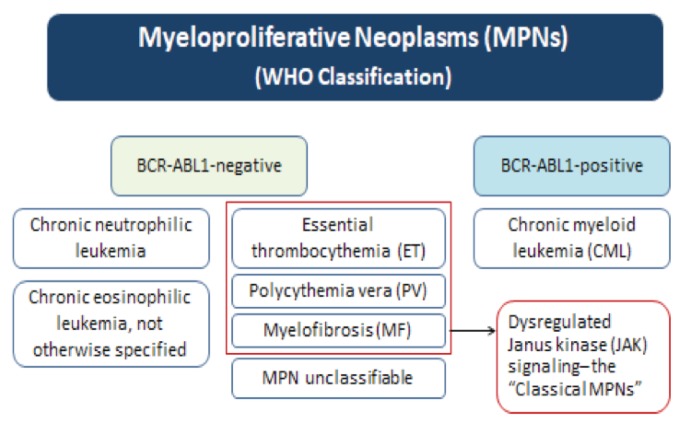
Myeloproliferative neoplasms (MPNs) are rare, yet potentially life-threatening, disorders caused by overproliferation of bone marrow stem cells. The symptom burden experienced by patients with the BCR-ABL1-negative MPNs (also referred to as the classical MPNs, i.e., essential thrombocythemia [ET], polycythemia vera [PV] and myelofibrosis [MF]) can be significant and can negatively impact quality of life (QOL). Since patients with these MPNs can live for several years, thereby requiring long-term treatment and follow-up, nurses play an essential role in communicating with these patients, assessing their symptoms, and educating them on treatments and self-management strategies that can reduce their symptom burden. This article, which is the first of a two-part series, was developed to provide nurses and other healthcare professionals with a review of the diagnosis and treatment of the most common classical MPNs. The second article in this series (also available in this issue) will provide nurses with practical guidance for managing the symptom burden associated with MPNs in order to help enhance the overall health and well-being of patients living with these disorders.
Keywords: diagnosis; essential thrombocythemia; myelofibrosis; myeloproliferative neoplasms; nursing management; polycythemia vera; treatment.
Conflict of interest statement
CONFLICT OF INTEREST Sabrina Fowlkes has received honoraria from Novartis for speaking engagements, education program development and as a nurse consultant. Cindy Murray has received honoraria from Novartis for educational purposes. Adrienne Fulford has received honoraria from Novartis for speaking and a consultancy meeting. Tammy DeGelder has received honoraria from Novartis for speaking, education and consultancy. Nancy Siddiq has received honoraria from Novartis for educational activities. None of the authors received remuneration for writing of this article.
References
-
- Abdel-Wahab OI, Levine RL. Primary myelofibrosis: Update on definition, pathogenesis, and treatment. Annual Review of Medicine. 2009;60:233–45. - PubMed
-
- Arber DA, Orazi A, Hasserjian R, Thiele J, Borowitz MJ, Le Beau MM, Bloomfield, Vardiman JW. The 2016 revision to the World Health Organization classification of myeloid neoplasms and acute leukemia. Blood. 2016;127(20):2391–2405. - PubMed
-
- Cervantes F, Dupriez B, Pereira A, Passamonti F, Reilly JT, Morra E, Vannucchi AM, Tefferi A. New prognostic scoring system for primary myelofibrosis based on a study of the International Working Group for Myelofibrosis Research and Treatment. Blood. 2009;113(13):2895–2901. - PubMed
LinkOut - more resources
Full Text Sources
Other Literature Sources
Miscellaneous