. 2019 Aug:203:8-18.
doi: 10.1016/j.exppara.2019.05.007. Epub 2019 May 28.

Exploring protein myristoylation in Toxoplasma gondii

Affiliations

Exploring protein myristoylation in Toxoplasma gondii

Andrés M Alonso et al. Exp Parasitol. 2019 Aug.

Abstract

Toxoplasma gondii is an important human and veterinary pathogen and the causative agent of toxoplasmosis, a potentially severe disease especially in immunocompromised or congenitally infected humans. Current therapeutic compounds are not well-tolerated, present increasing resistance, limited efficacy and require long periods of treatment. On this context, searching for new therapeutic targets is crucial to drug discovery. In this sense, recent works suggest that N-myristoyltransferase (NMT), the enzyme responsible for protein myristoylation that is essential in some parasites, could be the target of new anti-parasitic compounds. However, up to date there is no information on NMT and the extent of this modification in T. gondii. In this work, we decided to explore T. gondii genome in search of elements related with the N-myristoylation process. By a bioinformatics approach it was possible to identify a putative T. gondii NMT (TgNMT). This enzyme that is homologous to other parasitic NMTs, presents activity in vitro, is expressed in both intra- and extracellular parasites and interacts with predicted TgNMT substrates. Additionally, NMT activity seems to be important for the lytic cycle of Toxoplasma gondii. In parallel, an in silico myristoylome predicts 157 proteins to be affected by this modification. Myristoylated proteins would be affecting several metabolic functions with some of them being critical for the life cycle of this parasite. Together, these data indicate that TgNMT could be an interesting target of intervention for the treatment of toxoplasmosis.

Keywords: Calcium homeostasis; Myristoylome; N-myristoyltransferase; Protein myristoylation; Toxoplasma gondii.


Figures

Figure 1.
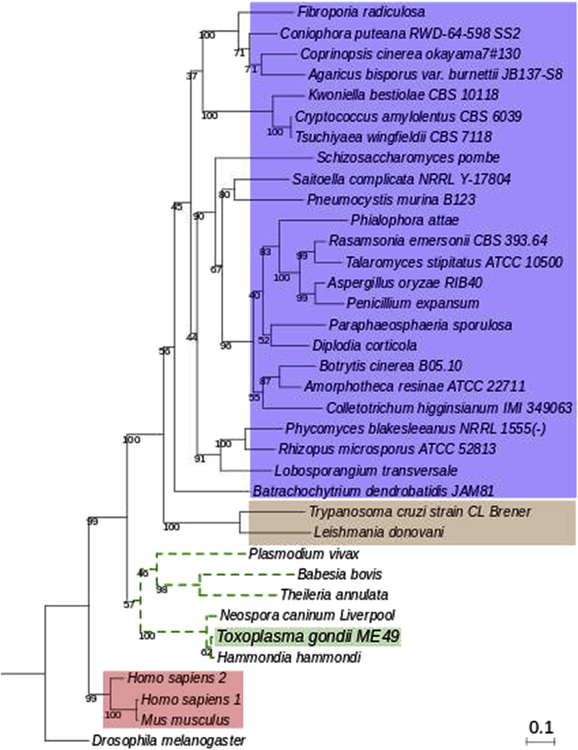
Figure 1.. Phylogenetic analysis of TGME49_209160 amino acid sequence.
Phylogenetic tree representing evolutionary relationships between the TGME49_209160 amino acid sequence and reference sequences of known and predicted NMTs of eukaryotic organisms such as other apicomplexans (dotted green lines), trypanosomatids (brown box), mammals (red box) and fungi (blue box). Sequence of Drosophila melanogaster was included as outgroup.
Figure 2.
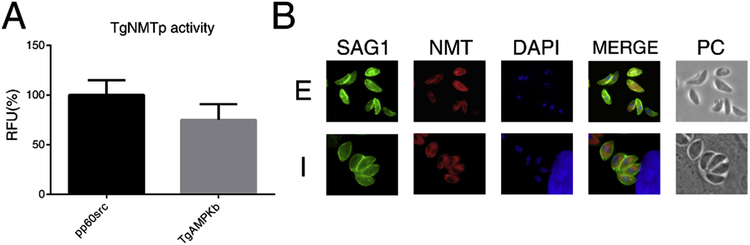
Figure 2.. Enzymatic activity and cellular localization of TgNMT.
(A) TgNMTp was incubated with either with a standard substrate (pp60src) or a putative T. gondii substrate (TgAMPKb; access number Toxodb: TGME49_268960) as described in the Material and Methods section. Activity is expressed as a percentage of the relative fluorescence units (RFU) obtained with pp60src. Appropriate blanks (without Myristoyl-CoA or substrate) are already subtracted. (B) Indirect Immunofluorescence assay using the anti-TgNMT serum (NMT, red) on intra- (I) or extracellular (E) parasites. Mouse anti-SAG1 (SAG1, green) was used to label the plasma membrane and DAPI was used to mark nuclei. Parasites were observed by phase-contrast microscopy (PC).
Figure 3.
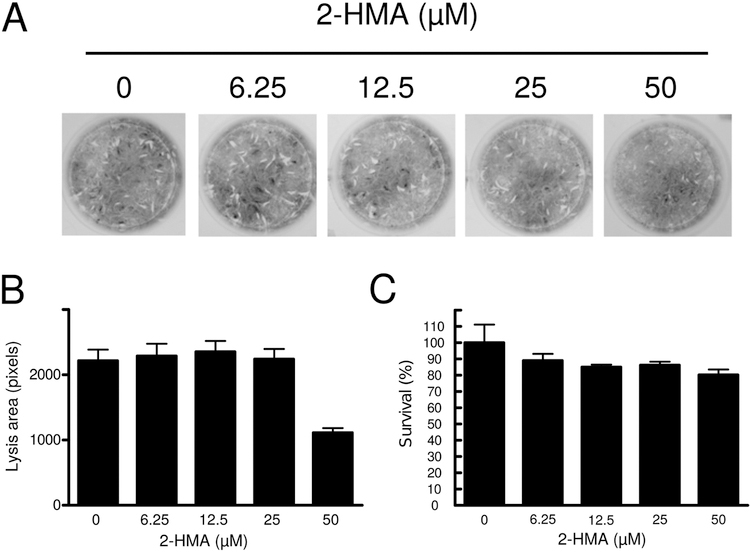
Figure 3.. NMT activity is necessary for T. gondii lytic cycle.
(A) Plaque lysis assay performed on HFF monolayers infected with tachyzoites and incubated in presence of 0 (vehicle) or increasing concentrations of 2HMA. (B) Quantitation of lysis area. (C) Cellular cytotoxicity and of increasing concentrations of 2HMA was evaluated on HFF monolayers through the reduction of MTT. The experiments were carried out in duplicate in three independent experiments. Asterisk indicates significant differences with p < 0.05.
Figure 4.
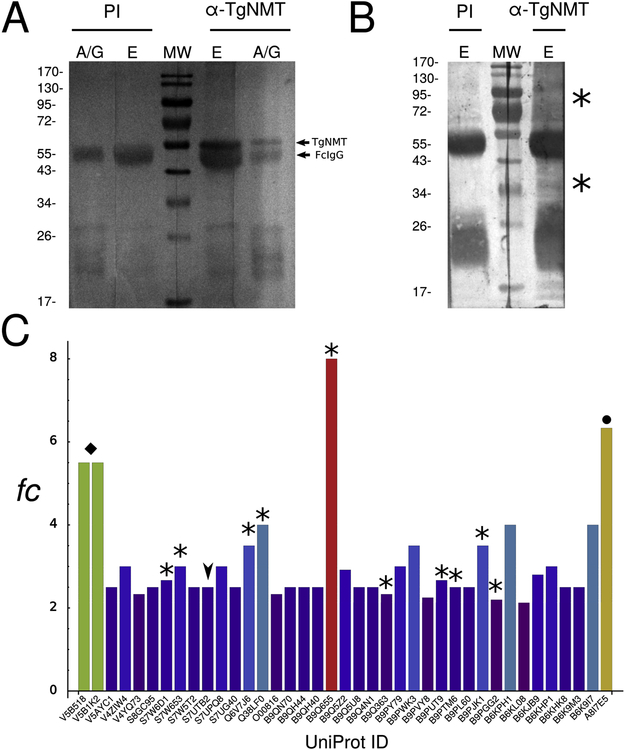
Figure 4.. TgNMT interactome.
(A) Western blot analysis of T. gondii NMT immunoprecipitation with TgNMT antiserum (α-TgNMT). The pre-immune fraction (PI) was used as negative control. A/G: proteins bound to A/G sepharose beads even after elution; E: eluted proteins from with A/G sepharose; MW: molecular weight pattern. TgNMT migration is indicated with an arrowhead. (B) Ponceau red stain of Western blot described above. Asterisks indicate bands corresponding to potential TgNMT partners. (C) Bar chart of spectral count (SpC) for every protein detected in the MudPIT analysis. Only those proteins whose SpC fold change (fc) exceeded the value of 2 were plotted. Asterisks indicate proteins that participate in the translation process. Arrowheads indicate a predicted TgNMT substrate. A black diamond indicates proteins that participate in vesicular transport. A black circle indicates GRA7 antigen, a well-represented antigen in the total proteome.
Figure 5.
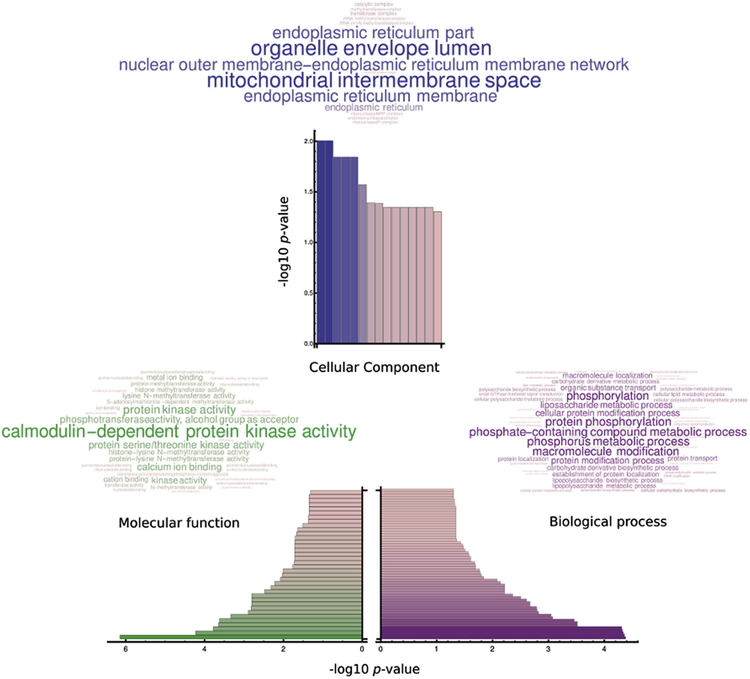
Figure 5.. Gene Ontology (GO) analysis of the in silico myristoylome.
Possible biological process affected (A); predicted molecular function involved (B) and putative cellular components affected (C) by protein myristoylation.
Figure 6.
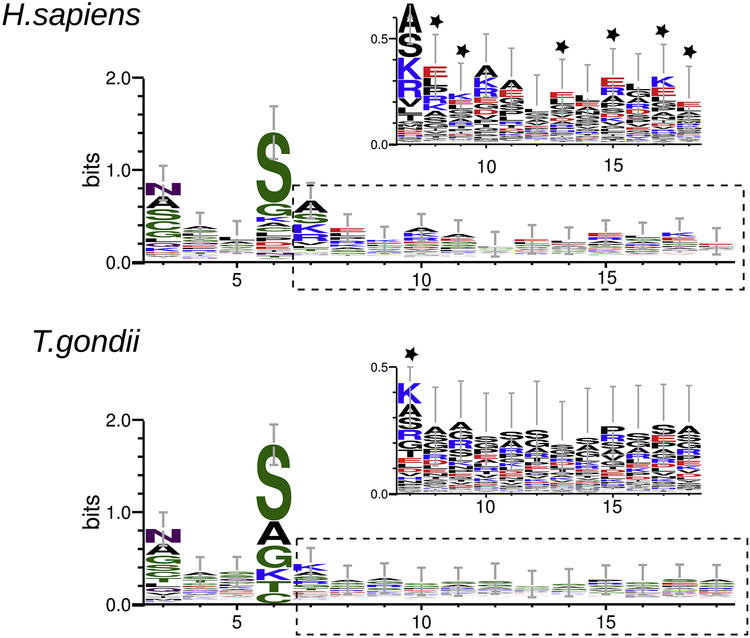
Figure 6.. Web logo of HsNMT and TgNMT peptides substrates.
Amino acid alignment of HsNMT and TgNMT peptide substrates from positions 3 to 18. Residues are highlighted according to their chemistry (polar: green; neutral: purple; basic: blue; acidic: red; hydrophobic: black). For both enzymes, a zoomed view over positions 6 to 18 (dotted lines) is shown; residues are highlighted by charge (neutral: black; positive: blue; negative: red). Stars indicate differences.

References

    1. Adams PD, Seeholzer S & Ohh M, 2002. Identification of Associated Proteins by Coimmunoprecipitation In: Argentine J, (Ed., Molecular Cloning: a Laboratory Manual. Cold Spring Harbor Laboratory Press, Cold Spring Harbor, N.Y., pp. 59–74.
    1. Albarracin RM, Becher ML, Farran I, Sander VA, Corigliano MG, Yacono ML, Pariani S, Lopez ES, Veramendi J, and Clemente M, 2015. The fusion of Toxoplasma gondii SAG1 vaccine candidate to Leishmania infantum heat shock protein 83-kDa improves expression levels in tobacco chloroplasts. Biotechnol J 10, 748–759. - PubMed
    1. Bangoura B, Zoller B, and Daugschies A, 2011. [Prevalence and relevance of avian Toxoplasma gondii infections in Europe]. Berl Munch Tierarztl Wochenschr 124, 485–496. - PubMed
    1. Beck JR, Rodriguez-Fernandez IA, de Leon JC, Huynh MH, Carruthers VB, Morrissette NS, and Bradley PJ, 2010. A novel family of Toxoplasma IMC proteins displays a hierarchical organization and functions in coordinating parasite division. PLoS Pathog 6, e1001094. - PMC - PubMed
    1. Billker O, Lourido S, and Sibley LD, 2009. Calcium-dependent signaling and kinases in apicomplexan parasites. Cell Host Microbe 5, 612–622. - PMC - PubMed

MeSH terms

Substances

LinkOut - more resources