. 2019 May 31;16(11):1925.
doi: 10.3390/ijerph16111925.

Emerging Resistance of Neglected Tropical Diseases: A Scoping Review of the Literature

Affiliations

Emerging Resistance of Neglected Tropical Diseases: A Scoping Review of the Literature

Folahanmi T Akinsolu et al. Int J Environ Res Public Health. .

Abstract

Background: Antimicrobial resistance (AMR) is a global public health threat with the potential to cause millions of deaths. There has been a tremendous increase in the use of antimicrobials, stemming from preventive chemotherapy elimination and control programs addressing neglected tropical diseases (NTDs). This study aims to identify the frequency of drug resistance for 11 major NTDs and 20 treatment drugs within a specific period by systematically analyzing the study design, socio-demographic factors, resistance, and countries of relevant studies. Methods: Adhering to PRISMA guidelines, we performed systematic reviews of the major 11 NTDs to identify publications on drug resistance between 2000 and 2016. A quality assessment tool adapted for evaluating observational and experimental studies was applied to assess the quality of eligible studies. Results: One of the major findings is that six NTDs have information on drug resistance, namely human African trypanosomiasis, leishmaniasis, onchocerciasis, schistosomiasis, soil-transmitted helminths, and trachoma. Many studies recorded resistance due to diagnostic tests, and few studies indicated clinical resistance. Although most studies were performed in Africa where there is the occurrence of several NTDs, there was no link between disease burden and locations of study. Conclusions: Based on this study we deduce that monitoring and surveillance systems need to be strengthened to enable the early detection of AMR and the mitigation of its global spread.

Keywords: antimicrobial resistance; drug resistance; monitoring; neglected tropical diseases; surveillance.


Conflict of interest statement

The authors declare no conflict of interest.

Figures
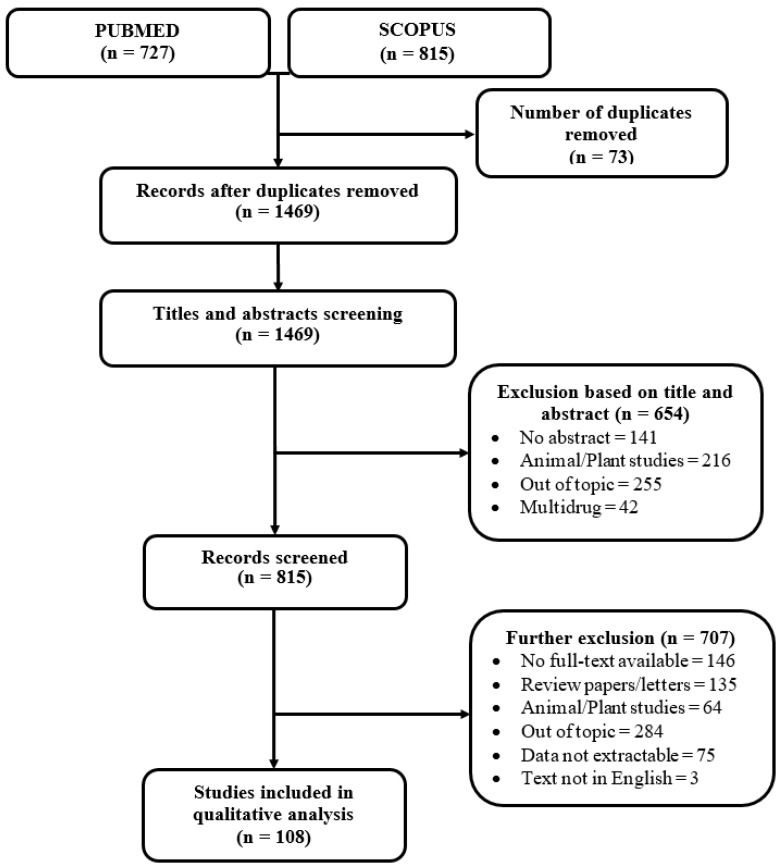
Figure 1
Figure 1
PRISMA flow chart.
Figure 2
Figure 2
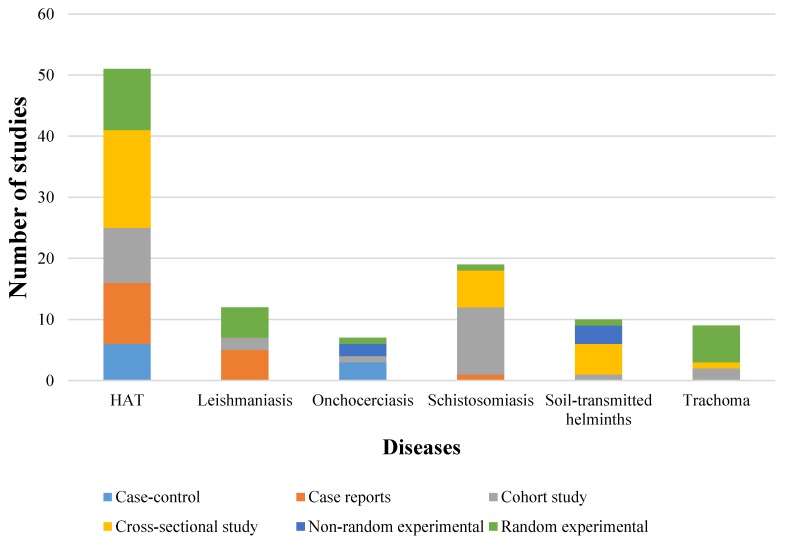
Prevalence of the study types of diseases. HAT: human African trypanosomiasis.
Figure 3
Figure 3
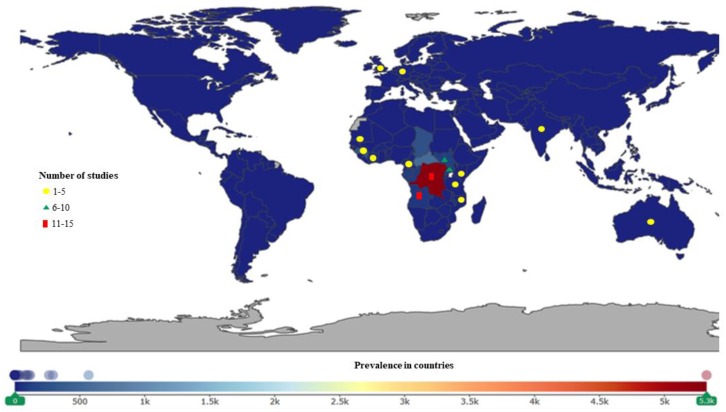
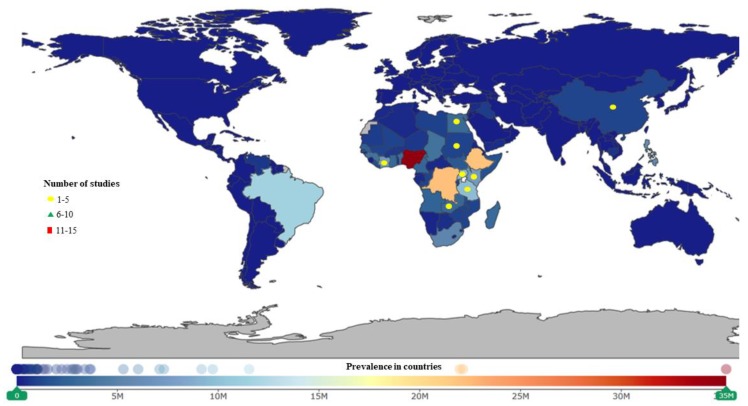
Human African trypanosomiasis (HAT) studies were conducted in Africa, Asia, Australia, and Europe. More studies were conducted in the Democratic Republic of Congo (DRC), Angola, South Sudan, and Uganda. The DRC, Central African Republic (CAR), and Gabon have the highest prevalence.
Figure 4
Figure 4
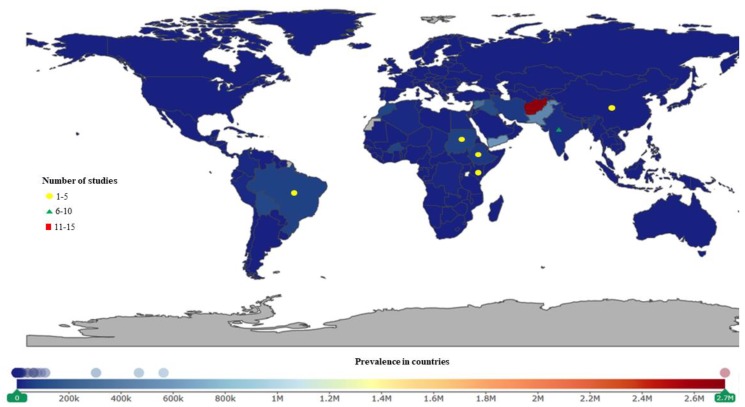
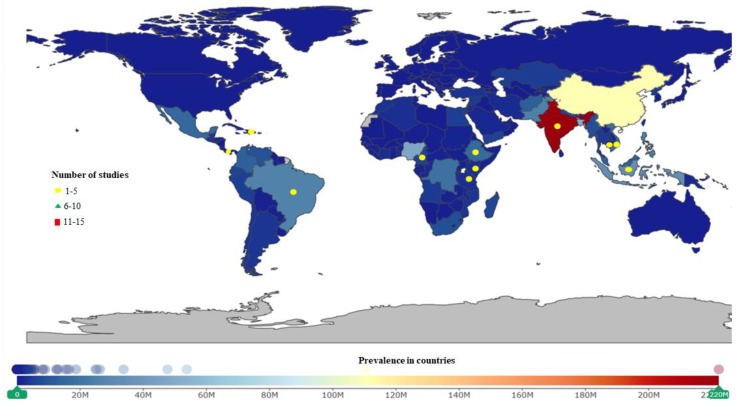
Leishmaniasis studies were conducted more often in Asia. India had the highest number of studies. Afghanistan, Yemen, and Pakistan have the highest prevalence.
Figure 5
Figure 5
Soil-transmitted helminths studies were conducted more often in Africa. China, India, and Nigeria have the highest prevalence.
Figure 6
Figure 6
Schistosomiasis studies were mostly conducted in Africa. Egypt and Cote d’Ivoire had the most studies. Nigeria, the DRC, and Ethiopia have the highest prevalence.
Figure 7
Figure 7
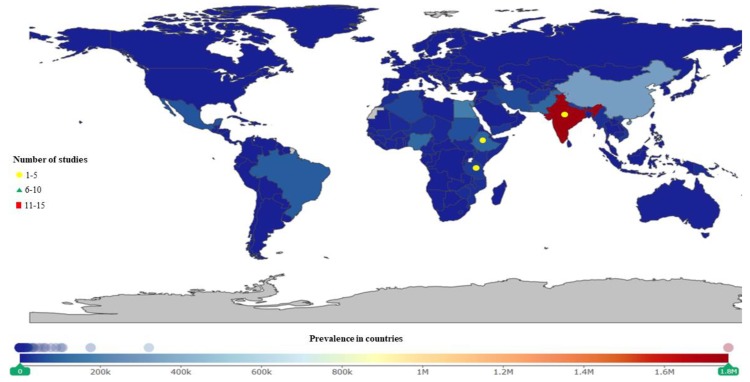
Trachoma studies were conducted more in Africa and Asia. Tanzania, Ethiopia, and Nepal had the most studies. Trachoma is highly prevalent in India, China, and Egypt.
Figure 8
Figure 8
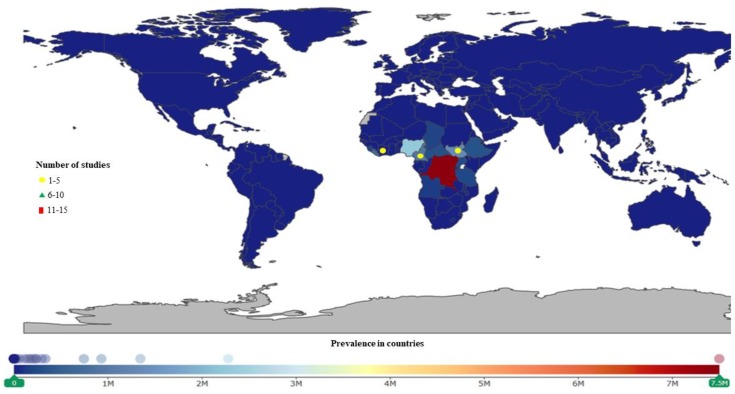
Onchocerciasis studies were conducted only in Africa (Cameroon, Ghana, and South Sudan). Onchocerciasis is highly prevalent in the DRC, Nigeria, and South Sudan. Source: The maps and prevalence of the studied neglected tropical diseases (NTDs) were created and retrieved from the Global Health Data Exchange [24].

References

    1. Kappagoda S., Ioannidis J. Prevention and Control of Neglected Tropical Diseases: Overview of Randomized Trials, Systematic Reviews and Meta-Analyses. Volume 92. Bulletin of the World Health Organization; Geneva, Switzerland: 2014. pp. 356–366C. - PMC - PubMed
    1. Akinsolu F.T., de Paiva V.N., Souza S.S., Varga O. Patent landscape of neglected tropical diseases: An analysis of worldwide patent families. Glob. Health. 2017;13:82. doi: 10.1186/s12992-017-0306-9. - DOI - PMC - PubMed
    1. World Health Organization . Neglected Tropical Diseases. WHO; Geneva, Switzerland: 2017. [(accessed on 12 March 2018)]. Available online: http://www.who.int/neglected_diseases/diseases/en/
    1. Hotez P.J. Ten failings in global neglected tropical diseases control. PLoS Negl. Trop. Dis. 2017;11:e0005896. doi: 10.1371/journal.pntd.0005896. - DOI - PMC - PubMed
    1. Kealey A. Neglected tropical diseases: Infection, modeling, and control. J. Health Care Poor Underserved. 2010;21:53–69. doi: 10.1353/hpu.0.0270. - DOI - PubMed

Publication types

Substances