


X-linked hypophosphatemic rickets: an Italian experts' opinion survey
- PMID: 31151476
- PMCID: PMC6545008
- DOI: 10.1186/s13052-019-0654-6
X-linked hypophosphatemic rickets: an Italian experts' opinion survey
Abstract
Background: X-linked hypophosphatemic rickets (XLH) is the first cause of inherited hypophosphatemia and is caused by mutation in the PHEX gene, resulting in excessive expression of the phosphaturic factor FGF23. Symptoms are mainly related to rickets in children and osteomalacia in adults and cause several complications that can be highly invalidating. Due to its rarity, XLH is poorly known and diagnosis is frequently delayed. Conventional treatment is based on oral phosphate salts supplementation and activated vitamin D analogs, which however, cannot cure the disease in most cases.
Objective: Due to the low prevalence of XLH, an experts' opinion survey was conducted across Italian centers to collect data on XLH and on its management.
Methods: A questionnaire was developed by a group of experts to collect data on XLH epidemiology, diagnosis and treatment in Italy.
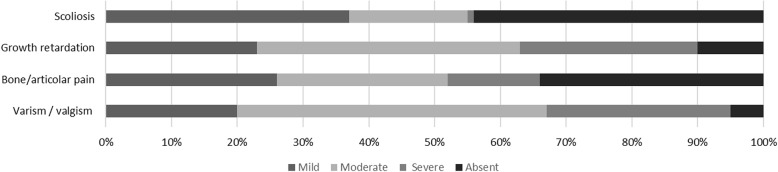
Results: Data from 10 Italian centers (nine of which pediatric) on 175 patients, followed between 1998 and 2017, were included in the survey. Most patients were followed since childhood and 63 children became adults during the investigated period. The diagnosis was made before the age of 1 and between 1 and 5 years in 11 and 50% of cases, respectively. Clinically apparent bone deformities were present in 95% of patients. These were ranked moderate/severe in 75% of subjects and caused growth stunting in 67% of patients. Other frequent complications included bone pain (40%), dental abscesses (33%), and dental malpositions (53%). Treatment protocols varied substantially among centers. Nephrocalcinosis was observed in 34% of patients. Tertiary hyperparathyroidism developed in 6% of patients.
Conclusions: XLH remains a severe condition with significant morbidities.
Keywords: FGF23; Osteomalacia; Phosphate; Rickets; Vitamin D.
Conflict of interest statement
The authors declare that they have no competing interests.
References
-
- Haffner D, Waldegger S. Disorders of phosphorus metabolism. In: Geary DF, Schaefer F, editors. Pediatric kidney disease. Berlin Heidelberg: Springer-Verlag; 2016. pp. 953–972.
-
- Whyte MP, Schranck FW, Armamento-Villareal R. X-linked hypophosphatemia: a search for gender, race, anticipation, or parent of origin effects on disease expression in children. J Clin Endocrinol Metab. 1996;81(11):4075–4080. - PubMed
