


Confidentiality agreements: a challenge in market regulation
- PMID: 31155003
- PMCID: PMC6545740
- DOI: 10.1186/s12939-019-0916-3
Confidentiality agreements: a challenge in market regulation
Abstract
Background: Sustainability and the ability to maintain the right to health, with the guarantee of access to quality medicines and health services, have been a great challenge for countries with universal health systems. The great technological advances bring with it an expressive increase in the expenditures of the health systems, especially those directed towards the acquisition of high-cost drugs, which are still under patent protection, have a high cost and, in some cases, present uncertainties about their effectiveness and safety. As a way of maintaining the proper functioning of the systems and guaranteeing access to these medicines, some countries started to negotiate discounts with manufacturing companies. Pricing agreements have been adopted by developed countries with the objective of reducing their spending on high-cost medicines and, although they represent an opportunity for better negotiation with the industries, they violate the principle of transparency that regulates the world market. However, the existence of confidentiality agreements has meant that the declared prices are not the actual prices, unfairly harming the countries that use these price lists as beacons in their systems.
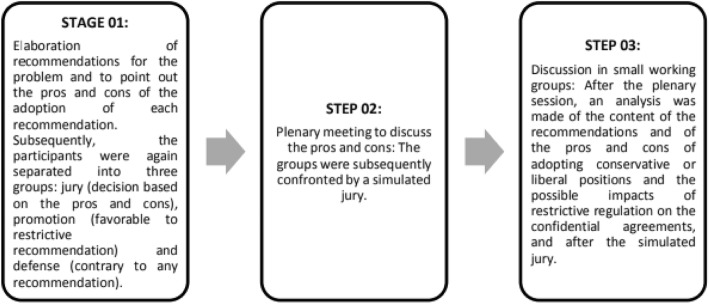
Methods: Representatives of health, judicial, legislative, patient organizations and academics from eight countries in Latin America and South Korea participated in a meeting in September 2017 in Chile to discuss price confidentiality agreements and the impact on public health policies. During the meeting, participants were presented with a hypothetical case to subsidize the discussion on the topic. Divided into groups, participants should propose recommendations for the problem by pointing out the pros and cons if each proposed recommendation was adopted. The groups were then confronted by a simulated jury and finally issued a single and final recommendation for the problem.
Results: The topic was widely discussed and recommendations were raised by the participants. Among them, it is worth noting the elaboration of norms that regulate the negotiations of prices between the countries bringing transparency and harmony in the adopted conducts. In addition, the possible consequences and potential impacts of confidentiality on drug prices and inputs, such as information asymmetry and inequity of access between countries, were pointed out.
Conclusion: Despite there are efforts to make price negotiations more transparent, there is still no well-established standardization that promotes a well-functioning market. Confidentiality agreements hamper the fairness of access to essential health products.
Keywords: Confidentiality agreements; Equity; Market regulation.
Conflict of interest statement
The authors declare that they have no competing interests.
References
-
- Ferrario, A.; Kanavos, P. Managed entry agreements for pharmaceuticals: the European experience. LSE research online, 2013. The London School of Economics and Political Science.
-
- Freitas H, Janissek R. Análise léxica e análise de conteúdo. Ed. Sagra Luzzato: Porto Alegre; 2000.
MeSH terms
LinkOut - more resources
Full Text Sources
Research Materials
Miscellaneous
