Modified Transosseous Wiring Technique for Neglected Fracture-Dislocation of the Proximal Interphalangeal Joint
- PMID: 31156775
- PMCID: PMC6526134
- DOI: 10.4055/cios.2019.11.2.220
Modified Transosseous Wiring Technique for Neglected Fracture-Dislocation of the Proximal Interphalangeal Joint
Abstract
Background: Fracture-dislocation of the proximal interphalangeal (PIP) joint of the finger is challenging due to the high risk of stiffness. The purpose of this study is to evaluate the clinical and radiological results of a modified transosseous wiring technique for the management of chronic fracture-dislocations of the PIP joint.
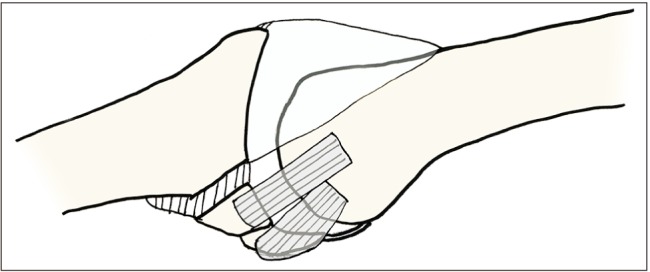
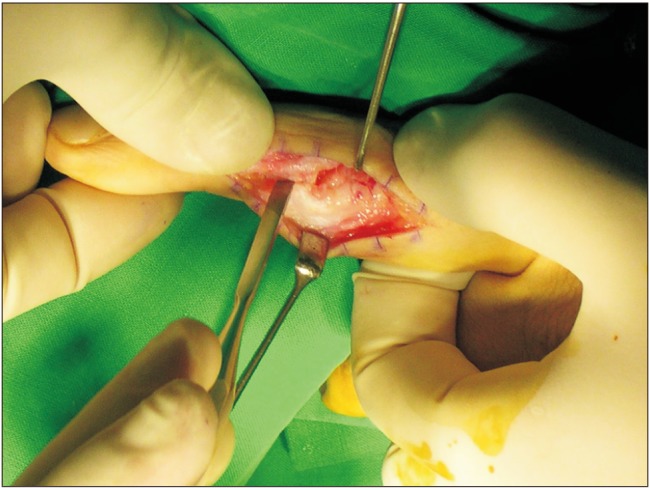
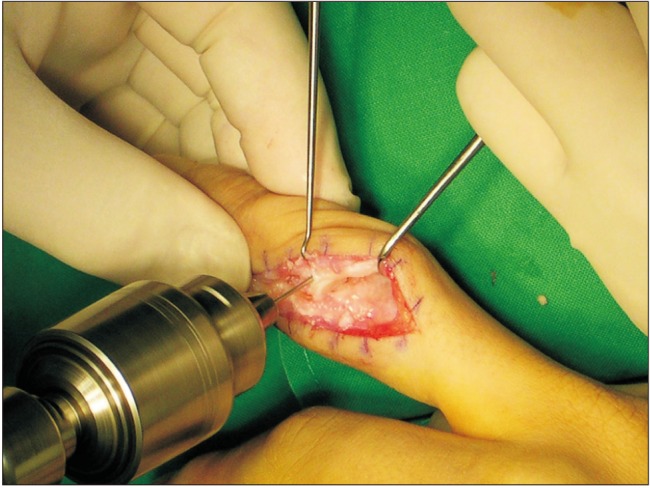
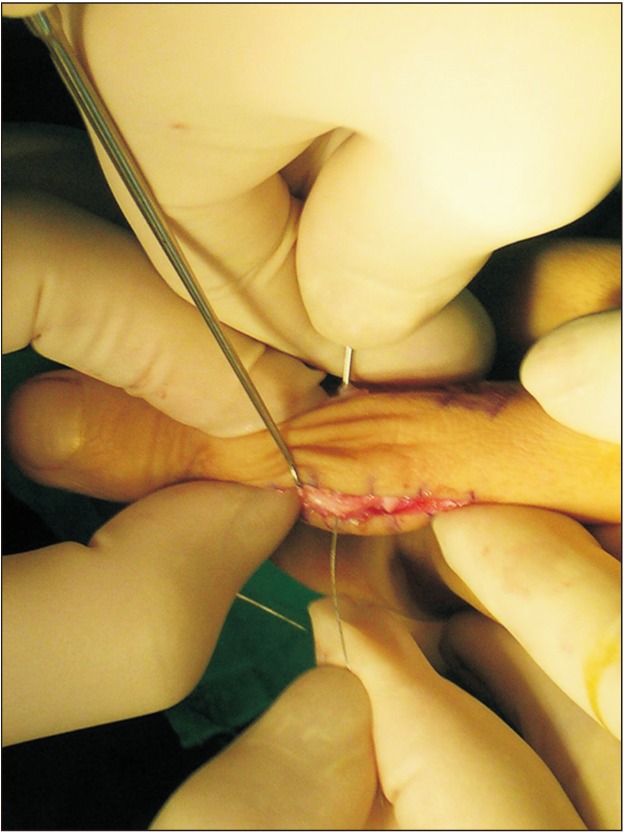
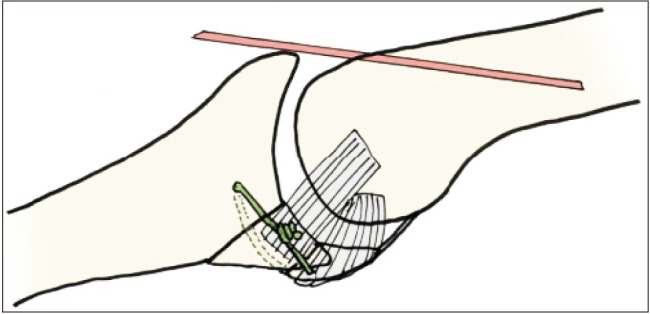
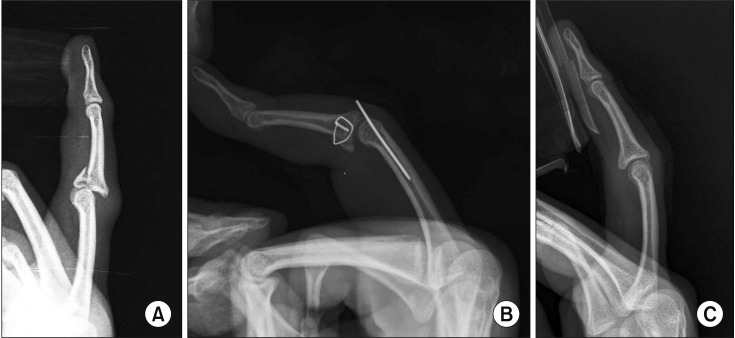
Methods: Ten patients (nine men and one woman; mean age, 38.3 years; range, 21 to 69 years) with neglected fracture-dislocation of the PIP joint were included. The mean duration from injury to operation was 14.7 weeks (range, 3 to 66 weeks). The dorsolateral approach and extension block pinning were used to reduce dislocation. After thorough debridement of the scar tissues in the dorsal dead space and the fracture site, the reduction was maintained with transosseous wiring. Radiologic evaluations of bone union and arthritic changes and clinical evaluations (range of motion of the PIP joint and Disabilities of the Arm, Shoulder and Hand [DASH] score) were performed. The mean follow-up period was 12.9 months (range, 12 to 19 months).
Results: All patients demonstrated evidence of radiographic healing within a mean healing time of 6 weeks (range, 4 to 10 weeks); however, one had a widened gap and one had an early arthritic change. The mean range of motion in the PIP joint was 81° (range, 50° to 105°). The mean DASH score was 21.6 (range, 7.5 to 35.8).
Conclusions: For chronic fracture-dislocation of the PIP joint, transosseous wiring with direct curettage and optimal bone purchase can provide satisfying outcome.
Keywords: Bone wires; Extension block; Fracture dislocation; Proximal interphalangeal joint.
Conflict of interest statement
CONFLICT OF INTEREST: No potential conflict of interest relevant to this article was reported.
Figures
References
-
- Shen XF, Mi JY, Rui YJ, et al. Delayed treatment of unstable proximal interphalangeal joint fracture-dislocations with a dynamic external fixator. Injury. 2015;46(10):1938–1944. - PubMed
-
- Weiss AP. Cerclage fixation for fracture dislocation of the proximal interphalangeal joint. Clin Orthop Relat Res. 1996;(327):21–28. - PubMed
-
- Tang JB, Avanessian B. New tendon, nerve, and bone surgical methods impacting the practice of hand surgery. Clin Plast Surg. 2014;41(3):xix–xx. - PubMed
-
- Ng CY, Oliver CW. Fractures of the proximal interphalangeal joints of the fingers. J Bone Joint Surg Br. 2009;91(6):705–712. - PubMed
-
- Finsen V. Suzuki's pins and rubber traction for fractures of the base of the middle phalanx. J Plast Surg Hand Surg. 2010;44(4-5):209–213. - PubMed
MeSH terms
LinkOut - more resources
Full Text Sources
Medical
Miscellaneous