The role of a pharmacist in a hospice: a nationwide survey among hospice directors, pharmacists and physicians
- PMID: 31156826
- PMCID: PMC6451534
- DOI: 10.1136/ejhpharm-2015-000730
The role of a pharmacist in a hospice: a nationwide survey among hospice directors, pharmacists and physicians
Abstract
Background: Palliative care requires the collaborative efforts of an interdisciplinary team, and as such a range of health professionals should be involved in supporting patients with life-threatening diseases. As a part of this therapeutic network, pharmacists at residential hospices should be thoroughly involved in care, cooperate with other medical staff and perform pharmaceutical services in order to deliver safe and efficient pharmacotherapy.
Aim: To provide an overview of the current state of pharmacy practice at Polish residential hospices.
Methods: A cross-sectional study was applied and three types of anonymous questionnaires were developed to collect data. Hospice directors, pharmacists and physicians from all residential hospices in Poland were invited to participate.
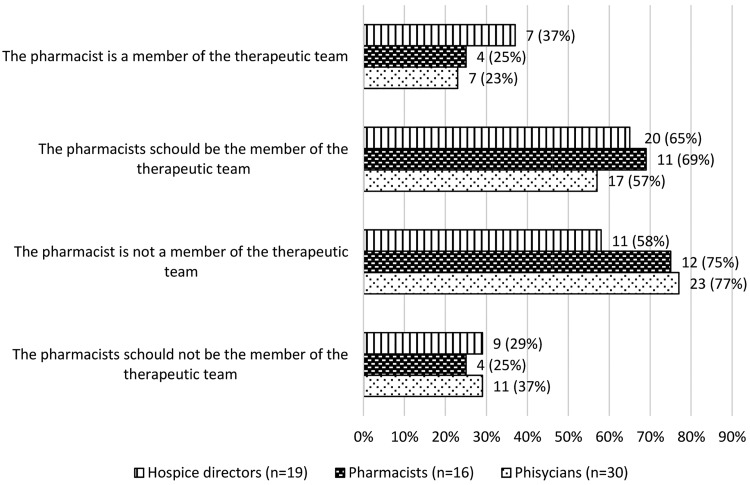
Results: 19 (61%) hospices collaborate with at least one pharmacist, who performs pharmaceutical services on the premises. 12 (75%) pharmacists provide advice concerning medicines and 11 (69%) are involved in various roles related to procurement, dispensing and storage of drugs, as well as creating procedures for these activities. Despite pharmacists' great level of involvement in drug policy, most of them are not members of the therapeutic team and they do not participate in ward rounds. Furthermore, the provision of clinical pharmaceutical services forms a minority of Polish hospital pharmacy practice.
Conclusions: Although the role of a hospice-based pharmacist is focused on the provision of drugs, it should become more clinical, that is, more patient oriented. The data obtained should be used as a source of information for implementing potential changes to palliative care pharmacy.
Keywords: CLINICAL PHARMACOLOGY; DRUG PROCUREMENT; DRUG STORAGE AND DISTRIBUTION; PHARMACY MANAGEMENT (PERSONNEL).
Conflict of interest statement
Competing interests: None declared.
Figures
References
-
- World Health Organization. WHO Definition of Palliative Care, http://www.who.int/cancer/palliative/definition/en (accessed 12 May 2015).
-
- De Conno F. Use of medicines in palliative care. Eur J Hosp Pharm 2012;19:28 10.1136/ejhpharm-2011-000064 - DOI
-
- Radbruch L, Hoffmann-Menzel H, Kern M, et al. Cover story. Hospice pharmaceutical care: the care for the dying. Eur J Hosp Pharm 2012;19:45–8. 10.1136/ejhpharm-2011-000016 - DOI
-
- American Society of Health-System Pharmacists. ASHP statement on the pharmacist's role in hospice and palliative care. Am J Health Syst Pharm 2002;59:1770–3. - PubMed
LinkOut - more resources
Full Text Sources
Other Literature Sources
Research Materials