Patient-centred management of polypharmacy: a process for practice
- PMID: 31156827
- PMCID: PMC6451546
- DOI: 10.1136/ejhpharm-2015-000762
Patient-centred management of polypharmacy: a process for practice
Abstract
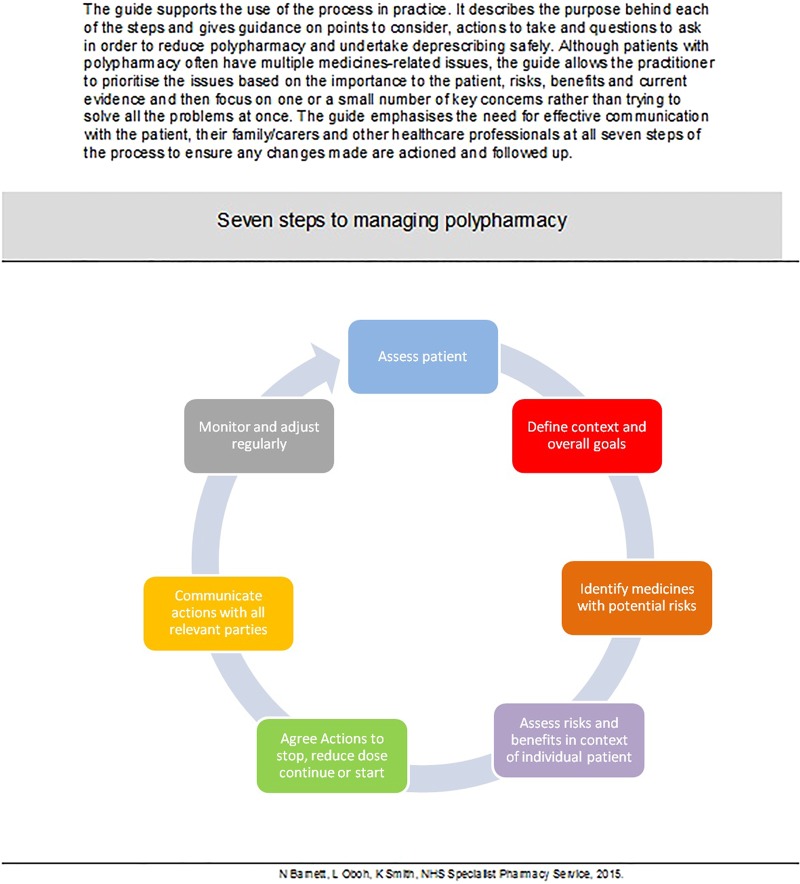
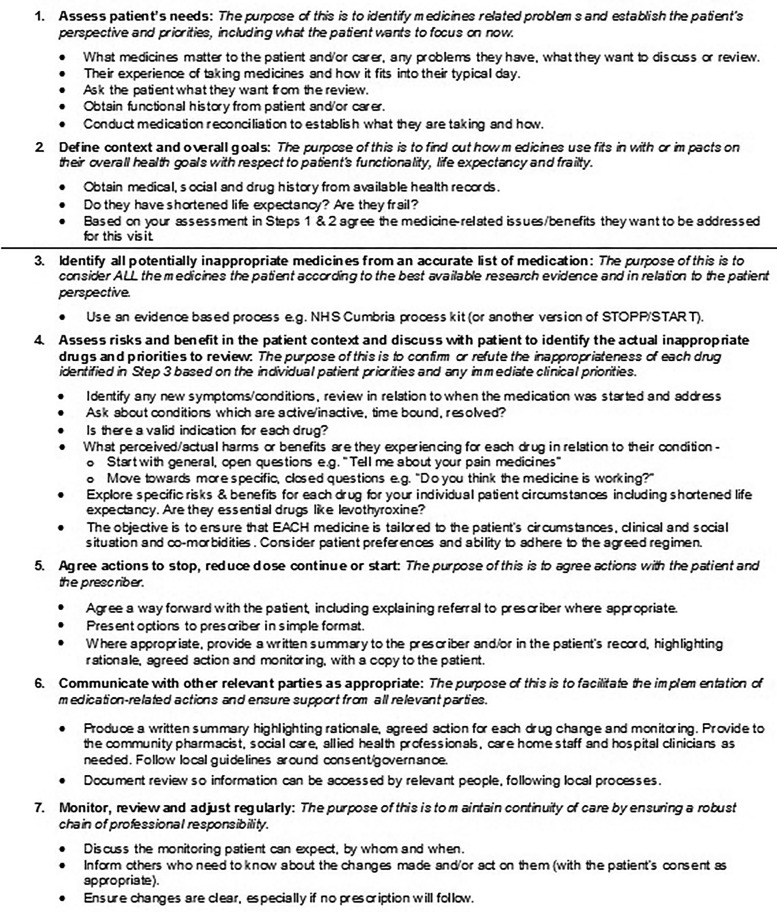
Medicines are the most common intervention to improve health. The number of medicines taken by older people in the UK has been steadily increasing for the last three decades. Polypharmacy is a term that refers to either the prescribing or taking many medicines. Concerns about the risks of polypharmacy in primary and secondary care are growing, supported by evidence which associates polypharmacy with increased adverse drug events, hospital admissions, increased healthcare costs and non-adherence. In the UK, this can largely be attributed, over the last 20 years, to the greater availability of evidence-based treatments promoted through therapeutic guidelines which are designed for single conditions, rather than addressing the multimorbidity that affects many older people. There is also currently a paucity of evidence-based national guidance around reducing and stopping medication and incorporating the patient perspective. This paper reviews current UK literature around polypharmacy including a description of four key resources which all make use of international literature and all focus on the medication aspects of polypharmacy from a clinician's perspective. The patient-centred approach combines both clinical health professionals and patient perspective. Developed using existing resources, it is designed to assist with collaborative (patient and clinician based) medication review to inform decisions around deprescribing and address polypharmacy as part of overall strategies to optimise medicines for the patient. Presented as a diagrammatic representation in seven steps, it also includes guidance on points to consider, actions to take and questions to ask in order to reduce polypharmacy and undertake deprescribing safely.
Keywords: EDUCATION & TRAINING (see Medical Education & Training); Evidence based medicine; GERIATRIC MEDICINE; PHARMACOTHERAPY; PRIMARY CARE.
Conflict of interest statement
Competing interests: None declared.
Figures
References
-
- NHS Scotland and The Scottish Government. Polypharmacy Guidance, October 2012. http://www.central.knowledge.scot.nhs.uk/upload/Polypharmacy%20full%20gu...
-
- Barber N, Alldred DP, Raynor DK, et al. Care homes’ use of medicines study: prevalence, causes and potential harm of medication errors in care homes for older people. http://qualitysafety.bmj.com/content/18/5/341.full - PMC - PubMed
-
- NHS Wales Health Board. Polypharmacy: Guidance for Prescribing in Frail Adults Practical guide, full guidance, BNF sections to target. May 2013. http://www.wales.nhs.uk/sites3/documents/814/PrescribingForFrailAdults-A...
-
- Duerden M, Avery T, Payne R. Polypharmacy and medicines optimisation making it safe and sound. Kings Fund, 2013. http://www.kingsfund.org.uk/publications/polypharmacy-and-medicines-opti...
-
- NHS Scotland and The Scottish Government. Polypharmacy Guidance, March 2015. http://www.sehd.scot.nhs.uk/publications/DC20150415polypharmacy.pdf
Publication types
LinkOut - more resources
Full Text Sources
Other Literature Sources