Impact of a pharmaceutical care programme for patients with chronic disease initiated at the emergency department on drug-related negative outcomes: a randomised controlled trial
- PMID: 31157039
- PMCID: PMC6452329
- DOI: 10.1136/ejhpharm-2016-001055
Impact of a pharmaceutical care programme for patients with chronic disease initiated at the emergency department on drug-related negative outcomes: a randomised controlled trial
Abstract
Background: The resolution of potential drug-related problems is a priority of pharmaceutical care programmes.
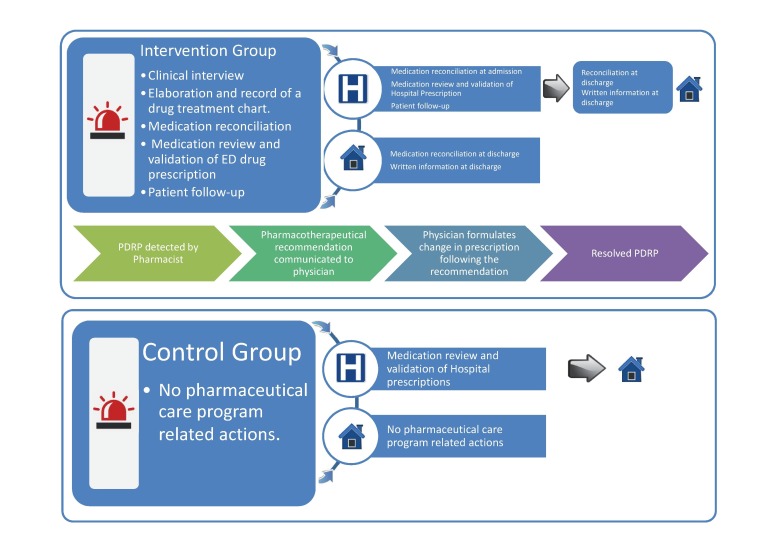
Objectives: To assess the clinical impact on drug-related negative outcomes of a pharmaceutical care programme focusing on the resolution of potential drug-related problems, initiated in the emergency department for patients with heart failure (HF) and/or chronic obstructive pulmonary disease (COPD).
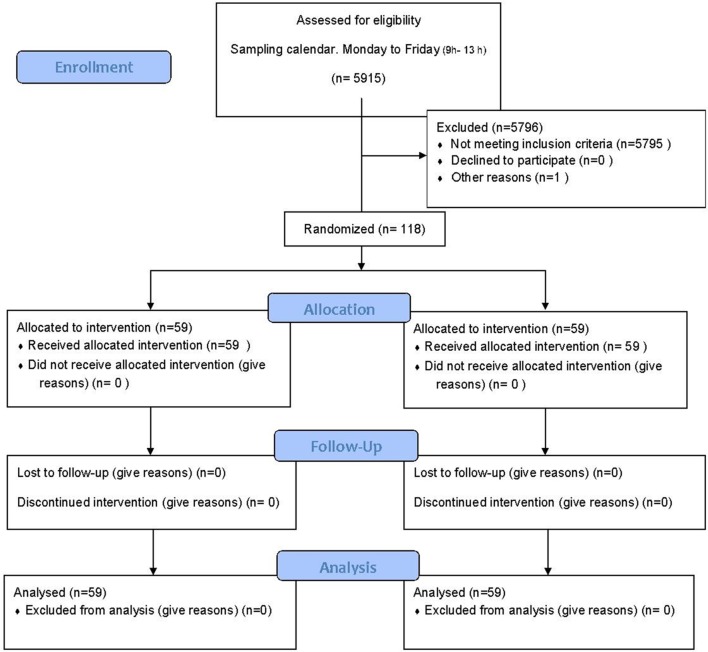
Methods: Controlled trials, in which older adults (≥65 years) receiving four or more medications admitted to the emergency department for ≥12 hours for worsening of HF and/or COPD were randomised (1:1) to either a pharmaceutical care programme focusing on resolving potential drug-related problems initiated at the emergency department (intervention group (IG)) or standard care (control group). Comparisons between the groups were made for the proportion of patients with drug-related negative outcomes, number of drug-related negative outcomes per patient, mean stay, patients readmitted within 180 days and 180-day mortality.
Results: 118 patients were included, 59 in each group. Fewer patients in the IG had drug-related negative outcomes (37 (62.7%) vs 47 (79.7%) in the control group (p=0.042)). Fewer drug-related negative outcomes per patient occurred in the IG (56 (0.95 per patient) vs 85 (1.44 per patient) in the control group (p=0.01)). The mean stay was similar between groups (194.7 hours in the IG vs 242.5 hours in the control group (p=0.186)). No difference in revisits within 180 days was found (32 (54.24%) in the IG vs 22 (37.3%) in the control group (p=0.065)). 180-Day mortality was detected in 11 (18.6%) patients in the IG compared with 13 (22%) in the control group (p=0.647).
Conclusion: A pharmaceutical care programme focusing on resolving potential drug-related problems initiated at the emergency department has a favourable clinical impact, as it reduces the number and prevalence of drug-related negative outcomes. No difference was found in other outcome variables.Trial registration number NCT02368548.
Keywords: COPD; Drug-related negative outcomes; Emergency Department; Heart Failure; Pharmaceutical care; clinical trial.
Conflict of interest statement
Competing interests: None declared.
Figures
References
-
- Population ageing and development wallchart. 2012:9–10. http://www.un.org/esa/socdev/documents/ageing/Data/2012PopAgeingandDev_W... (accessed 17 Nov 2015).
-
- Lazarou J, Pomeranz BH, Corey PN. Incidence of adverse drug reactions in hospitalized patients: a meta-analysis of prospective studies. JAMA 1998;279:1200–5. - PubMed
Associated data
LinkOut - more resources
Full Text Sources
Medical
Research Materials
Miscellaneous