


The Emperor's New Clothes: PRospective Observational Evaluation of the Association Between Initial VancomycIn Exposure and Failure Rates Among ADult HospitalizEd Patients With Methicillin-resistant Staphylococcus aureus Bloodstream Infections (PROVIDE)
- PMID: 31157370
- PMCID: PMC7145993
- DOI: 10.1093/cid/ciz460
The Emperor's New Clothes: PRospective Observational Evaluation of the Association Between Initial VancomycIn Exposure and Failure Rates Among ADult HospitalizEd Patients With Methicillin-resistant Staphylococcus aureus Bloodstream Infections (PROVIDE)
Abstract
Background: Vancomycin is the most commonly administered antibiotic in hospitalized patients, but optimal exposure targets remain controversial. To clarify the therapeutic exposure range, this study evaluated the association between vancomycin exposure and outcomes in patients with methicillin-resistant Staphylococcus aureus (MRSA) bacteremia.
Methods: This was a prospective, multicenter (n = 14), observational study of 265 hospitalized adults with MRSA bacteremia treated with vancomycin. The primary outcome was treatment failure (TF), defined as 30-day mortality or persistent bacteremia ≥7 days. Secondary outcomes included acute kidney injury (AKI). The study was powered to compare TF between patients who achieved or did not achieve day 2 area under the curve to minimum inhibitory concentration (AUC/MIC) thresholds previously found to be associated with lower incidences of TF. The thresholds, analyzed separately as co-primary endpoints, were AUC/MIC by broth microdilution ≥650 and AUC/MIC by Etest ≥320.
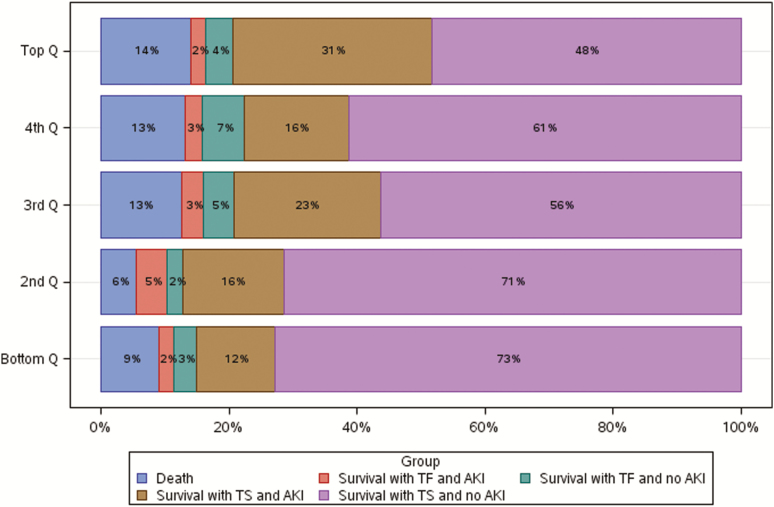
Results: Treatment failure and AKI occurred in 18% and 26% of patients, respectively. Achievement of the prespecified day 2 AUC/MIC thresholds was not associated with less TF. Alternative day 2 AUC/MIC thresholds associated with lower TF risks were not identified. A relationship between the day 2 AUC and AKI was observed. Patients with day 2 AUC ≤515 experienced the best global outcomes (no TF and no AKI).
Conclusions: Higher vancomycin exposures did not confer a lower TF risk but were associated with more AKI. The findings suggest that vancomycin dosing should be guided by the AUC and day 2 AUCs should be ≤515. As few patients had day 2 AUCs <400, further study is needed to define the lower bound of the therapeutic range.
Keywords: MRSA; bacteremia; outcomes; vancomycin.
© The Author(s) 2019. Published by Oxford University Press for the Infectious Diseases Society of America. All rights reserved. For permissions, e-mail: journals.permissions@oup.com.
Figures
Comment in
-
60 Plus Years Later and We Are Still Trying to Learn How to Dose Vancomycin.Clin Infect Dis. 2020 Apr 10;70(8):1546-1549. doi: 10.1093/cid/ciz467. Clin Infect Dis. 2020. PMID: 31157362 No abstract available.
References
-
- Rybak MJ, Rotschafer JC, Rodvold KA. Vancomycin: over 50 years later and still a work in progress. Pharmacotherapy 2013; 33:1253–5. - PubMed
-
- Rybak MJ, Lomaestro BM, Rotschafer JC, et al. . Therapeutic monitoring of vancomycin in adults summary of consensus recommendations from the American Society of Health-System Pharmacists, the Infectious Diseases Society of America, and the Society of Infectious Diseases Pharmacists. Pharmacotherapy 2009; 29:1275–9. - PubMed
-
- Davis SL, Scheetz MH, Bosso JA, Goff DA, Rybak MJ. Adherence to the 2009 consensus guidelines for vancomycin dosing and monitoring practices: a cross-sectional survey of U.S. hospitals. Pharmacotherapy 2013; 33:1256–63. - PubMed
-
- Brown J, Brown K, Forrest A. Vancomycin AUC24/MIC ratio in patients with complicated bacteremia and infective endocarditis due to methicillin-resistant Staphylococcus aureus and its association with attributable mortality during hospitalization. Antimicrob Agents Chemother 2012; 56:634–8. - PMC - PubMed
Publication types
MeSH terms
Substances
Grants and funding
LinkOut - more resources
Full Text Sources
Other Literature Sources
Medical
Research Materials
Miscellaneous
