


Spousal Caregivers Are Caregiving Alone In The Last Years Of Life
- PMID: 31158025
- PMCID: PMC6760240
- DOI: 10.1377/hlthaff.2019.00087
Spousal Caregivers Are Caregiving Alone In The Last Years Of Life
Abstract
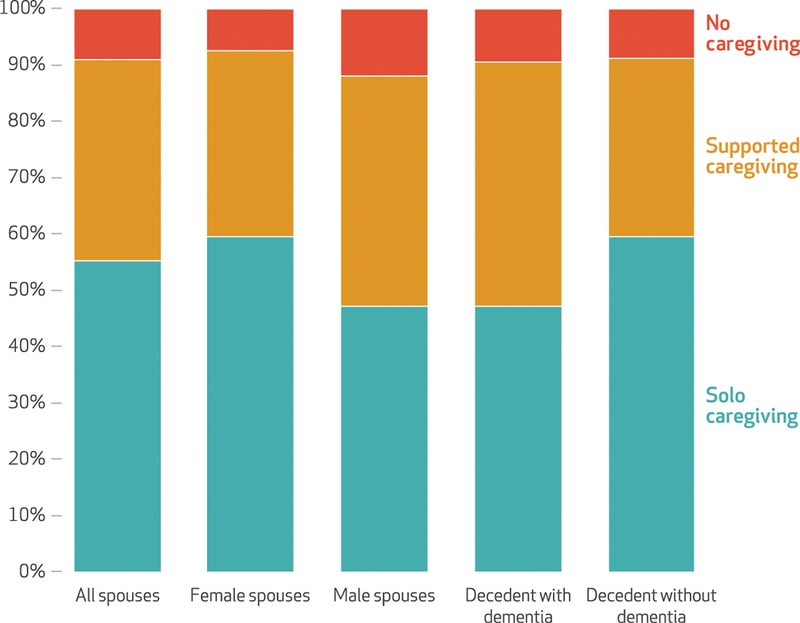
Caregiving in the last years of life is associated with increased depression and negative health outcomes for surviving spouses, many of whom are themselves in poor health. Yet it is unclear how often spouses are caregiving alone, how they differ from supported spouses, and whether lack of support affects postbereavement outcomes. We hypothesized that spouses who were solo caregivers-that is, the only caregivers (paid or unpaid) who provided assistance with a spouse's self-care or household activities-would experience more depression after bereavement than supported spouses would. Using information from the Health and Retirement Study, we found that 55 percent of the spouses of community-dwelling married people with disability were solo caregivers. Solo caregiving was even common among people who cared for spouses with dementia and those with adult children living close by. Bereavement outcomes did not differ between solo and supported caregiving spouses. Caregiving spouses are often isolated and may benefit from greater support, particularly during the final years before bereavement. While some state and federal policy proposals aim to systematically recognize and assess caregivers, further innovations in care delivery and reimbursement are needed to adequately support seriously ill older adults and their caregivers. Ultimately, the focus of serious illness care must be expanded from the patient to the family unit.
Keywords: bereavement; caregiving; end-of-life; families; palliative care.
Figures
References
-
- National Academies of Sciences, Engineering, and Medicine. Families caring for an aging America. Washington (DC): National Academies Press; 2016. - PubMed
-
- Institute of Medicine. Dying in America: improving quality and honoring individual preferences near the end of life. Washington (DC): National Academies Press; 2015. - PubMed
Publication types
MeSH terms
Grants and funding
LinkOut - more resources
Full Text Sources
Medical
