. 2019 May 31;6(2):50.
doi: 10.3390/bioengineering6020050.

A Microcavity Array-Based 4D Cell Culture Platform

Affiliations

A Microcavity Array-Based 4D Cell Culture Platform

Cordula Nies et al. Bioengineering (Basel). .

Abstract

(1) Background: We describe a 4D cell culture platform with which we tried to detect and to characterize migration dynamics of single hematopoietic stem cells in polymer film microcavity arrays integrated into a microtiter plate. (2) Methods: The system was set up with CD34-expressing KG-1a cells as a surrogate for hematopoietic stem cells. We then evaluated the system as an artificial hematopoietic stem cell niche model comprised of a co-culture of human hematopoietic stem cells from cord blood (cord blood CD34+ cells, hHSCs) and human mesenchymal stromal cells (hMSCs) from bone marrow over a period of 21 days. We used a software-based cell detection method to count single hematopoietic stem cells (HSCs) in microcavities. (3) Results: It was possible to detect single HSCs and their migration behavior within single microcavities. The HSCs displayed a pronounced migration behavior with one population of CD34-expressing cells located at the bottom of the microcavities and one population located in the middle of the microcavities at day 14. However, at day 21 the two populations seemed to unite again so that no clear distinction between the two was possible anymore. (4) Conclusions: Single cell migration detection was possible but microscopy and flow cytometry delivered non-uniform data sets. Further optimization is currently being developed.

Keywords: 3D cell culture; 4D microscopy platform; co-culture; hematopoietic progenitor cells; mesenchymal stromal cells; microcavity array.


Conflict of interest statement

Eric Gottwald was CEO of 300MICRONS GmbH at the time when the experiments were carried out.

Figures
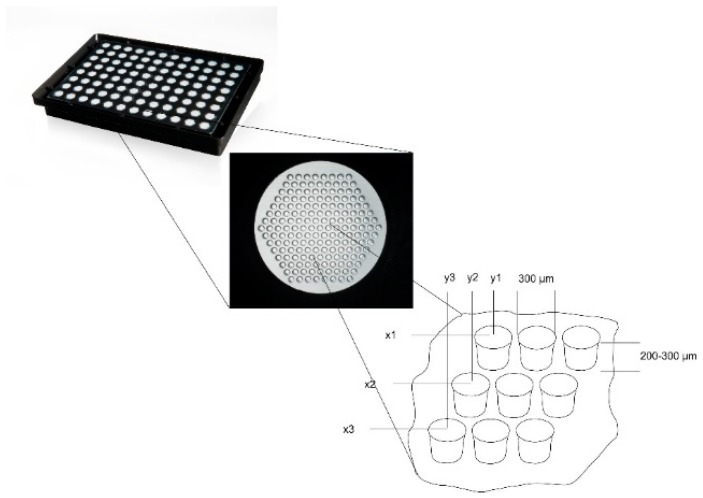
Figure 1
Figure 1
Microcavity array plate for the generation of 16,224 three-dimensional co-culture aggregates on a 96-well microtiter plate footprint. Each well of the microtiter plate contains an array of 169 microcavities; the cutout shows the principal layout of an array with x1y1, x2y2 illustrating the fixed position of each 3D aggregate as well as the diameter and depth of 300 µm and 200 to 300 µm, respectively.
Figure 2
Figure 2
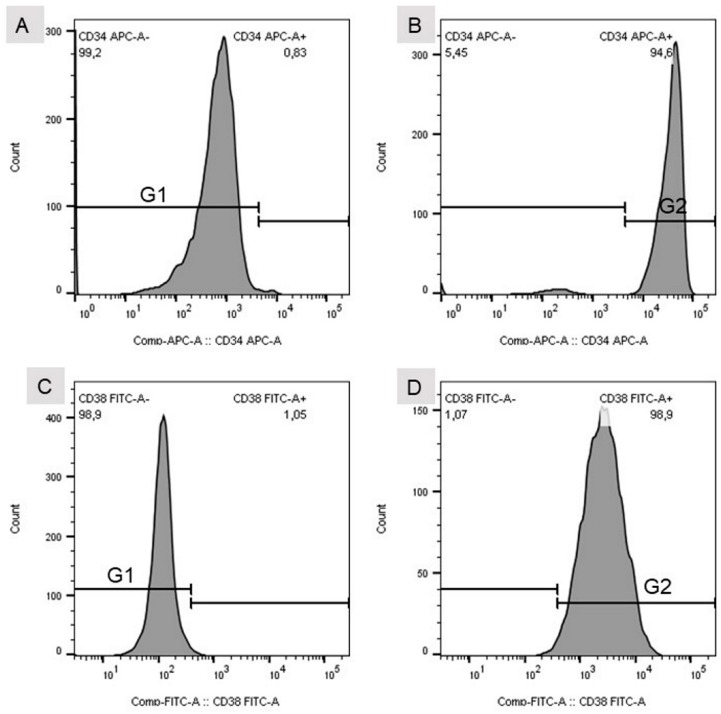
(A) Gate set for the isotype control of the CD34 mouse anti-human APC-labelled antibody. (B) Gate set for CD34 mouse anti-human APC-labelled antibody. (C) Gate set for the isotype control of the CD38 (HIT2)–FITC-labelled antibody. (D) Gate set for the CD38 (HIT2)–FITC-labelled antibody. (E) Detection of single (CD34+ or CD38+) and double positive (CD34+CD38+) stained cells. HSC unst. = unstained hHSC.
Figure 2
Figure 2
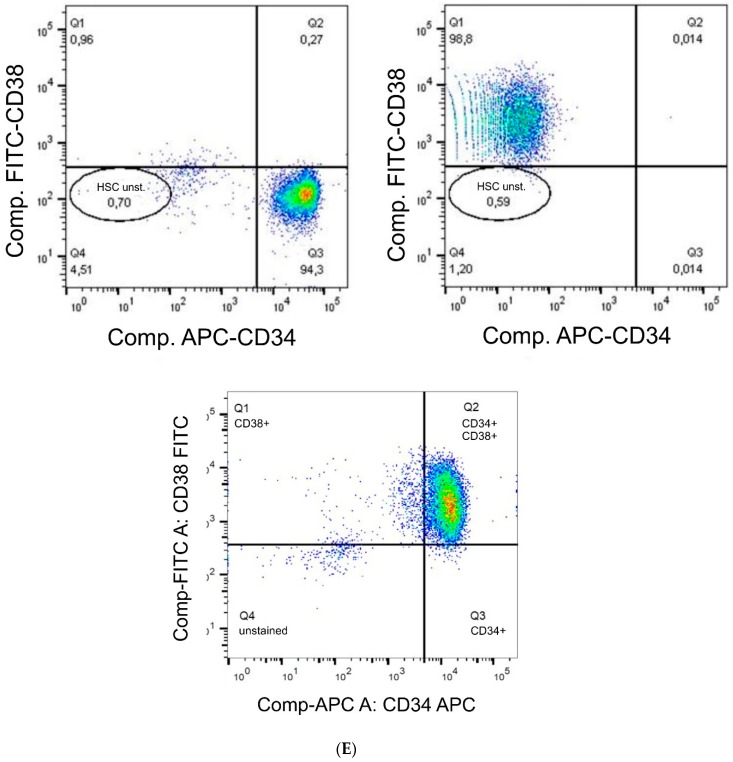
(A) Gate set for the isotype control of the CD34 mouse anti-human APC-labelled antibody. (B) Gate set for CD34 mouse anti-human APC-labelled antibody. (C) Gate set for the isotype control of the CD38 (HIT2)–FITC-labelled antibody. (D) Gate set for the CD38 (HIT2)–FITC-labelled antibody. (E) Detection of single (CD34+ or CD38+) and double positive (CD34+CD38+) stained cells. HSC unst. = unstained hHSC.
Figure 3
Figure 3
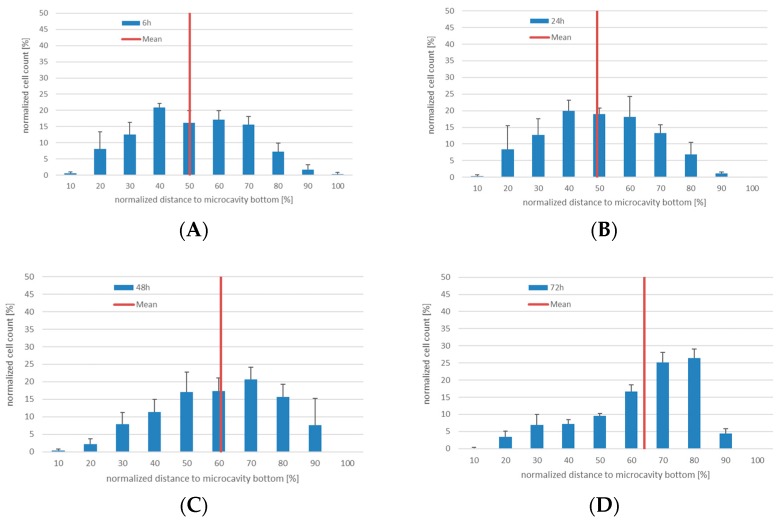
3D co-culture of KG-1a with Hep G2 cells in microcavities. Number of CellTrackerTM Green positive cells (CTG+) and their position relative to the cavity bottom (100%) at 6 (A), 24 (B), 48 (C), and 72 h (D), respectively. The mean is displayed as a red line, n = 3.
Figure 4
Figure 4
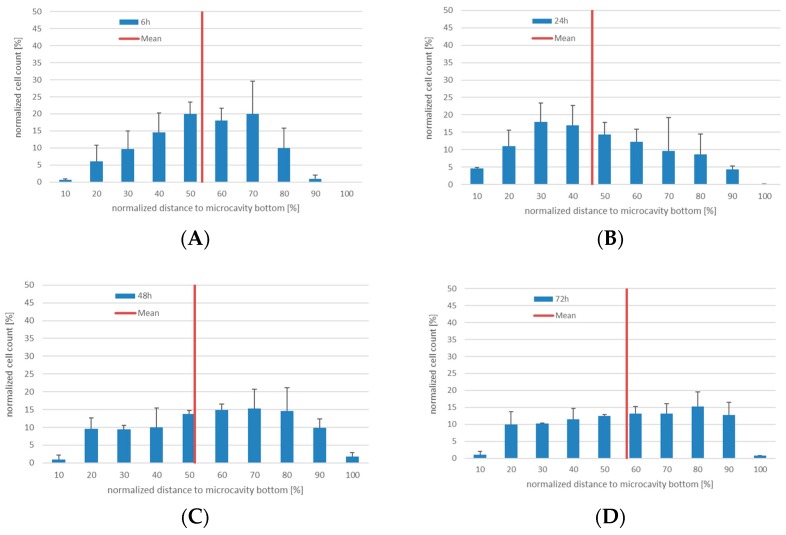
3D co-culture of human bone marrow MSCs with human KG-1a cells in microcavities. Number of CTG+-cells and their position relative to the cavity bottom (0%). The mean distance is displayed as a red line, n = 3. (A) Distribution of KG-1a cells in 3D co-culture after 6 h. (B) Distribution of KG-1a cells in 3D co-culture after 24 h. (C) Distribution of KG-1a cells in 3D co-culture after 48 h. (D) Distribution of KG-1a cells in 3D co-culture after 72 h.
Figure 5
Figure 5
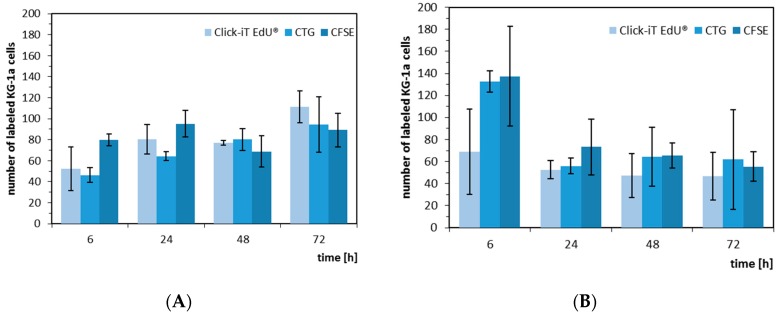
Absolute number of proliferating KG-1a cells in co-culture with Hep G2 (A) and hMSC (B). The KG-1a cells were labelled with either EdU (light blue), CellTrackerTM Green (medium blue), or CFSE (dark blue) and, after labelling, cultivated for 6, 24, 48, and 72 h.
Figure 6
Figure 6
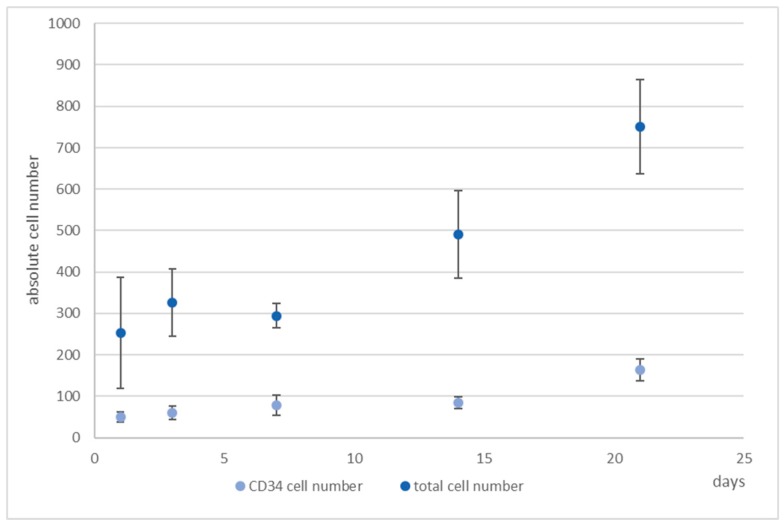
4D cell count of hHSCs and hMSCs in co-culture over the indicated time period after indirect immunofluorescence staining of CD34+ cells (medium blue) and determination of total cell count (light blue) with propidium iodide counterstaining and subsequent software based counting. As can be seen, the total cell number tripled with the ratio of hHSCs:hMSCs kept constant. Used antibodies for CD34+ cell detection: CD34 mouse anti-human, ab762, Abcam, and goat-anti-mouse-AlexaFluor488, AC-11001, ThermoFisher Scientific.
Figure 7
Figure 7
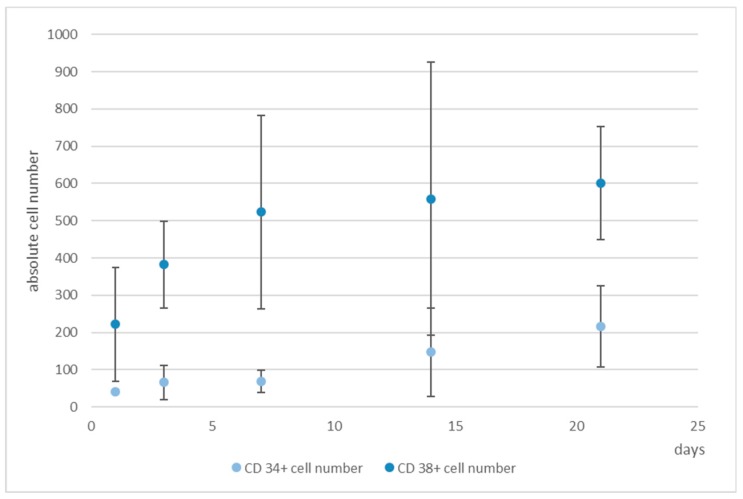
Numbers of CD34+ (light blue) and CD38+ cells (medium blue), determined by software-based counting, over a period of 21 days. Used antibodies for CD34 and CD38 cell detection: CD34 mouse anti-human-APC, AC136-APC, ThermoFisher Scientific, and CD38 monoclonal antibody (HIT2), FITC, eBioscience™, ThermoFisher Scientific.
Figure 8
Figure 8
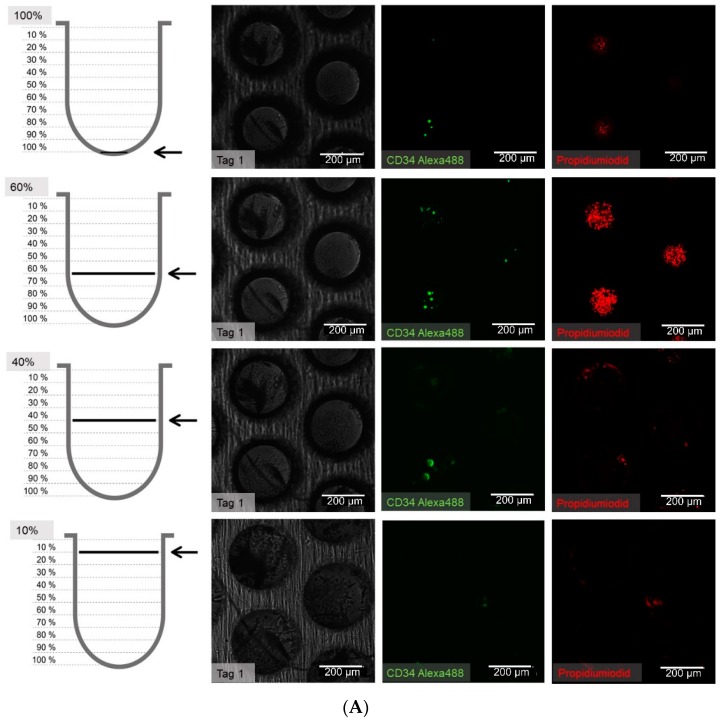
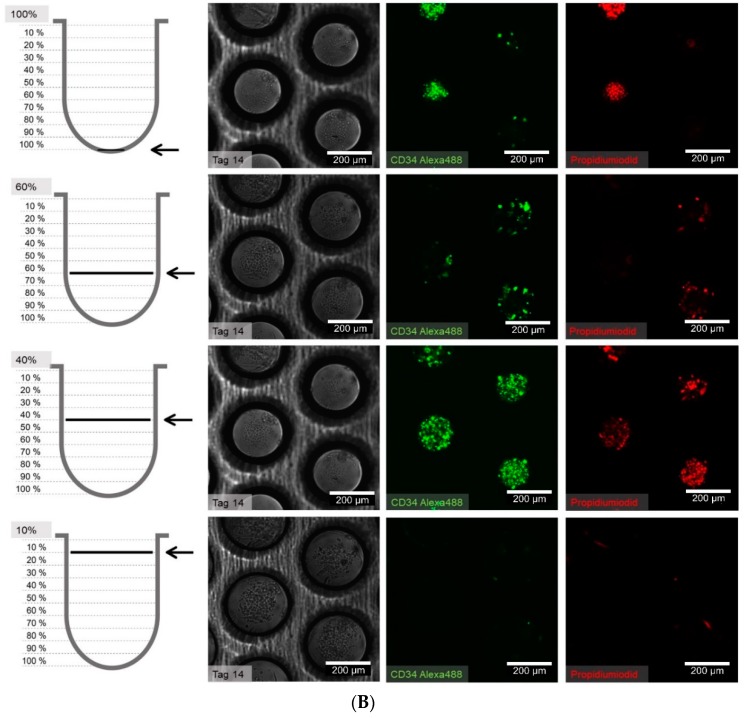
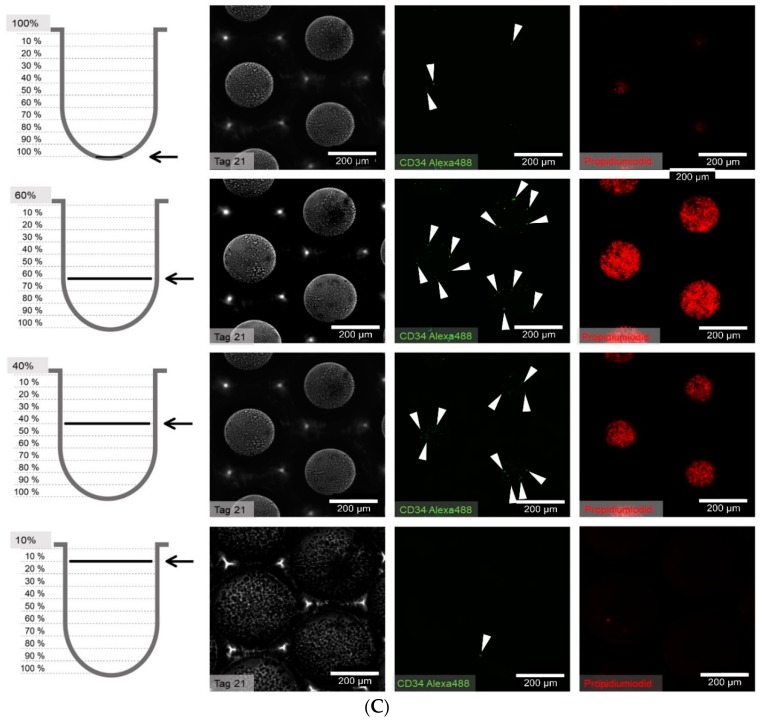
(A) Distribution of hHSCs in microcavities after day 1 of co-culture. Scale bar: 200 µm. (B) Distribution of hHSCs in microcavities after day 14 of co-culture. (C) Distribution of hHSCs in microcavities atfer day 21 of co-culture. White arrowheads point to CD34+ cells. Used antibodies for CD34+ cell detection: CD34 mouse anti-human, ab762, Abcam, and goat-anti-mouse-AlexaFluor488, AC-11001, ThermoFisher Scientific.
Figure 8
Figure 8
(A) Distribution of hHSCs in microcavities after day 1 of co-culture. Scale bar: 200 µm. (B) Distribution of hHSCs in microcavities after day 14 of co-culture. (C) Distribution of hHSCs in microcavities atfer day 21 of co-culture. White arrowheads point to CD34+ cells. Used antibodies for CD34+ cell detection: CD34 mouse anti-human, ab762, Abcam, and goat-anti-mouse-AlexaFluor488, AC-11001, ThermoFisher Scientific.
Figure 8
Figure 8
(A) Distribution of hHSCs in microcavities after day 1 of co-culture. Scale bar: 200 µm. (B) Distribution of hHSCs in microcavities after day 14 of co-culture. (C) Distribution of hHSCs in microcavities atfer day 21 of co-culture. White arrowheads point to CD34+ cells. Used antibodies for CD34+ cell detection: CD34 mouse anti-human, ab762, Abcam, and goat-anti-mouse-AlexaFluor488, AC-11001, ThermoFisher Scientific.
Figure 9
Figure 9
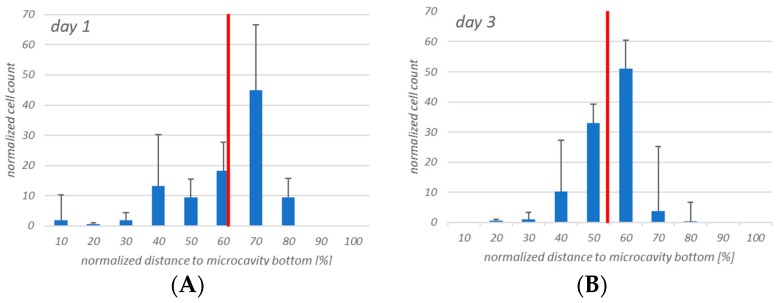
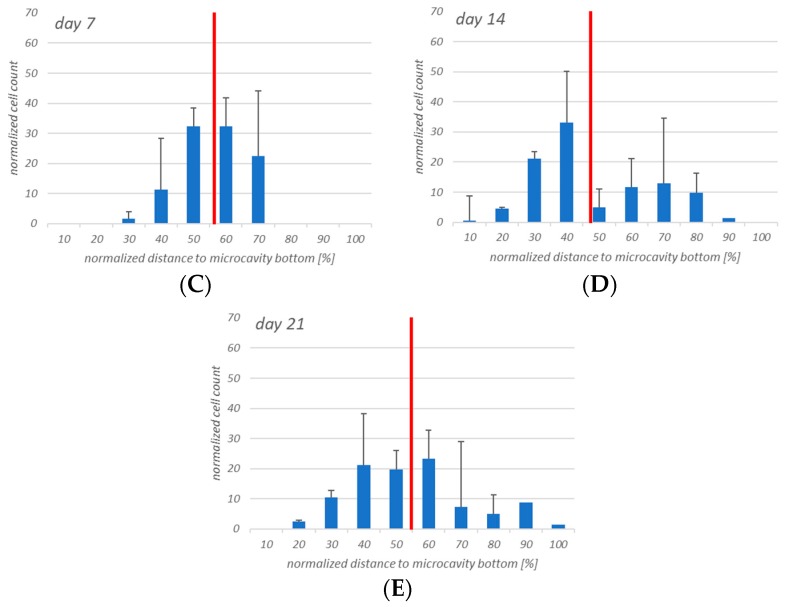
Four-dimensional hHSCs cell count after day 1 (A), day 3 (B), day 7 (C), day 14 (D), and day 21 (E). Up to day 14 it appears that two distinct populations are formed. However, at day 21 this is less pronounced. Red: Median of the distribution. n = 3, * = p < 0.05.
Figure 9
Figure 9
Four-dimensional hHSCs cell count after day 1 (A), day 3 (B), day 7 (C), day 14 (D), and day 21 (E). Up to day 14 it appears that two distinct populations are formed. However, at day 21 this is less pronounced. Red: Median of the distribution. n = 3, * = p < 0.05.
Figure 10
Figure 10
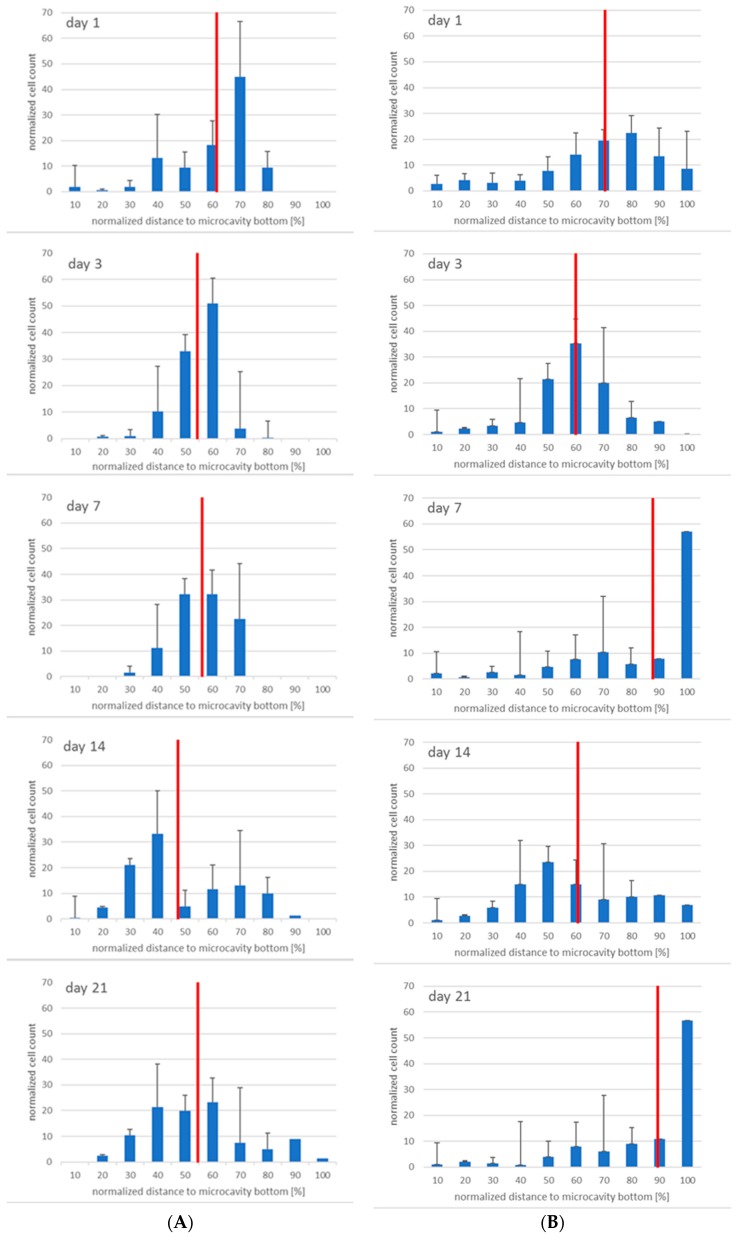
Migratory behaviour of CD34+ (A) and CD38+ (B) cells at day 1, 3 7, 14, and 21 (from top to bottom), n = 3, * = p < 0.05.
Figure 11
Figure 11
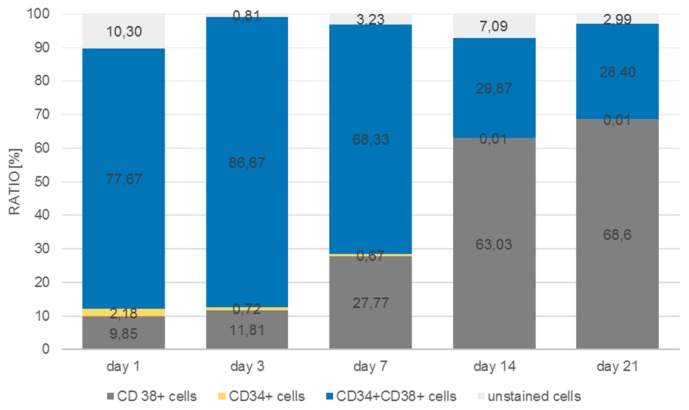
Distribution of CD34+, CD38+, CD34+/CD38+, and unstained cells in microcavities over a period of 21 days.
Figure 12
Figure 12
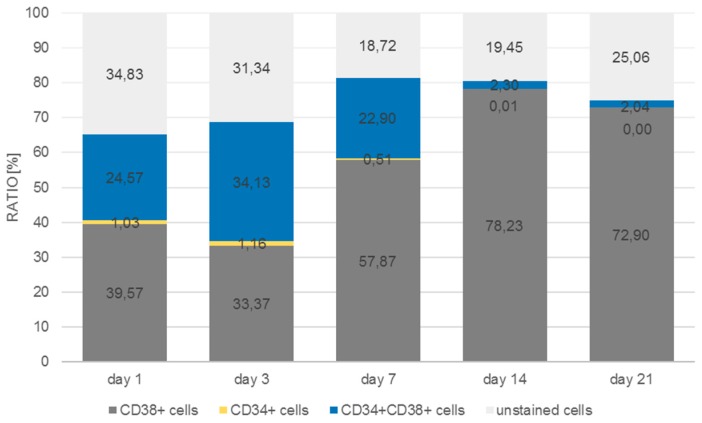
Distribution of CD34+, CD38+, CD34+/CD38+, and unstained cells in monolayer over a period of 21 days.

References

    1. Schofield R. The relationship between the spleen colony-forming cell and the haemopoietic stem cell. Blood Cells. 1978;4:7–25. - PubMed
    1. Boulais P.E., Frenette P.S. Making sense of hematopoietic stem cell niches. Blood. 2015;125:2621–2629. doi: 10.1182/blood-2014-09-570192. - DOI - PMC - PubMed
    1. Mikkola H.K., Orkin S.H. The journey of developing hematopoietic stem cells. Development. 2006;133:3733–3744. doi: 10.1242/dev.02568. - DOI - PubMed
    1. Medvinsky A., Dzierzak E. Definitive hematopoiesis is autonomously initiated by the AGM region. Cell. 1996;86:897–906. doi: 10.1016/S0092-8674(00)80165-8. - DOI - PubMed
    1. Ivanovs A., Rybtsov S., Welch L., Anderson R.A., Turner M.L., Medvinsky A. Highly potent human hematopoietic stem cells first emerge in the intraembryonic aorta-gonad-mesonephros region. J. Exp. Med. 2011;208:2417–2427. doi: 10.1084/jem.20111688. - DOI - PMC - PubMed

LinkOut - more resources