


Impact of palliative chemotherapy and best supportive care on overall survival and length of hospitalization in patients with incurable Cancer: a 4-year single institution experience in Japan
- PMID: 31159782
- PMCID: PMC6547558
- DOI: 10.1186/s12904-019-0428-3
Impact of palliative chemotherapy and best supportive care on overall survival and length of hospitalization in patients with incurable Cancer: a 4-year single institution experience in Japan
Abstract
Background: This study aimed to analyze the determinants of patients' choice between palliative chemotherapy and best supportive care (BSC) and to investigate how this choice affects overall survival (OS) and length of hospitalization according to Eastern Cooperative Oncology Group (ECOG) performance status (PS).
Methods: An oncologist explained the palliative chemotherapy and BSC options to 129 patients with incurable cancer during their first consultation. Data on the ECOG PS, treatment decision, OS, and the length of hospitalization were retrospectively collected over 4 years.
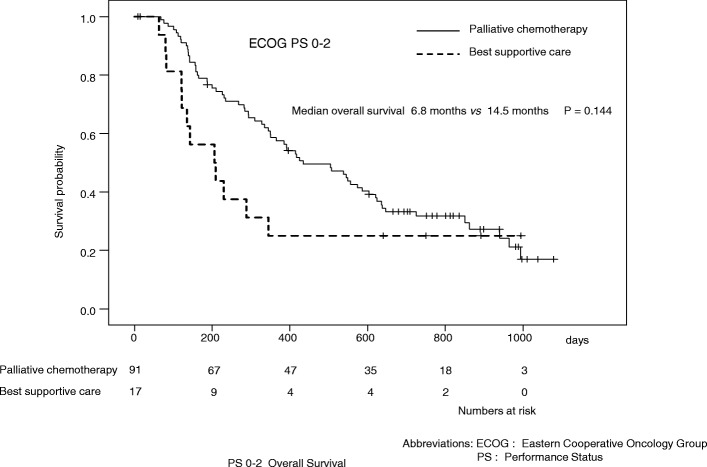
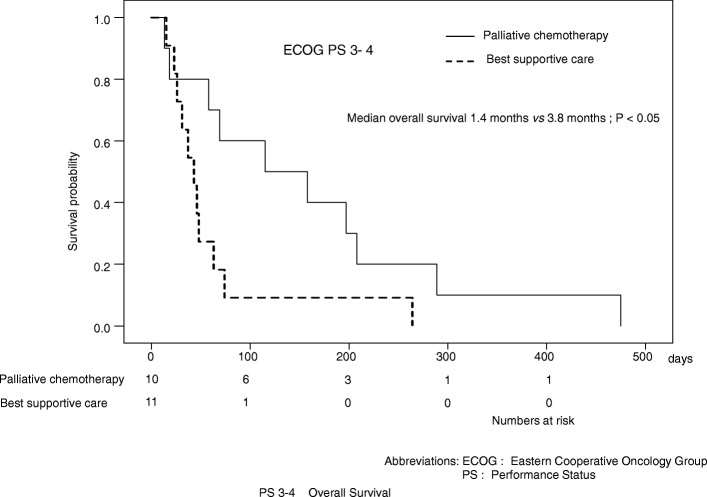
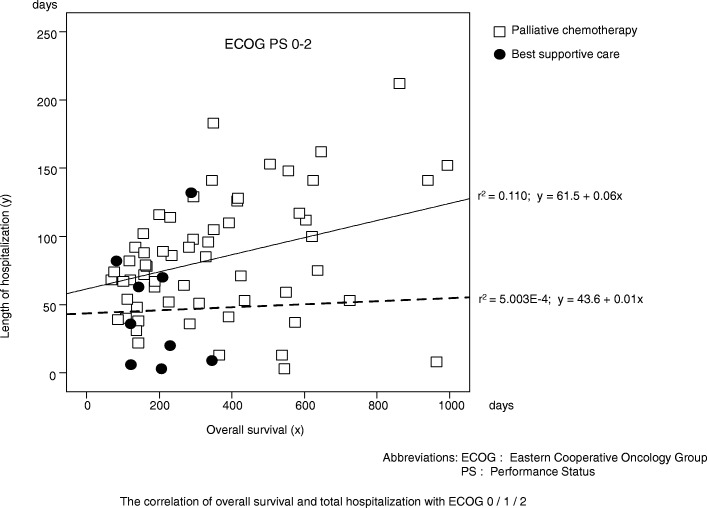
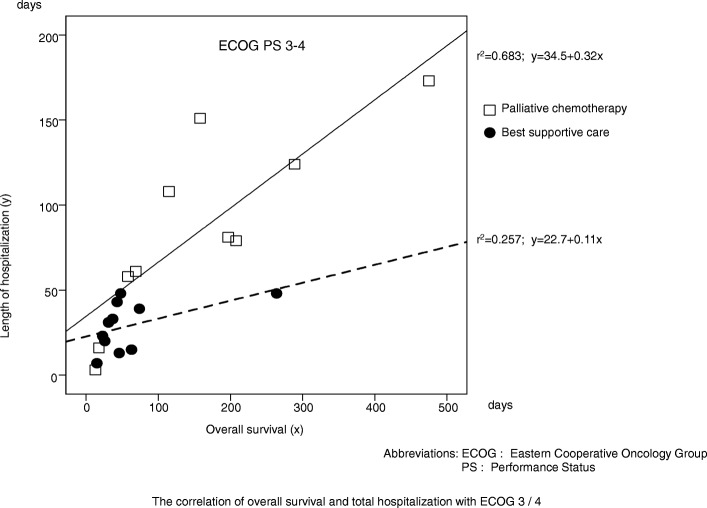
Results: Patients with an ECOG PS of 0-2 chose palliative chemotherapy more often than those with an ECOG PS of 3-4 (P < 0.01). Patients with ≤70 years chose palliative chemotherapy more often than those with > 70 (P < 0.05). And patients with gastric cancer and colon cancer chose palliative chemotherapy more often than those with CUP (carcinoma of unknown primary) (P < 0.05, P < 0.05 respectively). Factors associated with a significantly poorer OS in an adjusted analysis included the ECOG PS and treatment decision (hazard ratios: 0.18 and 0.43; P < 0.001, P < 0.01 respectively). In patients with an ECOG PS of 0-2, palliative chemotherapy was not associated with a longer OS compared with BSC (median OS: 14.5 vs. 6.8 months, respectively; P = 0.144). In patients with an ECOG PS of 3-4, palliative chemotherapy resulted in a significant survival gain compared to with BSC (median OS: 3.8 vs. 1.4 months, respectively; P < 0.05). Strong positive correlations between OS and the length of hospitalization were observed in patients with an ECOG PS of 3-4 who underwent palliative chemotherapy (r2 = 0.683) and the length of hospitalization was approximately one-third of their OS.
Conclusions: The determinants for treatment choice were age, ECOG PS and type of cancer, not sex difference. Oncologists should explain to patients that OS and the length of hospitalization vary according to the ECOG PS when selecting between palliative chemotherapy and BSC.
Keywords: Best supportive care; Hospitalization; Palliative chemotherapy; Performance status; Quality of life.
Conflict of interest statement
The authors declare that they have no competing interests.
Figures
References
-
- Tsuji T. Health-care issues: Japan’s aging society and appropriate countermeasures. Jpn J Nurs Sci. 2007;4(2):71–73. doi: 10.1111/j.1742-7924.2007.00087.x. - DOI
MeSH terms
LinkOut - more resources
Full Text Sources
