


Elimination of tumor hypoxia by eribulin demonstrated by 18F-FMISO hypoxia imaging in human tumor xenograft models
- PMID: 31161539
- PMCID: PMC6546772
- DOI: 10.1186/s13550-019-0521-x
Elimination of tumor hypoxia by eribulin demonstrated by 18F-FMISO hypoxia imaging in human tumor xenograft models
Abstract
Background: Eribulin, an inhibitor of microtubule dynamics, shows antitumor potency against a variety of solid cancers through its antivascular activity and remodeling of tumor vasculature. 18F-Fluoromisonidazole (18F-FMISO) is the most widely used PET probe for imaging tumor hypoxia. In this study, we utilized 18F-FMISO to clarify the effects of eribulin on the tumor hypoxic condition in comparison with histological findings.
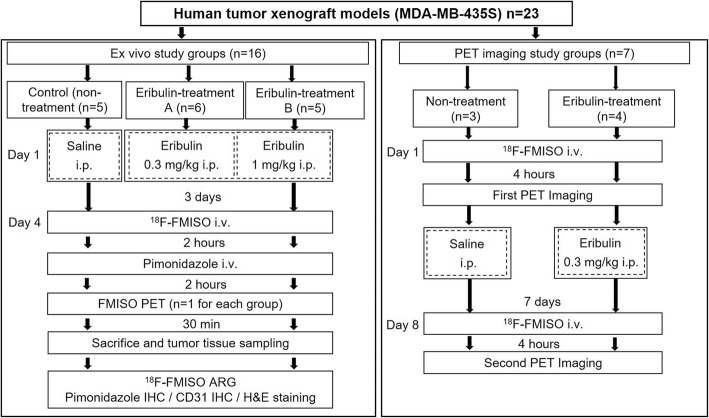
Material and methods: Mice bearing a human cancer cell xenograft were intraperitoneally administered a single dose of eribulin (0.3 or 1.0 mg/kg) or saline. Three days after the treatment, mice were injected with 18F-FMISO and pimonidazole (hypoxia marker for immunohistochemistry), and intertumoral 18F-FMISO accumulation levels and histological characteristics were determined. PET/CT was performed pre- and post-treatment with eribulin (0.3 mg/kg, i.p.).
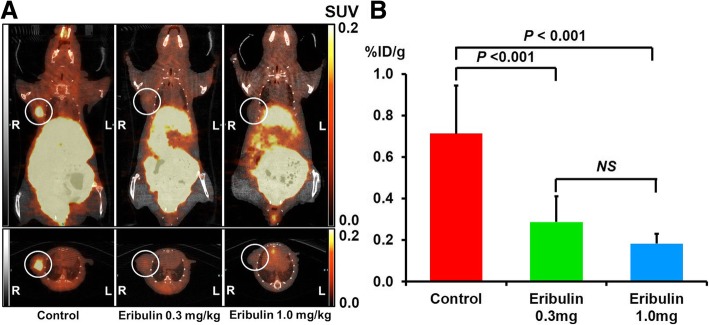
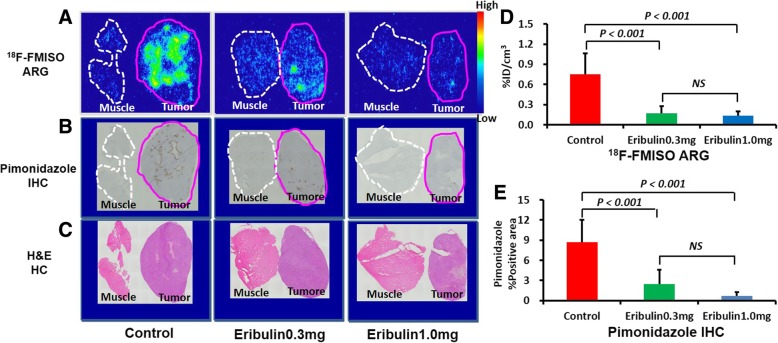
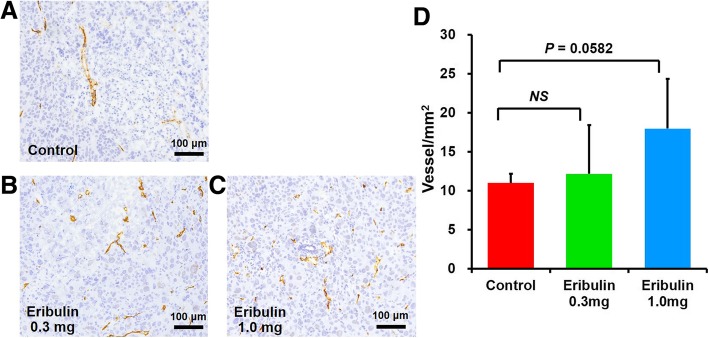
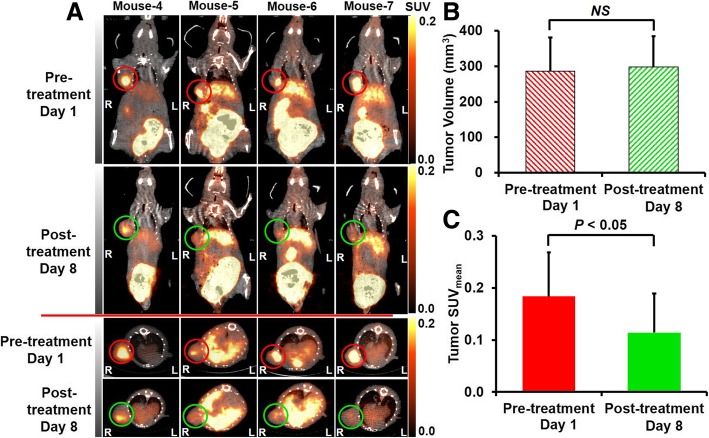
Results: The 18F-FMISO accumulation levels and percent pimonidazole-positive hypoxic area were significantly lower, whereas the number of microvessels was higher in the tumors treated with eribulin. The PET/CT confirmed that 18F-FMISO distribution in the tumor was decreased after the eribulin treatment.
Conclusions: Using 18F-FMISO, we demonstrated the elimination of the tumor hypoxic condition by eribulin treatment, concomitantly with the increase in microvessel density. These findings indicate that PET imaging using 18F-FMISO may provide the possibility to detect the early treatment response in clinical patients undergoing eribulin treatment.
Keywords: 18F-FMISO PET imaging; Eribulin; Human tumor xenograft model; Remodeling of tumor vasculature; Tumor hypoxia.
Conflict of interest statement
The authors declare that they have no competing interests.
Figures
References
LinkOut - more resources
Full Text Sources
