


Differences in the epidemiology of out-of-hospital and in-hospital trauma deaths
- PMID: 31163036
- PMCID: PMC6548370
- DOI: 10.1371/journal.pone.0217158
Differences in the epidemiology of out-of-hospital and in-hospital trauma deaths
Abstract
Background: Trauma is a leading cause of mortality. Holistic views of trauma systems consider injury as a public health problem that requires efforts in primary, secondary and tertiary prevention. However, the performance of trauma systems is commonly judged on the in-hospital mortality rate. Such a focus misses opportunities to consider all deaths within a population, to understand differences in in-hospital and out-of-hospital trauma deaths and to inform population-level injury prevention efforts. The aim of this study was to provide an epidemiological overview of out-of-hospital and in-hospital trauma deaths in a geographically-defined area over a 10-year period.
Methods: We performed a population-based review of out-of-hospital and in-hospital trauma deaths over the period of 01 July 2006 to 30 June 2016 in Victoria, Australia, using data from the National Coronial Information System and the Victorian State Trauma Registry. Temporal trends in population-based incidence rates were evaluated.
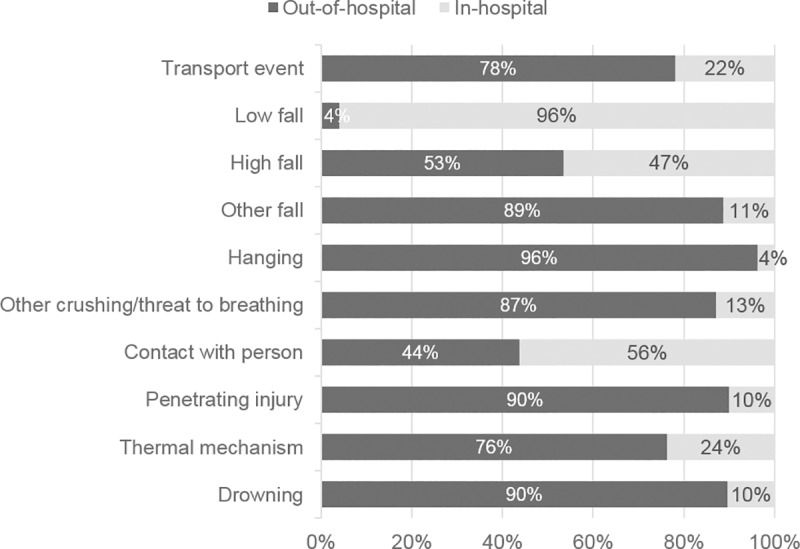
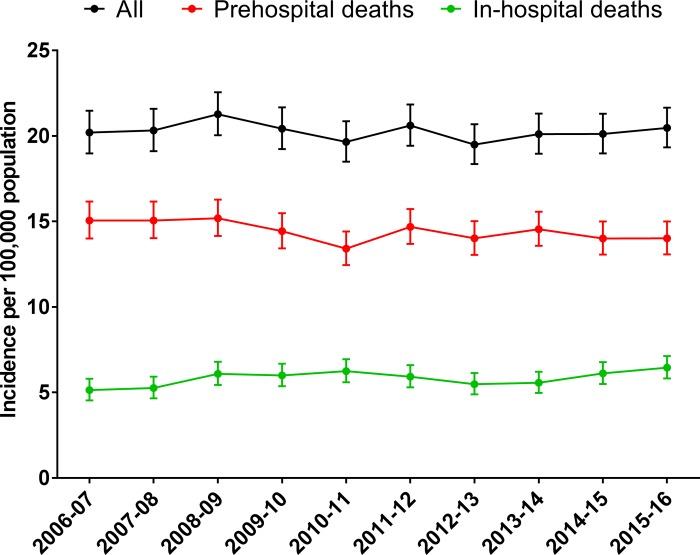
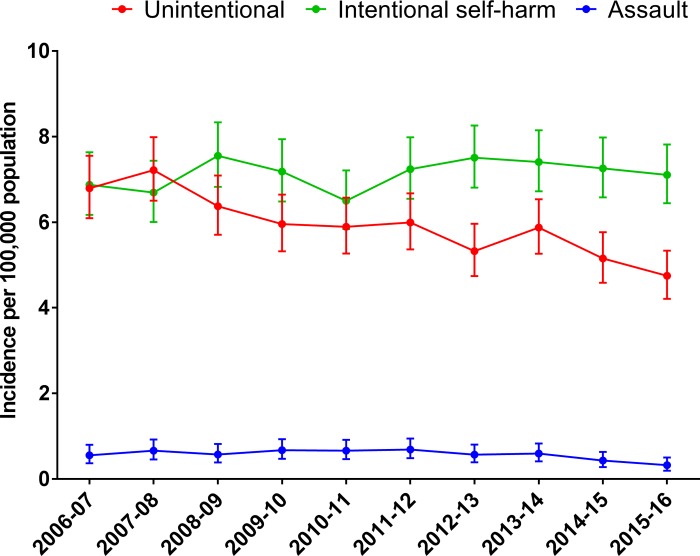
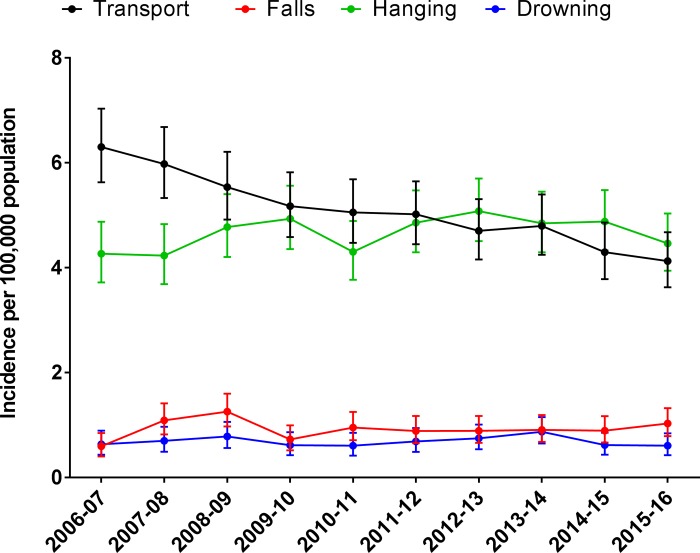
Results: Over the study period, there were 11,246 trauma deaths, of which 71% were out-of-hospital deaths. Out-of-hospital trauma deaths commonly resulted from intentional self-harm events (50%) and transport events (35%), while in-hospital trauma deaths commonly resulted from low falls (≤1 metre) (50%). The incidence of overall trauma deaths did not change over the study period (incidence rate ratio 0.998; 95%CI: 0.991, 1.004; P = 0.56).
Conclusions: Out-of-hospital deaths accounted for most trauma deaths. Given the notable differences between out-of-hospital and in-hospital trauma deaths, monitoring of all trauma deaths is necessary to inform injury prevention activities and to reduce trauma mortality. The absence of a change in the incidence of both out-of-hospital and in-hospital trauma deaths demonstrates the need for enhanced activities across all aspects of injury prevention.
Conflict of interest statement
The authors have declared that no competing interests exist.
Figures
References
-
- Centers for Disease Control and Prevention. Leading causes of death 2016 [30/08/2017]. Available from: https://www.cdc.gov/injury/wisqars/overview/key_data.html.
-
- Australian Institute of Health and Welfare. Deaths in Australia Canberra, Australia: Australian Government; 2018. [cited 2018 13/11/2018]. Available from: https://www.aihw.gov.au/reports/life-expectancy-death/deaths-in-australi....
-
- Cameron PA, Gabbe BJ, Cooper DJ, Walker T, Judson R, McNeil J. A statewide system of trauma care in Victoria: effect on patient survival. Med J Aust. 2008;189(10):546–50. - PubMed
-
- U.S. Department of Health and Human Services. Model Trauma System Planning and Evaluation. U.S. Department of Health and Human Services, 2006.
Publication types
MeSH terms
LinkOut - more resources
Full Text Sources
Medical
