


Reactive Astrocytes in Neurodegenerative Diseases
- PMID: 31165009
- PMCID: PMC6538217
- DOI: 10.14336/AD.2018.0720
Reactive Astrocytes in Neurodegenerative Diseases
Abstract
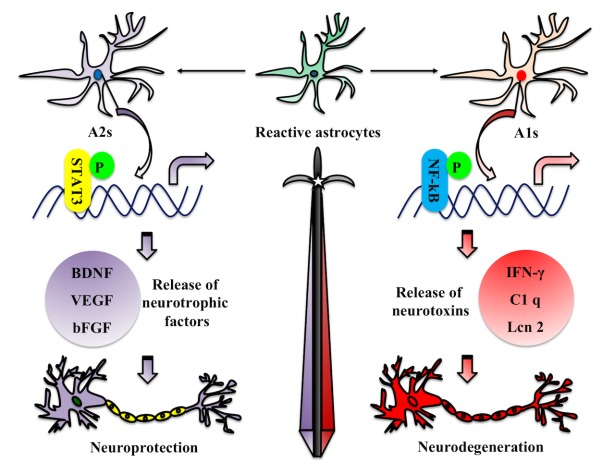
Astrocytes, the largest and most numerous glial cells in the central nervous system (CNS), play a variety of important roles in regulating homeostasis, increasing synaptic plasticity and providing neuroprotection, thus helping to maintain normal brain function. At the same time, astrocytes can participate in the inflammatory response and play a key role in the progression of neurodegenerative diseases. Reactive astrocytes are strongly induced by numerous pathological conditions in the CNS. Astrocyte reactivity is initially characterized by hypertrophy of soma and processes, triggered by different molecules. Recent studies have demonstrated that neuroinflammation and ischemia can elicit two different types of reactive astrocytes, termed A1s and A2s. However, in the case of astrocyte reactivity in different neurodegenerative diseases, the recently published research issues remain a high level of conflict and controversy. So far, we still know very little about whether and how the function or reactivity of astrocytes changes in the progression of different neurodegenerative diseases. In this review, we aimed to briefly discuss recent studies highlighting the complex contribution of astrocytes in the process of various neurodegenerative diseases, which may provide us with new prospects for the development of an excellent therapeutic target for neurodegenerative diseases.
Keywords: neurodegenerative diseases; neuroinflammation; reactive astrocytes.
Figures
References
-
- Benjamin Kacerovsky J, Murai KK (2016). Stargazing: Monitoring subcellular dynamics of brain astrocytes. Neuroscience, 323:84-95. - PubMed
-
- Arango-Lievano M, Jeanneteau F (2016). Timing and crosstalk of glucocorticoid signaling with cytokines, neurotransmitters and growth factors. Pharmacol Res, 113:1-17. - PubMed
-
- Allaman I, Belanger M, Magistretti PJ (2011). Astrocyte-neuron metabolic relationships: for better and for worse. Trends Neurosci, 34:76-87. - PubMed
Publication types
LinkOut - more resources
Full Text Sources