


String correction using the Damerau-Levenshtein distance
- PMID: 31167641
- PMCID: PMC6551241
- DOI: 10.1186/s12859-019-2819-0
String correction using the Damerau-Levenshtein distance
Abstract
Background: In the string correction problem, we are to transform one string into another using a set of prescribed edit operations. In string correction using the Damerau-Levenshtein (DL) distance, the permissible edit operations are: substitution, insertion, deletion and transposition. Several algorithms for string correction using the DL distance have been proposed. The fastest and most space efficient of these algorithms is due to Lowrance and Wagner. It computes the DL distance between strings of length m and n, respectively, in O(mn) time and O(mn) space. In this paper, we focus on the development of algorithms whose asymptotic space complexity is less and whose actual runtime and energy consumption are less than those of the algorithm of Lowrance and Wagner.
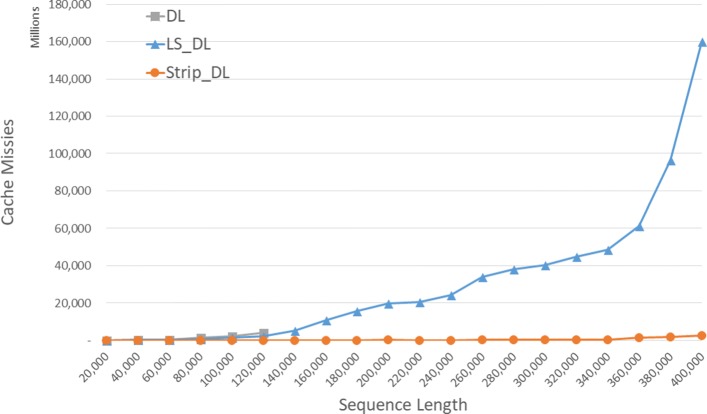
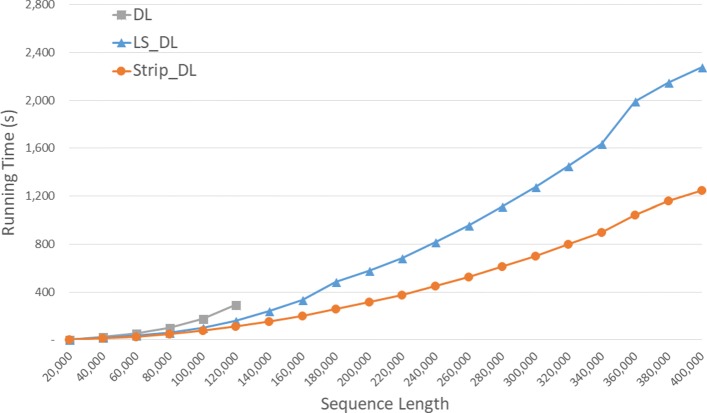
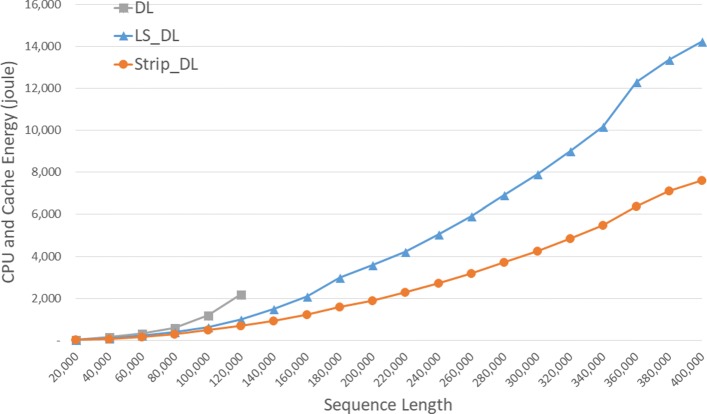
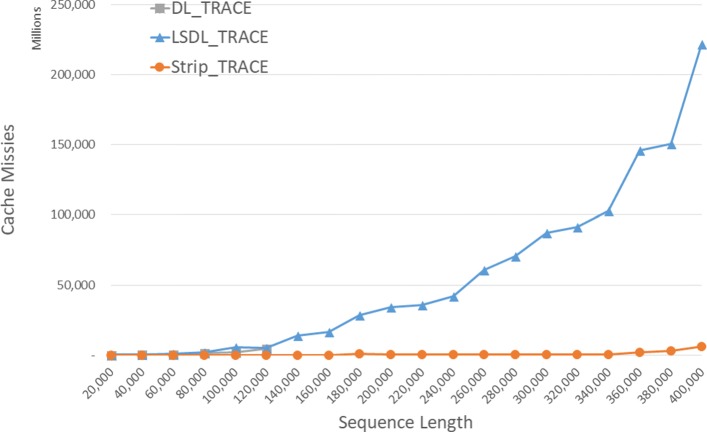
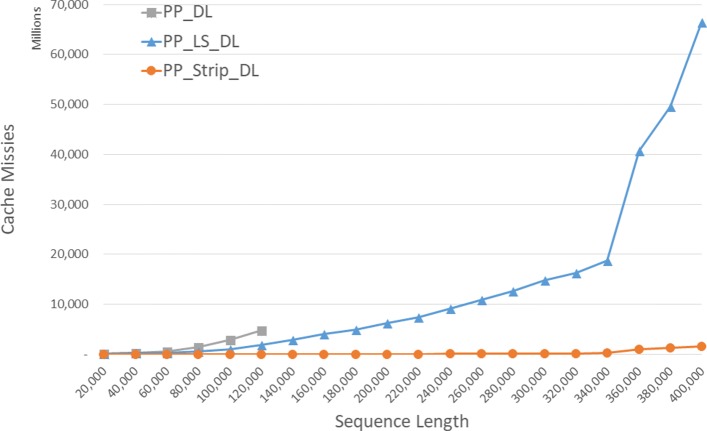
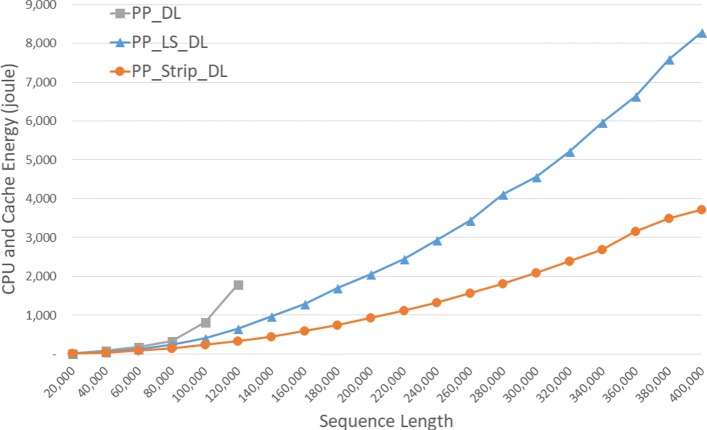
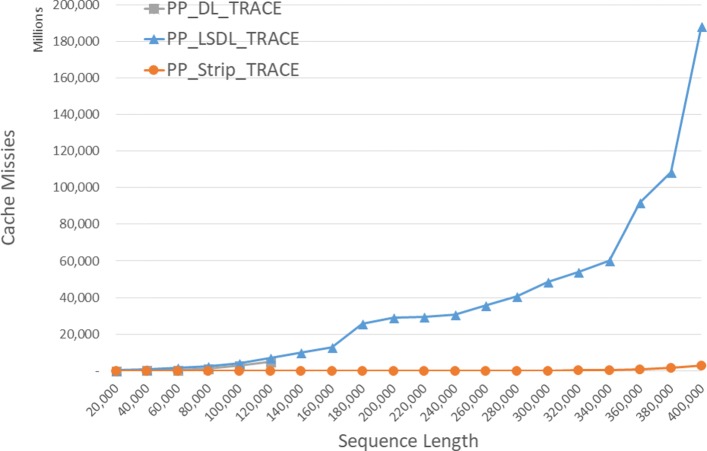
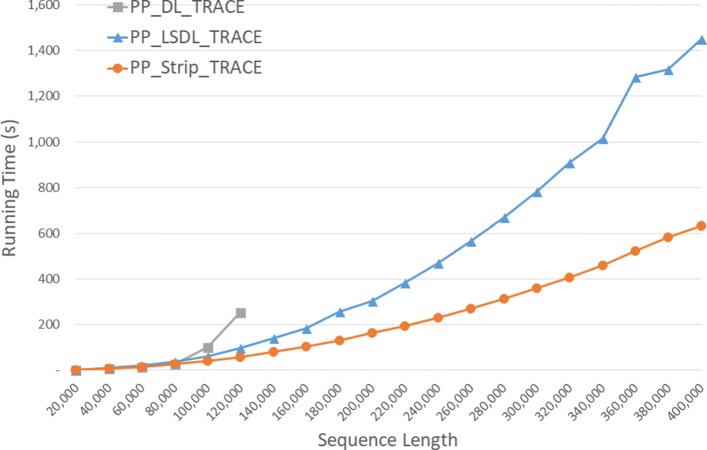
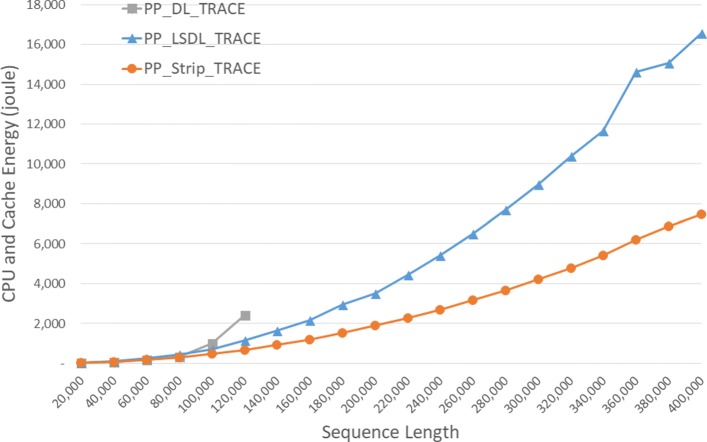
Results: We develop space- and cache-efficient algorithms to compute the Damerau-Levenshtein (DL) distance between two strings as well as to find a sequence of edit operations of length equal to the DL distance. Our algorithms require O(s min{m,n}+m+n) space, where s is the size of the alphabet and m and n are, respectively, the lengths of the two strings. Previously known algorithms require O(mn) space. The space- and cache-efficient algorithms of this paper are demonstrated, experimentally, to be superior to earlier algorithms for the DL distance problem on time, space, and enery metrics using three different computational platforms.
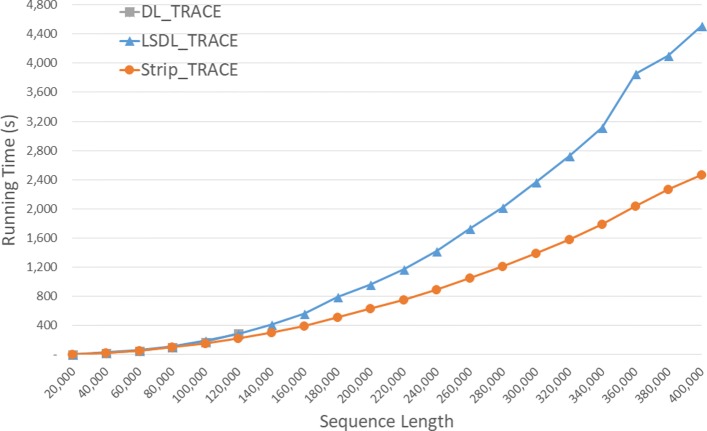
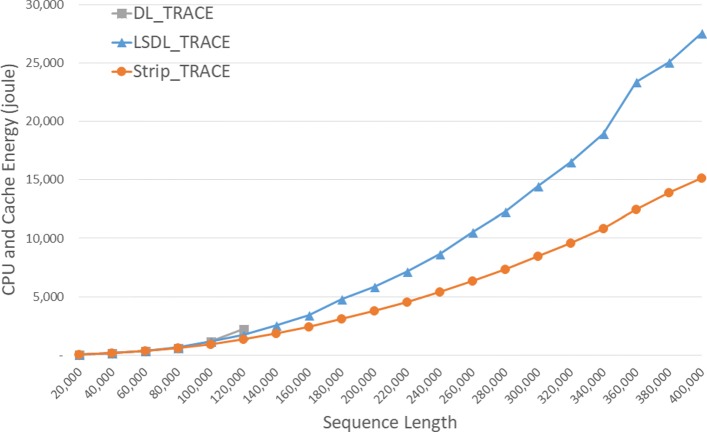
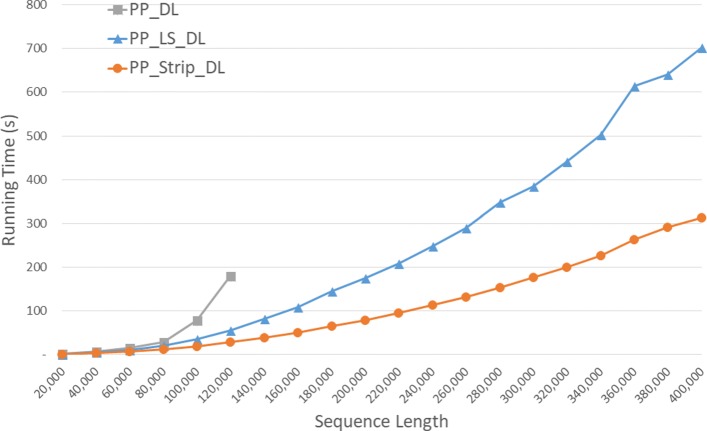
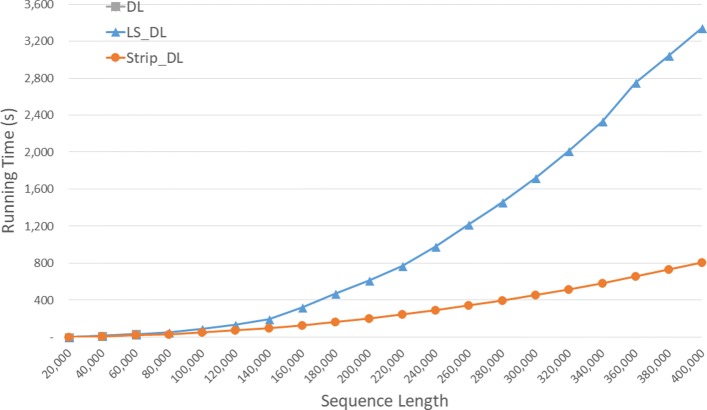
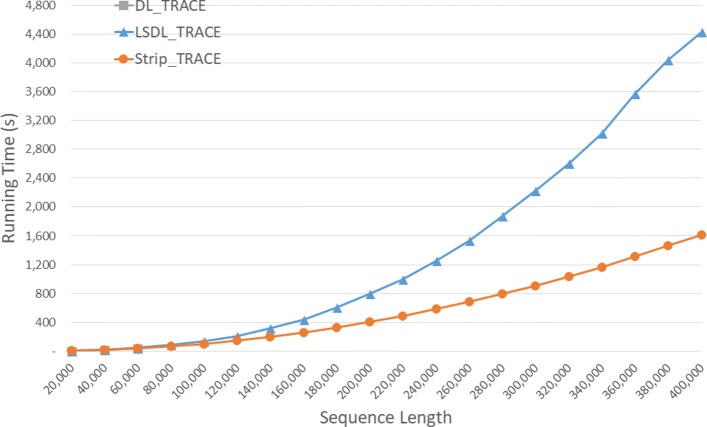
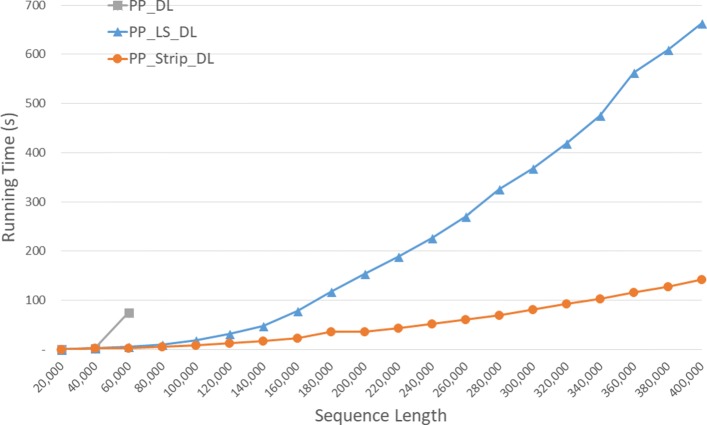
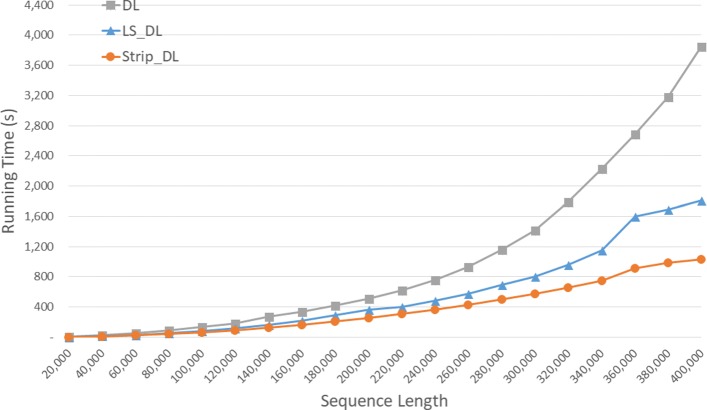
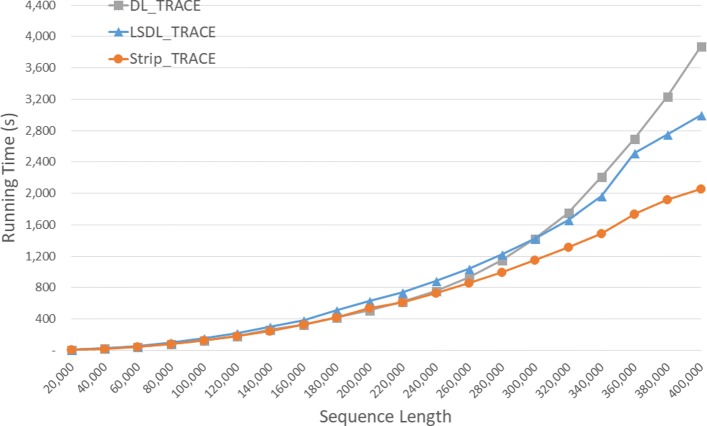
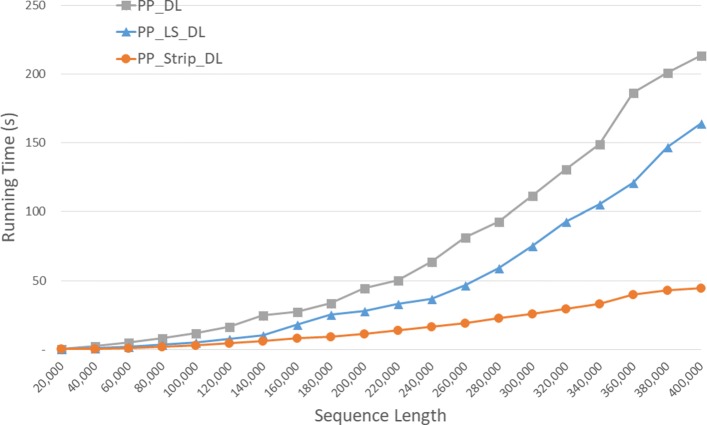
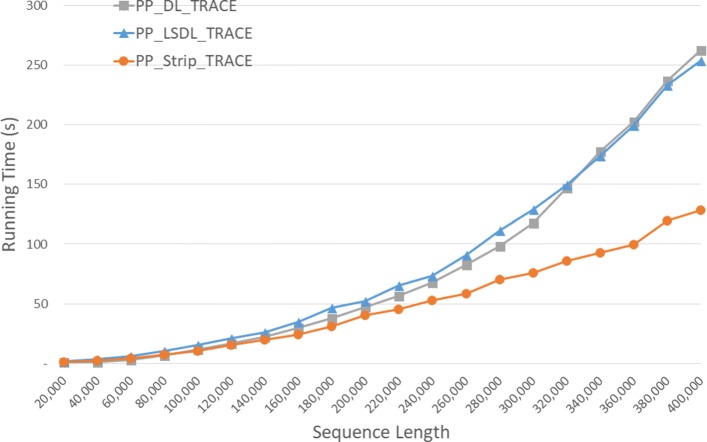
Conclusion: Our benchmarking shows that, our algorithms are able to handle much larger sequences than earlier algorithms due to the reduction in space requirements. On a single core, we are able to compute the DL distance and an optimal edit sequence faster than known algorithms by as much as 73.1% and 63.5%, respectively. Further, we reduce energy consumption by as much as 68.5%. Multicore versions of our algorithms achieve a speedup of 23.2 on 24 cores.
Keywords: Cache efficient; Damerau-Levenshtein distance; Edit distance; String correction.
Conflict of interest statement
The authors declare that they have no competing interests.
Figures

References
-
- Levenshtein VI. Binary codes capable of correcting deletions, insertions, and reversals. Sov Phys Dokl. 1966;10(8):707–10.
-
- Damerau FJ. A technique for computer detection and correction of spelling errors. Commun ACM. 1964;7(3):171–6. doi: 10.1145/363958.363994. - DOI
-
- Maier D. The complexity of some problems on subsequences and supersequences. J ACM. 1978;25(2):322–36. doi: 10.1145/322063.322075. - DOI
-
- Robinson DJS. An Introduction to Abstract Algebra. Berlin: Walter de Gruyter; 2003.
-
- Jaro MA. Advances in record-linkage methodology as applied to matching the 1985 census of Tampa, Florida. J Am Stat Assoc. 1989;84(406):414–20. doi: 10.1080/01621459.1989.10478785. - DOI
MeSH terms
LinkOut - more resources
Full Text Sources
