


A topical heparinoid-containing product improves epidermal permeability barrier homeostasis in mice
- PMID: 31168829
- PMCID: PMC6663615
- DOI: 10.1111/exd.13985
A topical heparinoid-containing product improves epidermal permeability barrier homeostasis in mice
Abstract
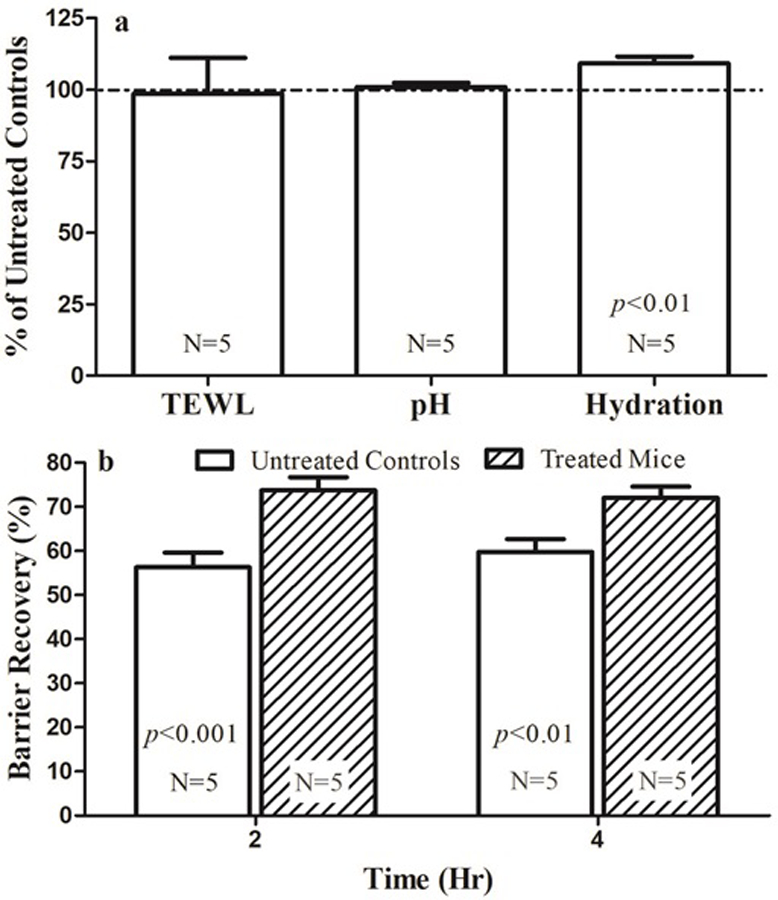
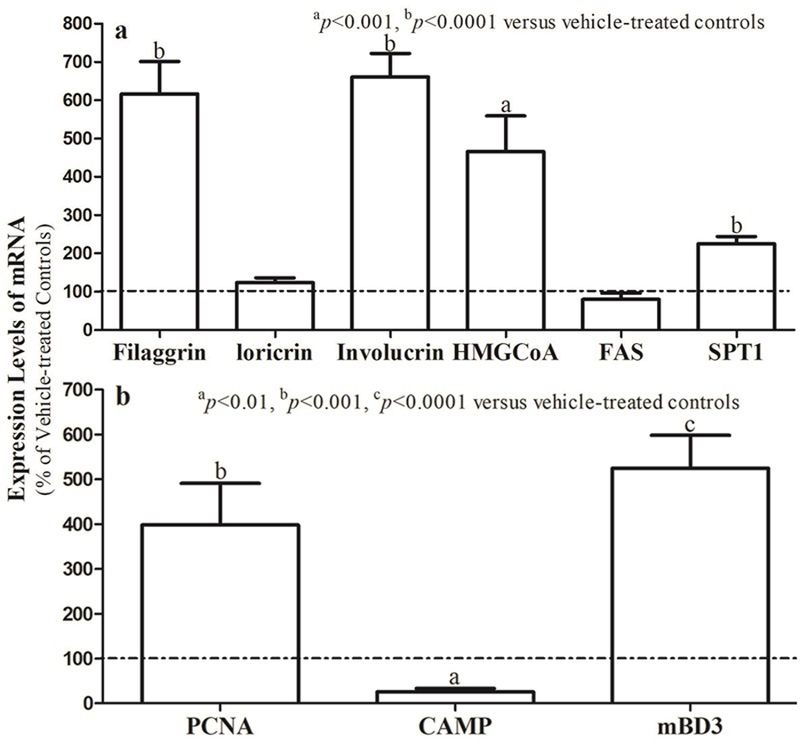
Because of the importance of epidermal functions, including stratum corneum hydration and maintenance of permeability barrier homeostasis, in the pathogenesis of a variety of cutaneous and systemic disorders, a wide range of products has been developed to improve epidermal functions. However, the underlying mechanisms whereby certain products, including heparinoid-containing product, are far little understood. In the present study, we assessed the impact of a heparinoid-containing product, Hirudoid® cream, on epidermal permeability barrier function and expression levels of a panel of epidermal mRNA related to the formation/maintenance of the permeability barrier in mouse skin. Our results showed that while the baseline levels of transepidermal water rates remained unchanged, treatment with Hirudoid® cream twice daily for 7 days significantly accelerated permeability barrier recovery and increased stratum corneum hydration. In parallel, expression levels of epidermal mRNA for certain differentiation marker-related proteins, lipid synthetic enzymes, keratinocyte proliferation and antimicrobial peptides also increased significantly. Together, these results provide the underlying mechanisms by which topical Hirudoid® cream improves epidermal permeability barrier and antimicrobial function. Because of its benefits for epidermal functions, heparinoid-containing product could be more useful in the management of skin conditions, characterized by abnormal permeability barrier and antimicrobial function.
Keywords: barrier function; differentiation; heparinoid; stratum corneum hydration.
© 2019 John Wiley & Sons A/S. Published by John Wiley & Sons Ltd.
Conflict of interest statement
Figures
References
-
- SEIFTER J, BEGANY AJ Studies on the action of a synthetic heparinoid. Am J Med Sci 1948;216:234. - PubMed
-
- SORENSON CW, SEIFTER J, WRIGHT IS A new synthetic anticoagulant (heparinoid) preliminary report of its action in humans. Bull N Y Acad Med 1949;25:448. - PubMed
-
- Hirsh J Overview of low molecular weight heparins and heparinoids: basic and clinical aspects. Aust N Z J Med 1992;22:487–95. - PubMed
-
- Adams HP Jr, Woolson RF, Biller J, Clarke W. Studies of Org 10172 in patients with acute ischemic stroke. TOAST Study Group. Haemostasis 1992;22:99–103. - PubMed
Publication types
MeSH terms
Substances
Grants and funding
LinkOut - more resources
Full Text Sources
Other Literature Sources
