


The geographic and topical landscape of medical education research
- PMID: 31170974
- PMCID: PMC6554948
- DOI: 10.1186/s12909-019-1639-2
The geographic and topical landscape of medical education research
Abstract
Background: Whether medical education research (MER) is primarily conducted in wealthy countries (in the "Realm of the Rich") is the subject of an ongoing debate. Previous studies of the geography of MER publication output have relied upon proprietary databases, have not compared MER with other fields of study, and have not studied the relationship between authorship geography and topics of study. This study was designed to evaluate the geographic distribution of MER authorship and to relate this to the topics studied in MER.
Methods: Authors' countries of affiliation were identified from PubMed records by parsing and cleaning the text of affiliations and submitting them to the google maps geocoding API. The geography of publication output in MER was compared to other fields using the chi-square goodness-of-fit test. Country income classifications and medical subject heading (MeSH) terms were used to evaluate the topical contributions of countries at different income levels, and simulation was used to compute significance of MeSH term enrichment in MER papers from low income and lower middle income countries.
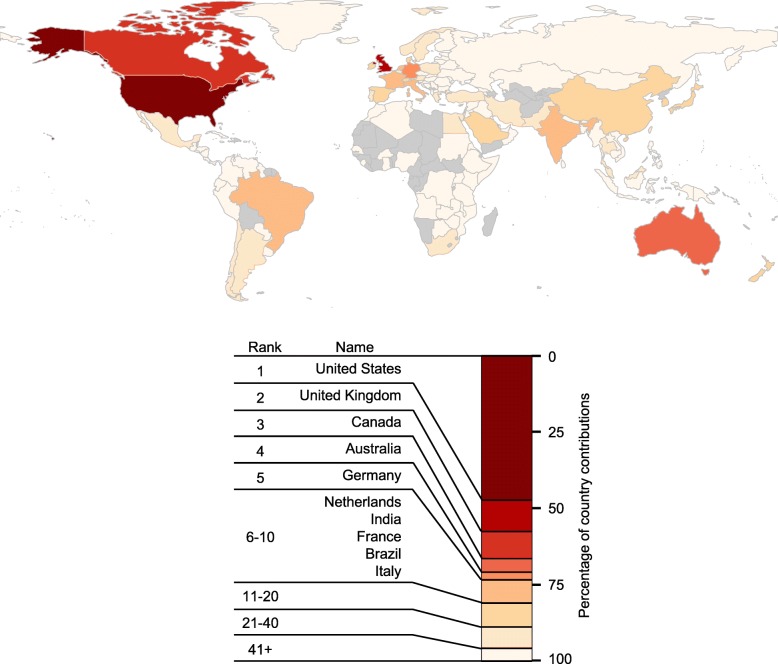
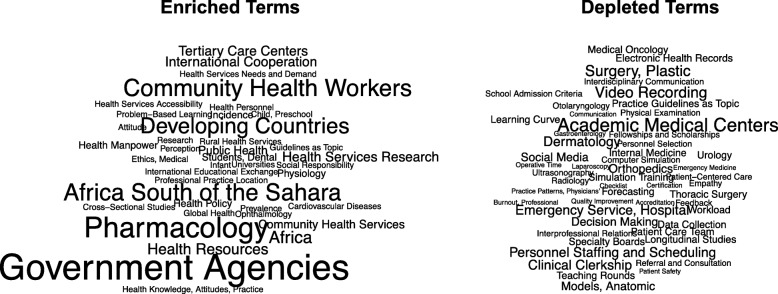
Results: The vast majority of MER papers were contributed by authors based in high income countries. The top four countries were the United States, the United Kingdom, Canada, and Australia, with listed author affiliations in 80% of all MER papers. This percentage was greater in MER than in several other categories, including Biological Science Disciplines (48%), Medicine (69%) and Education (74%), which is a parent category of MER. Authors from low income countries contributed significantly to the topical diversity of MER. MeSH terms associated with government, community health, and health delivery were enriched in papers from low income countries, while terms associated with specialty and clinical training, technology in teaching, and professional obligations (such as workload, burnout, and empathy) were enriched in papers from high income countries.
Conclusions: Geographic disparities in publication output are greater in MER than in any other field examined. The historical origins of MER in North America might explain disproportionate publication output by authors from this region. This study suggests that the MER field benefits from research contributed by authors from low income countries, and also points to potential gaps in MER (and medical education as a whole) in the developing world.
Keywords: Diversity; Income disparities; Low income countries; Medical education research; Research geography; Research productivity.
Conflict of interest statement
The author declares that he has no competing interests.
Figures
References
MeSH terms
LinkOut - more resources
Full Text Sources
Miscellaneous
